
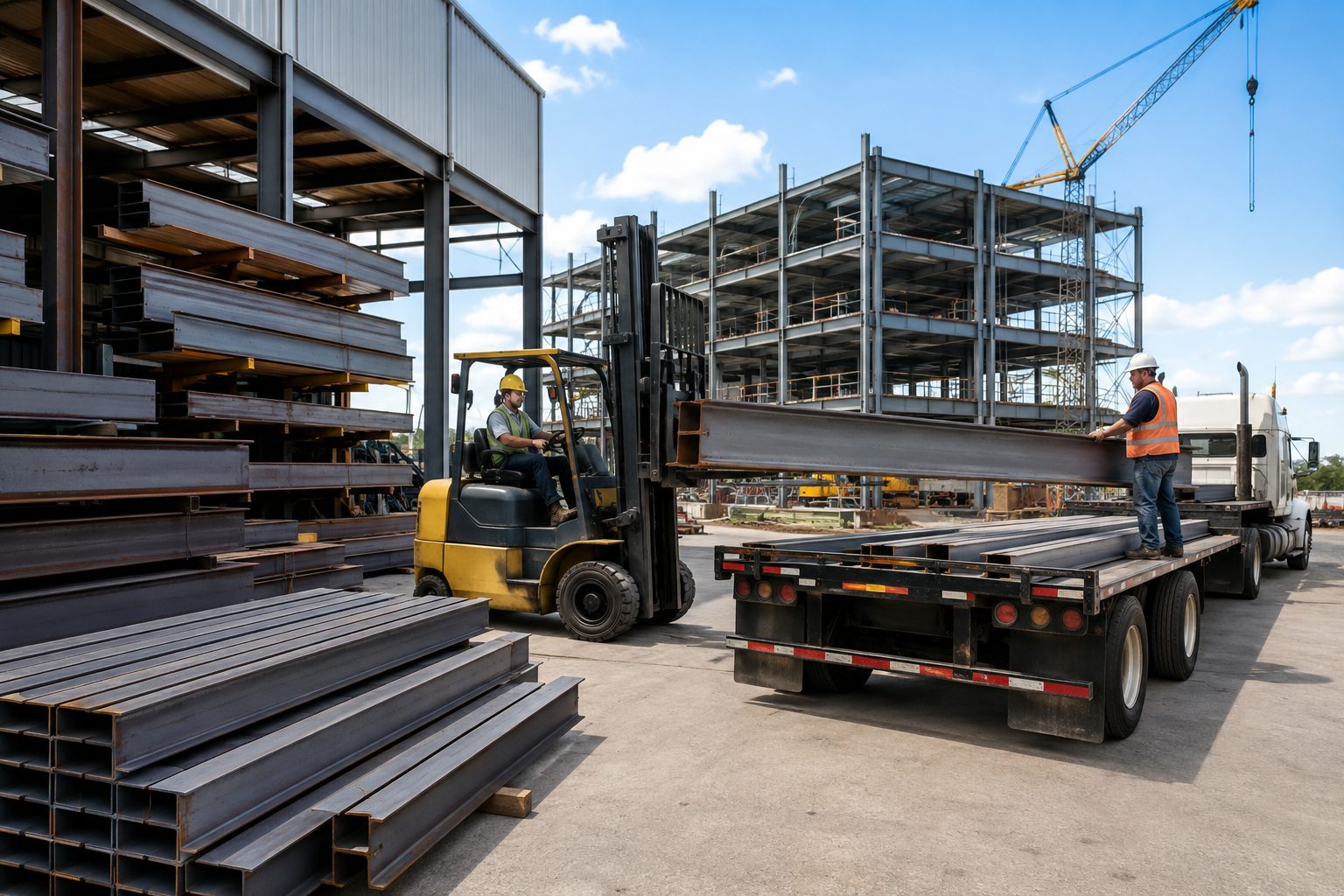
A single steel beam typically passes through three to four hands before it ever reaches a building site, and most people watching the crane lift it into place never think about where it came from. Somewhere between the mill’s furnace and the concrete foundation, a steel distributor decides how fast that beam actually moves.
Where the Beam Is Born
Steel starts as scrap or iron ore, melted at temperatures above 1,600°C and cast into slabs or billets. Rolling mills then press the hot metal into shape, whether an I-beam or a plate, while inline sensors check thickness and surface quality before the piece even cools. A growing share of this output now comes from fossil-free production, where hydrogen replaces coking coal in the reduction process.
That shift matters for anyone buying metals for a construction project, because it changes not just emissions figures but which suppliers get considered first. Mills documenting a hydrogen-based process now win contracts that price alone wouldn’t have secured five years ago.
The Hidden Middle Step
Very few beams travel straight from furnace to foundation. Mills produce in bulk, running long batches of standard dimensions, often in standard lengths of 12 to 15 meters, while a single construction project needs specific lengths and grades delivered on a tight schedule, often with a particular finish besides. That gap is filled by a Steel distributor, which holds inventory sorted by grade and dimension and readies it for customers across sectors, from shipbuilders to house framers. Tibnor operates exactly this kind of stock point, buffering the mismatch between industrial-scale production and job-site timing. A detail few outside the trade ever notice: the same beam grade can sit under three different product codes at three different distributors, and mixing up a code during reorder is one of the most common causes of a wrong delivery landing on site.
Why “Direct From Mill” Is a Myth
Shorter isn’t automatically faster. A project ordering straight from a mill often waits four to six weeks for a production slot, because mills batch orders to keep furnaces running efficiently, not to match one contractor’s deadline.
A stocked steel distributor already holds the material, cut and graded, ready to ship within days. This runs against the common assumption that cutting out the middleman always saves money. Contractors comparing suppliers on Bygges quickly notice that a reliable delivery window matters as much as the unit price once a project is already underway.
Warehousing and pre-processing at this stage also catch defects before they reach a site, where a flawed beam costs far more to replace once it’s already scheduled for installation. In practice, the middle link often saves both time and money that a “direct” route would burn on waiting.
Fossil-Free Steel as the New Benchmark
Buyers increasingly ask for documented emissions data alongside price and delivery time, and that shifts which distributor gets the order. Tibnor’s position inside the SSAB group gives it direct traceability back to fossil-free production batches, so a customer can confirm not just the grade of steel but its carbon footprint. That paper trail is what separates a supplier who can answer a sustainability audit in an afternoon from one who needs weeks to track down mill certificates.
The Final Stretch to the Building Site
Once an order is confirmed, the beam moves from warehouse to truck, timed against the crane schedule on site. Late delivery stalls a crew standing idle; early delivery clutters a site with no room to store excess steel. Quality checks happen again just before loading: dimensions get confirmed and certifications get matched against the paperwork.
The beam’s route from furnace to foundation runs longer and more strategic than most people assume, and the steel distributor in the middle sets the pace for both the schedule and the sustainability record of the finished building.