
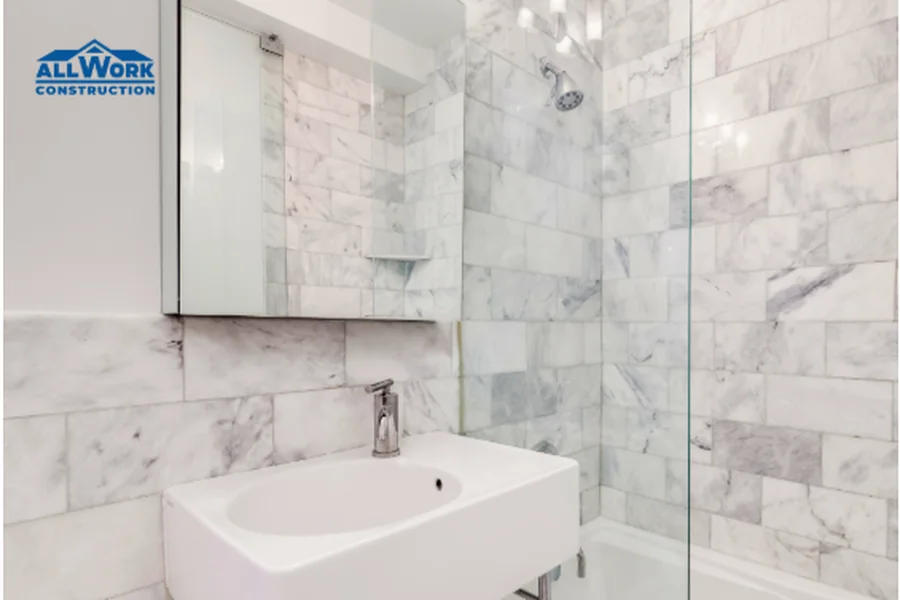
A small bathroom can feel surprisingly frustrating even when everything inside it is technically “new.”
Fresh tile doesn’t automatically fix awkward movement. A modern vanity won’t help if the room still feels cramped every morning. Even expensive finishes lose their impact when the layout keeps getting in the way.
That’s why smaller bathroom remodels are often harder to get right than larger ones.
In bigger spaces, mistakes can hide.
In smaller bathrooms, every inch matters.
And in many older Concord homes, the layout itself becomes the difference between a bathroom that simply looks renovated and one that genuinely feels easier to live with.
Small Bathrooms Don’t Leave Room for Bad Decisions
Larger bathrooms are forgiving.
You can oversize a vanity slightly or place fixtures less efficiently and still end up with a comfortable space.
Small bathrooms don’t work that way.
One poorly placed element affects everything around it:
- movement
- storage
- door clearance
- sightlines
- accessibility
That’s why layout planning becomes far more important during a small remodel than homeowners usually expect at the beginning.
Most Older Bathrooms Were Never Designed for Modern Routines
A lot of bathrooms in older Concord homes were built around basic functionality.
The expectations were completely different decades ago.
There were fewer products, less need for storage, simpler lighting setups, and smaller fixture footprints overall.
Today, bathrooms handle much more:
- shared routines
- storage demands
- larger showers
- additional electrical needs
- better lighting expectations
The room often hasn’t evolved with those changes.
That’s why remodeling small bathrooms isn’t really about making them look modern.
It’s about helping them function like modern spaces.
The Layout Usually Matters More Than the Finishes
Homeowners naturally focus on finishes first.
Tile. Hardware. Paint colors. Mirrors.
Those decisions are visual, so they feel easier to connect with emotionally.
But layout affects the room every single day in ways finishes never will.
You notice the layout while:
- trying to move around another person
- opening drawers
- stepping out of the shower
- reaching for storage
A beautiful bathroom with a weak layout still feels inconvenient.
A smart layout with simpler finishes often feels significantly better to use long-term.
Bigger Features Can Make Small Bathrooms Feel Worse
One of the most common remodeling mistakes is trying to force oversized features into limited space.
A large vanity may look impressive online, but in a smaller bathroom it can reduce movement dramatically.
The same thing happens with:
- oversized tubs
- thick shower walls
- bulky storage units
What feels luxurious in a large room can feel restrictive in a compact one.
Good small bathroom design usually feels lighter, more open, and less crowded.
Not because there’s less functionality, but because the layout is working harder behind the scenes.
Door Placement Quietly Controls the Entire Room
People rarely think about the door first.
They should.
In smaller bathrooms, the direction a door swings can completely affect how the room functions.
An inward-opening door may:
- block movement
- limit vanity placement
- interfere with storage
- tighten the entry area
Sometimes changing the door type creates more usable space than changing fixtures themselves.
That’s the kind of adjustment homeowners often don’t realize is possible until layout planning begins seriously.
Storage Problems Usually Start With Layout Problems
A lot of storage frustration comes from poor spacing rather than lack of cabinets.
When fixtures take up too much room, storage gets pushed into awkward locations.
Then the bathroom slowly becomes cluttered again after the remodel.
Smart layouts solve storage more naturally:
- recessed niches
- integrated shelving
- better vanity proportions
- vertical storage placement
The goal isn’t necessarily adding more storage.
It’s placing it where it actually supports the room.
Small Bathrooms Need Better Visual Balance
Crowded bathrooms often feel stressful even when they’re organized.
That usually comes down to visual weight.
Too many bulky elements in a small footprint make the room feel compressed.
This is where layout planning blends with design decisions.
Floating vanities, larger tile formats, cleaner transitions between surfaces, and open sightlines all help the room feel calmer without physically expanding it.
The space starts breathing differently.
Plumbing Flexibility Often Defines the Remodel
In older homes, layout ideas are heavily influenced by existing plumbing locations.
Moving a shower or toilet isn’t always simple.
Sometimes it’s worth adjusting the layout significantly.
Other times, smarter planning around the current plumbing creates a better result without unnecessary construction.
That balance matters.
The best remodels aren’t the ones that change everything.
They’re the ones that improve the room intelligently.
Small Improvements Usually Have a Bigger Impact Than Expected
In compact bathrooms, even small adjustments become noticeable quickly.
A slightly narrower vanity.
A repositioned shower entrance.
Better spacing between fixtures.
These changes don’t sound dramatic.
But once daily movement improves, the entire room starts feeling different.
That’s one reason thoughtful planning matters so much more in smaller spaces than people initially expect.
Lighting Placement Becomes More Important in Tight Layouts
Lighting behaves differently in small bathrooms.
Poor placement makes the room feel even tighter.
Heavy shadows, uneven brightness, and poorly lit mirrors can make an otherwise nice remodel feel uncomfortable.
Layered lighting softens the space instead of flattening it.
That’s especially important in New England homes where natural light inside bathrooms is often limited to begin with.
Why Some Small Bathroom Remodels Still Feel Cramped After Renovation
Usually because the remodel focused too heavily on appearance.
The finishes changed, but the flow stayed the same.
Movement patterns remained awkward. Storage stayed inefficient. Fixtures still competed for space.
The room technically became newer without becoming easier to use.
That’s one of the biggest differences between cosmetic updates and actual layout-driven remodeling.
Experienced Remodelers Approach Small Bathrooms Differently
Smaller spaces require more restraint, not more features.
That’s where experience becomes important.
Teams like All Work Construction often spend more time refining layout proportions in compact bathrooms because those decisions affect comfort more than expensive upgrades do.
A few inches in the wrong direction can change the entire room.
A few inches in the right direction can completely improve it.
The Best Small Bathrooms Rarely Feel “Designed”
Interestingly, the strongest layouts usually don’t draw attention to themselves.
Nothing feels forced.
You move naturally. Storage feels intuitive. The room works quietly in the background.
That’s when a bathroom stops feeling small.
Not because the square footage changed, but because the friction disappeared.
Final Thoughts
Small bathroom remodels in Concord require better planning because smaller spaces expose every weak layout decision immediately.
There’s less room for unnecessary features, awkward spacing, or poor movement patterns.
That’s why successful remodeling in compact bathrooms depends less on dramatic upgrades and more on thoughtful layout refinement.
When the layout is handled correctly, even a modest-sized bathroom can feel comfortable, functional, and surprisingly open.
And in most cases, that improvement matters far more than the finishes homeowners originally thought would define the project.