
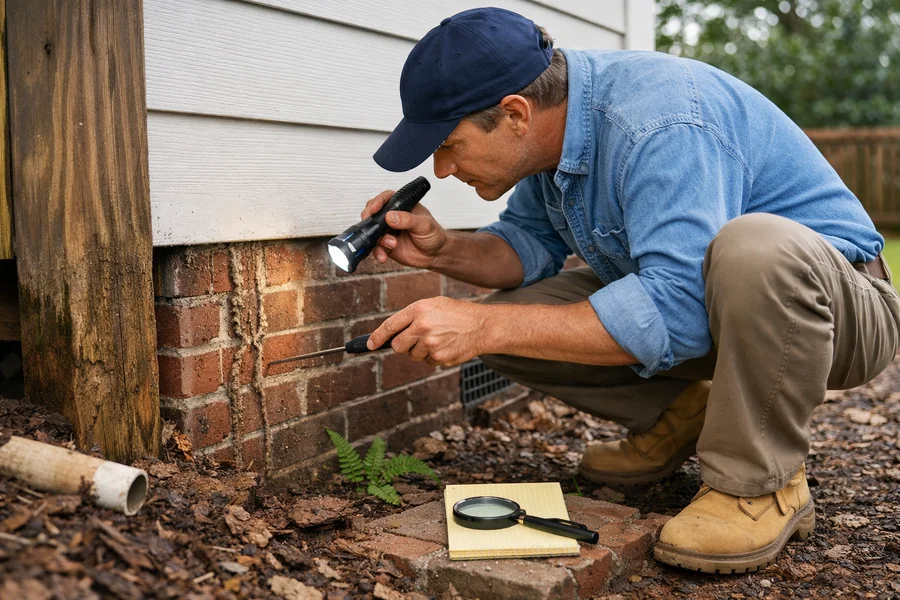
Spring feels like a reset. Windows open, yards come back to life, and home projects start again. It is also the season when pest pressure begins to rise. Warmer temperatures, frequent rain, and higher humidity can create the exact conditions that help termites swarm, ants forage, and moisture-loving pests settle into damp areas around the home. In Eastern North Carolina and Tidewater Virginia, termite swarming season often runs from late February through May, especially after spring rain and temperatures above 70 degrees.
That is why termite control spring planning matters before you see visible damage. A smart spring routine helps homeowners spot trouble early, reduce conditions pests love, and protect the structure of the home before small issues turn expensive.
Why Spring Brings More Pest Pressure
Spring changes the environment around your home fast. Soil warms up. Rain adds moisture. Crawl spaces stay damp longer. Mulch beds, wood piles, and shaded foundations hold humidity. Those shifts increase spring pest risks for homeowners because termites need moisture, ants search for food and water, and many nuisance pests thrive in damp, protected spaces.
Termites become active when conditions are right
Subterranean termites are especially common in this region, and they thrive in moist, humid conditions. Swarmers often appear on warm spring days, especially after rainfall. Homeowners may first notice discarded wings, mud tubes, or wood that sounds hollow when tapped.
Ants move where food and water are easy to find
Ants do not need much space to enter a home. They follow scent trails, track moisture, and often nest near damp areas. Terminix notes that ants are commonly attracted by food, standing water, and sheltered nesting areas such as crawl spaces or wall voids.
Moisture pests follow the water problem first
Many so-called moisture pests are really a warning sign. Moisture ants, springtails, mold-related pests, and other occasional invaders often show up where leaks, humidity, or poor ventilation already exist. Moisture ants, for example, may nest near water leaks or damp wood inside bathrooms, kitchens, and crawl spaces.
Quick fact: The National Pest Management Association says termites cause an estimated $6.8 billion in property damage each year in the United States.
The Early Warning Signs Homeowners Should Never Ignore
A lot of spring infestations start quietly. The earlier you notice the pattern, the easier it is to respond.
Signs of termite activity
Start with the exterior and lower levels of the home. Look for:
- Pencil-thin mud tubes on foundations, walls, or piers
- Discarded wings near windows, doors, or light sources
- Bubbling paint or soft wood
- Hollow-sounding trim, baseboards, or sill plates
These are common signs homeowners should watch during termite control spring checks.
Signs of ant problems
Ant problems are often dismissed at first, but spring trails usually point to a larger nesting issue. Watch for:
- Steady ant trails near sinks, baseboards, or pantry shelves
- Small piles of soil or debris near cracks
- Activity around damp windows, crawl spaces, or plumbing penetrations
- Repeated sightings after cleaning
This is where ant infestation solutions should focus on the source, not just the visible trail.
Local Homeowners Need a Spring Inspection Routine
A strong spring routine does not have to be complicated. It just has to be consistent. These local pest control tips are practical, seasonal, and easy to apply. I found useful guides on coolkingzone com about online trends.
Start outside before pests move inside
Walk the full perimeter of your home and check:
- Foundation cracks and utility entry points
- Mulch piled too high against siding
- Wood-to-soil contact around steps, decks, or fencing
- Gutters, downspouts, and drainage paths
- Tree limbs or shrubs touching the house
Then inspect damp interior zones
Inside the home, focus on the places pests prefer to stay hidden:
- Under sinks
- Around tubs and shower walls
- Near water heaters
- In basements and crawl spaces
- Around attic vents and roof penetrations
Moisture Control Is One of the Best Pest Prevention Tools
Moisture is not just a comfort issue. It is a pest issue. CDC says indoor humidity should ideally stay at 50% or lower, and leaks in roofs, walls, or plumbing should be fixed quickly to help prevent mold and other moisture problems. That same approach supports moisture pest prevention because damp, poorly ventilated spaces often attract ants, termites, and nuisance pests.
Where homeowners lose the moisture battle
The most common trouble spots include:
- Crawl spaces with poor ventilation
- Bathroom plumbing leaks
- Overflowing gutters
- Standing water near the foundation
- Damp mulch beds and shaded corners of the yard
What to do now
Use this quick action table as part of your local pest control tips routine:
| Problem Area | What to Look For | Why It Matters | Spring Fix |
| Crawl space | Damp soil, condensation, wood discoloration | Supports termites and moisture pests | Improve ventilation and reduce moisture |
| Gutters | Overflow, clogs, splashback | Sends water toward the foundation | Clean and direct water away |
| Mulch beds | Thick, wet mulch against siding | Holds moisture and hides pest activity | Keep mulch pulled back from the home |
| Plumbing areas | Drips, stains, musty smell | Attracts ants and moisture ants | Repair leaks fast |
| Exterior wood | Rot, direct soil contact | Makes termite access easier | Replace damaged wood and raise clearance |
Pro tip: Do your spring inspection within 24 to 48 hours after a steady rain. That is often when moisture issues, drainage flaws, and hidden pest activity become easier to spot.
Smart Prevention Beats Late Reaction
Homeowners often wait until they see a swarm, a trail of ants, or visible wood damage. By then, the problem may already be established. A better approach is seasonal prevention.
Focus on the conditions pests need
For termite control in the spring, that means reducing moisture, checking wood contact with soil, and watching for swarm evidence. For ant infestation solutions, it means removing food residue, sealing entry points, and fixing water access. For moisture pest prevention, it means drying out the environment before pests settle in.
Prevention checklist you can keep
- Store firewood away from the home
- Seal gaps around pipes and utility lines
- Keep kitchen crumbs and pet food cleaned up
- Repair leaks right away
- Trim back plants touching the siding
- Inspect crawl spaces and basements every spring
- Watch for seasonal changes that increase spring pest risks
When a Homeowner Should Take the Problem More Seriously
Some situations need closer attention than a basic DIY check.
Call for a closer evaluation when you notice
- Repeated swarms or discarded wings
- Mud tubes or soft structural wood
- Ant activity that returns after cleaning
- Musty crawl spaces with visible dampness
- Visible wood rot near doors, decks, or siding
In regions where subterranean termites are common, local timing matters. Tidewater Virginia and nearby coastal areas face recurring spring termite activity, which makes seasonal observation especially important.
If your spring checklist uncovers active termite signs, this is also the point where a search for termite inspection in Virginia Beach becomes more than routine. It becomes part of protecting the home early.
Key Takeaways
- Spring warmth and rain create better conditions for termites, ants, and damp-area pests.
- Termite control spring planning works best when it starts before visible damage appears.
- Moisture pest prevention begins with drying out crawl spaces, leaks, and drainage issues.
- Ant infestation solutions are more effective when you remove the water and shelter source.
- Local pest control tips such as sealing gaps, checking gutters, and pulling mulch away from siding, can lower spring pest risks.
Endnote
Spring pest season does not begin the day you spot a swarm or a line of ants across the counter. It starts earlier, when warm soil, rain, and moisture quietly create the right conditions around the home. That is why a seasonal inspection matters. When homeowners pay attention to damp zones, wood damage, drainage, and early insect activity, they give themselves a real chance to stay ahead of trouble.
The best spring strategy is simple: reduce moisture, inspect often, and act on small warning signs before they become bigger repair issues. Even a routine search for a reliable mouse exterminator or seasonal pest checklist can lead homeowners to catch hidden conditions that would otherwise go unnoticed.
FAQs
What month is best to start checking for termites in spring?
In many parts of Virginia and coastal North Carolina, termite activity can begin in late February and continue through May, with more visible swarming after warm spring rain.
Can moisture problems really attract pests?
Yes. Damp wood, plumbing leaks, high humidity, and poor drainage can attract moisture ants and other nuisance pests, while also making conditions more favorable for termites.
Are ants in spring always a major problem?
Not always, but recurring indoor trails usually mean ants have found food, water, or shelter close to the structure. That is why good ant solutions focus on cleaning, sealing, and moisture repair.
What are the best first steps for moisture pest prevention?
Start by fixing leaks, lowering indoor humidity, clearing gutters, improving crawl space airflow, and pulling wet mulch away from the foundation.
Take one hour this week and do a full spring walkaround of your home. Check the foundation, crawl space, gutters, plumbing points, and damp corners of the yard. A simple seasonal habit can help you catch termite control spring issues early, strengthen pest control tips at home, and lower spring pest risks before summer arrives.