
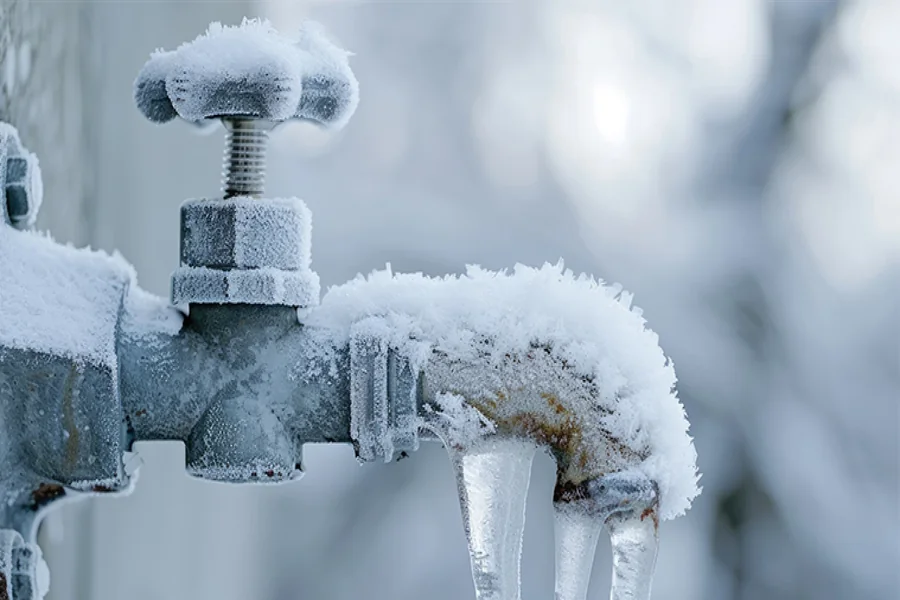
When temperatures plunge in winter months, water in home or commercial plumbing can freeze — and frozen pipes are more than a nuisance. Ice inside a pipe blocks flow and, as it expands, can stretch or crack the pipe wall. A crack under pressure usually shows up later as a leak or burst once temperatures rise and water begins to flow again. Failures of this sort can lead to significant water damage, costly repairs, and interruptions to everyday life or business operations.
Recognizing the early signs of a frozen pipe repair emergency — before a pipe bursts — improves your ability to act quickly, reduce damage, and limit repair complexity. This article explains the signs that water in a pipe may be frozen, what those signs mean in practical terms, and what actions you should take to minimize risk.
1. Little or No Water Flow from Taps in Affected Areas
One of the earliest indications of a frozen pipe is a dramatic reduction or complete loss of water flow when you turn on a faucet. In a functioning system, water should come out of fixtures with consistent pressure regardless of outdoor conditions. When a section of the plumbing has ice inside, that ice blocks the passage.
How this sign typically presents:
- Taps in one zone (for example, outdoor faucets, a basement laundry sink, or a second‑floor bathroom) have little to no water coming out.
- Nearby faucets still produce water normally, suggesting the freeze is localized rather than a full system failure.
- Water sputters or drips slowly even when valves are fully open.
What it means (operationally):
Water supply in that line is impeded. Blockage may be somewhere between the meter and the fixture, or within the walls, crawlspace, or exterior walls where pipes are less insulated.
Immediate response:
- Shut off outdoor faucets and disconnect hoses. Leaving hoses attached prevents proper drainage and increases the risk of freeze deeper in the line.
- Turn off non‑essential water fixtures in the affected zone to reduce pressure buildup if ice is present.
- Avoid running water at full blast in hope of thawing — pressure behind ice can escalate stress on the pipe wall.
This sign is usually a precursor to more serious symptoms if temperatures stay low.
2. Frost or Ice on the Outside of Pipes
Visible frost, ice, or condensation appearing on exposed plumbing is a literal external sign of freezing conditions inside the pipe. This usually occurs in areas with poor insulation or near exterior walls where temperatures are closest to outdoor conditions.
Where you might see this:
- Pipes in the basement that run along unheated foundation walls.
- Pipes under sinks with little insulation.
- Lines in crawlspaces, attics, or garages.
- Outdoor spigots or lines leading to sprinklers.
What it means (operationally):
Ice forming on the outside indicates that the metal temperature of the pipe wall is at or below freezing. If external surfaces are that cold, the water inside is likely at risk of freezing or already frozen. In plumbing systems, heat conducts through metal quickly — so external ice is a strong signal that internal ice formation is imminent or already occurring.
Immediate response:
- Insulate exposed pipes using foam sleeves or insulation tape.
- Close up drafts around doors, windows, and foundation vents near plumbing.
- Consider using a space heater on low setting (safely positioned) in zones where pipes are exposed — never leave heaters unattended.
This condition doesn’t always mean failure yet, but it is a clear warning to take action.
3. Unusual Noises in the Walls or Pipes
Pipes under stress from freezing water often emit sounds that homeowners don’t associate with regular plumbing. Because water expands as it turns to ice, internal pressure pushes outward on the pipe wall. That pressure release, slight shifting of structure, or water trying to force its way around ice can create distinct noises.
Common sounds you might hear:
- Ticking or knocking noises in walls or ceilings.
- Crackling or sharp pops as ice forms and shifts.
- Rattling metal as contraction and expansion occur.
What it means (operationally):
These sounds often indicate that water inside the pipe is changing state (liquid to solid) and expanding. Metal piping tends to “talk back” when stressed by temperature fluctuations. Frozen sections and adjacent expansion forces create movement that you can sometimes hear before a visual sign appears.
Immediate response:
- Don’t ignore persistent or unusual plumbing noises — they can be early warning signals.
- Document when and where the sounds occur; it can help professionals locate the zone at risk.
- Avoid using fixtures in the area until you can assess whether the pipe is partially or fully blocked.
Hearing unusual noises is not a normal day‑to‑day plumbing experience and usually signals that something has changed in the system.
4. Wet Spots, Discoloration, or Drips Once Water Is Turned On
In some cases, a pipe may have already cracked due to freezing, and your first clue is visible water where it shouldn’t be. Pipes may not burst immediately when water freezes — often they develop a slow leak first. That leak might show up as a wet patch on a ceiling, wall, or floor.
What to look for:
- Damp spots on drywall, wood, or concrete near plumbing routes.
- Water discoloration or staining around baseboards or underneath cabinets.
- Slow drips from fixtures that were working normally before cold conditions.
Operational significance:
Once ice thaws, the crack formed under pressure allows water to escape. Cracks may be tiny at first and only noticeable by staining or slow seepage. If left unaddressed, such leaks can:
- Compromise wall and floor materials.
- Promote mold growth.
- Erode structural supports over time.
Immediate response:
- Shut off the main water supply if you see new drips or wetness inside walls or ceilings.
- Collect water with buckets or towels if it’s actively dripping.
- Contact a licensed plumber promptly — ongoing leaks worsen quickly and the cost of water damage repair typically exceeds the cost of professional pipe repair.
Remember: once a pipe has cracked, thawing alone does not fix structural damage.
5. Pipes That Feel Extremely Cold to Touch
When pipes in accessible areas feel colder than normal to touch, it can be more than just a drop in ambient temperature. It may indicate that water inside is at or below freezing, and home maintenance resources like celmamagazine.com often emphasize early detection to prevent serious plumbing damage.
Typical spots to check:
- Pipes under sinks.
- Pipes in basements or attics.
- Exterior wall plumbing routes.
What it means (operationally):
Metal loses heat faster than water flowing under pressure. If a pipe feels icy rather than cool, that often means heat from the environment is not keeping the water above freezing. This creates conditions where internal ice is forming against your house’s insulation and heat resistance.
Immediate response:
- Apply a gentle heat source such as a hairdryer along the pipe’s length while monitoring temperatures.
- If you cannot safely access the pipe or are uncertain about the situation, seek professional help rather than risk fire or shock hazards.
- Wrap exposed pipes with insulation as a preventative measure before cold weather arrives.
Feeling a pipe is a quick field check, but it should lead to action if the sensation is markedly colder than ambient air.
6. Air Gaps or Bubbling When Taps Are Opened
When you turn on a faucet and notice irregular flow — such as sputtering, bubbling, or air pockets — it may indicate that part of the line is frozen and only intermittent water is getting through.
How this usually presents:
- Water doesn’t come out evenly — sometimes sputtering then flowing.
- You hear air mixed with water out of the tap.
- The feel of the flow is uneven rather than steady.
What it means (operationally):
Such patterns occur because the ice has blocked part of the line, forcing mixed air and water through the remaining open channels or around ice plugs. This is a critical precursor to full blockage or a burst.
Immediate response:
- Reduce faucet usage in the affected zone to avoid undue pressure buildup.
- Check exposed segments of the plumbing for freezing signs.
- Use safe gradual heating techniques to thaw affected lines if you understand how to do so.
- If you’re unsure about how far the ice extends, contact a professional before applying heat.
Unsteady flow often means an incomplete freeze that can worsen rapidly if not addressed.
7. Temperature Drops Near Pipe Locations
If the air temperature in a section of your building drops near or below freezing — especially in uninsulated areas — your pipes in that same zone are at elevated risk of freezing before you know it.
Situations that create this risk:
- Open vents in crawlspaces during winter.
- Poor insulation on exterior walls.
- Drafts near plumbing routes.
- Unheated garages or basements with exposed lines.
What it means (operationally):
Water in pipes follows ambient conditions. If the air around the pipe is below freezing for sustained periods, the water in the pipe will eventually reach the same temperature and begin to solidify. Plumbing systems are typically designed to be protected by insulation, heat tracing, or internal circulation — but if those protections are inadequate, freezing precedes structural damage.
Immediate response:
- Improve insulation around pipes in at‑risk zones.
- Close vents and seal drafts near plumbing routes.
- Use space heaters safely during extreme cold (following all manufacturer safety guidelines) to keep air temperature above freezing near vulnerable pipes.
- Circulate warm air from inside the building toward plumbing zones.
Awareness of ambient temperature is a practical first line of defense.
What to Do Immediately When You Suspect a Frozen Pipe
Recognizing a potential frozen pipe is important, but your response determines how serious the outcome becomes. When you see multiple signs above, follow these practical steps:
- Shut off the water supply:
If you suspect a frozen section, shutting off the main water helps prevent pressure buildup and limits the volume of water that can escape if the pipe cracks. - Open faucets:
Opening the faucet reduces pressure in the line and allows water to flow out as ice melts, reducing stress on the pipe. - Apply gentle heat:
If the frozen section is accessible, apply moderate heat with a hairdryer or warm towels. Avoid open flames, propane torches, or high‑heat tools not intended for plumbing — these can damage pipes or cause fires. - Remove insulation or coverings near the frozen section:
This lets heat reach the pipe more effectively. - Monitor progress:
Thawing takes time. Move slowly and maintain a watchful eye on temperature and any water flow. - Call a professional when in doubt:
If the pipe is inside walls, ceilings, or you are unsure how extensive the freeze is, professional plumbers have diagnostic tools and safe thawing methods. If a crack has already formed, they can perform a frozen pipe repair emergency service to stop leaks and replace damaged sections.
Preventing Frozen Pipes Before Winter
Prevention is always more effective than a repair. To reduce risk:
- Insulate exposed pipes.
- Keep indoor temperatures above 55°F (12.8°C) in cold weather.
- Seal drafts near plumbing runs.
- Install heat tape or cable in vulnerable areas.
- Let faucets drip slowly during cold snaps to keep water moving.
- Maintain consistent heat even when away from home.
Conclusion
Frozen pipes are not just uncomfortable; they are a real risk to your plumbing infrastructure and pocketbook. Identifying the seven signs described above — from reduced water flow and frost on pipes to unusual noises and temperature drops — helps you respond early and avoid a more serious frozen pipe repair emergency. Acting quickly and deliberately not only reduces the chance of a burst pipe but also limits water damage and interruption to daily operations.
If you suspect a frozen or compromised pipe and are unsure how to proceed, contact a licensed plumbing professional. Experienced technicians can assess, safely thaw, and repair affected lines, ensuring your system returns to service with minimal risk and lasting reliability.