
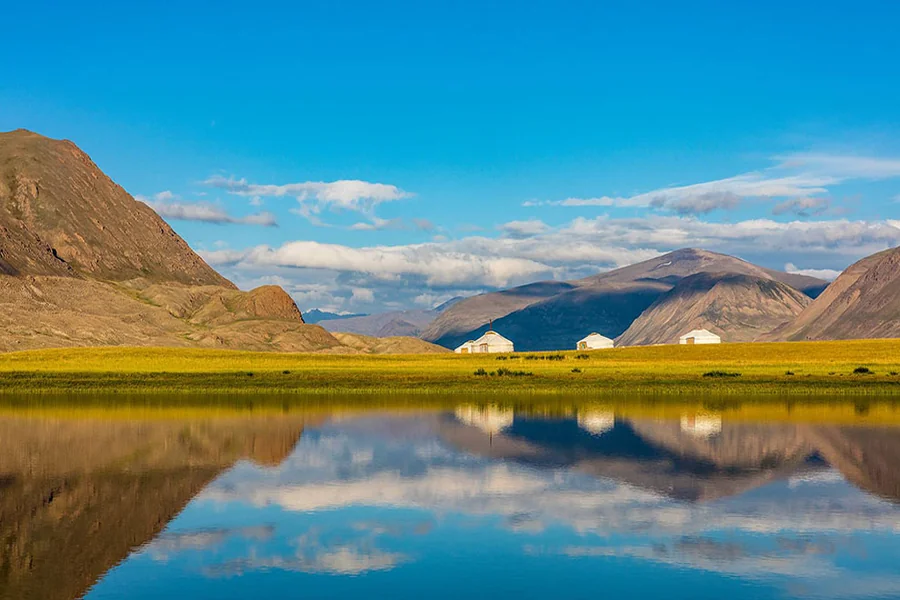
Nestled between Russia and China lies a land where ancient traditions meet endless horizons, where nomadic herders still live much as their ancestors did centuries ago. Mongolia offers travelers something increasingly rare in our modern world: a genuine escape into a landscape and culture that remains largely untouched by mass tourism. This vast country delivers experiences you simply cannot find anywhere else on Earth.
A Landscape Unlike Any Other
Mongolia’s geography is breathtaking in its diversity and scale. The country spans over 600,000 square miles, yet is home to only about 3 million people, making it the most sparsely populated nation on the planet. This means you can travel for hours without seeing another soul, surrounded only by rolling steppes, dramatic mountain ranges, or the otherworldly dunes of the Gobi Desert.
The sheer emptiness becomes its own attraction. Where else can you stand and see nothing but natural landscape stretching to the horizon in every direction? The Gobi Desert alone covers nearly a third of the country, offering everything from singing sand dunes to dinosaur fossil beds that have remained undisturbed for millions of years.
Living History Through Nomadic Culture
Perhaps Mongolia’s most distinctive feature is its living nomadic culture. Approximately 30% of Mongolians still maintain a traditional nomadic lifestyle, moving their gers (traditional felt tents) with the seasons to find fresh pasture for their livestock. This isn’t a museum exhibit or cultural performance; it’s genuine daily life continuing as it has for millennia.
Visitors have the unique opportunity to stay with nomadic families, sharing meals, learning about their customs, and experiencing their legendary hospitality firsthand. You’ll discover that the nomadic lifestyle isn’t primitive but rather a sophisticated adaptation to Mongolia’s challenging environment, requiring deep knowledge of weather patterns, animal husbandry, and sustainable land use.
The Legacy of Genghis Khan
Mongolia’s historical significance cannot be overstated. This was the birthplace of Genghis Khan, whose empire once stretched from Korea to Hungary, becoming the largest contiguous land empire in history. The Mongolian spirit of independence and warrior culture still permeates the national character today.
Throughout the country, you’ll encounter monuments, museums, and archaeological sites that bring this remarkable history to life. The giant statue of Genghis Khan on horseback, standing 130 feet tall on the steppes east of Ulaanbaatar, serves as a powerful reminder of Mongolia’s world-changing past. When exploring Mongolia tours, you’ll find that understanding this historical context enriches every aspect of your journey.
Festivals That Celebrate Ancient Traditions
Naadam, Mongolia’s most important festival, showcases the “three manly games” of wrestling, horse racing, and archery. Held every July, this isn’t a tourist attraction but a genuine national celebration where competitors from across the country demonstrate skills passed down through generations. The atmosphere is electric, authentic, and utterly captivating.
Beyond Naadam, numerous smaller festivals throughout the year celebrate everything from eagle hunting in the west to ice festivals in winter. These events provide windows into cultural practices that have survived intact despite the pressures of modernization.
Wildlife Encounters in Remote Wilderness
Mongolia serves as sanctuary to species found nowhere else or in very few other places. The Gobi Desert hosts the last remaining wild Bactrian camels, numbering fewer than 1,000 individuals. The mountains of western Mongolia are home to snow leopards, while the steppes support vast herds of Mongolian gazelles.
Przewalski’s horse, the only truly wild horse species, was extinct in the wild until successful reintroduction programs in Mongolia brought them back. Seeing these stocky, stripe-legged horses running free across the grasslands represents one of conservation’s greatest success stories.
Unparalleled Stargazing Opportunities
With minimal light pollution and vast open spaces, Mongolia offers some of the world’s best stargazing. On clear nights, the Milky Way stretches overhead like a luminous river, and you can see thousands of stars invisible in most populated areas. The silence and darkness create a profound connection to the cosmos that our ancestors knew but modern life has stolen from most of us.
Conclusion: A Journey Beyond the Ordinary
Mongolia challenges travelers to step outside their comfort zones and embrace a radically different way of experiencing the world. It’s not about luxury hotels or carefully curated experiences, but about authentic encounters with nature, culture, and history in their purest forms. This is travel that transforms rather than simply entertains, offering perspectives and memories that will stay with you long after you’ve returned home. For those willing to venture off the beaten path, Mongolia delivers rewards beyond measure.