

Energy-efficient exterior solutions for commercial properties include materials, designs, and technologies that lower energy use, improve indoor comfort, and cut running costs. These upgrades help businesses save money while supporting a more sustainable future.
From high-performance insulation to smart glass, the aim is to build a tight exterior shell that blocks outdoor heat and cold, easing the load on heating and cooling systems. For owners in busy cities, working with experienced construction companies in New York can be invaluable for handling these upgrades the right way.
These solutions focus on performance as well as appearance, blending function and sustainability into the building’s outer shell. Good choices start with the right materials and look at more than just upfront price. Long-term performance, maintenance needs, and environmental impact also matter.
Since the exterior is the first shield against weather, improving its energy performance is a smart move that pays off over time.
Why Is Exterior Energy Efficiency Important for Businesses?
Exterior energy efficiency has a big impact on business costs. Large offices, retail stores, and warehouses use a lot of energy, driven by heating, cooling, and lighting. A weak building envelope allows energy to escape, pushing utility bills higher and reducing profit.
On the other hand, investing in energy-smart exteriors can cut electricity use by a large amount and create steady savings year after year.
There are comfort gains too. Better insulation and tighter construction reduce drafts, hot and cold spots, and outside noise. This can boost tenant satisfaction and reduce vacancies.
Also, more investors and tenants care about sustainability, so energy-efficient buildings stand out, support environmental goals, and improve a company’s public image. Taking steps now also prepares buildings for stricter energy rules ahead.
What Factors Influence Exterior Energy Performance?
Many factors drive a commercial building’s exterior energy performance. Key points include:
- Material choice: Different siding and roofing systems have different levels of insulation, heat storage, and reflectivity. For example, EIFS (Exterior Insulation and Finish Systems) adds a continuous layer of insulation that cuts thermal bridging and energy loss.
- Building design and orientation: Thoughtful layouts use sunlight for heat and light while reducing unwanted heat gain in summer. Overhangs, shading, and window placement all affect energy flow.
- Installation quality: Poorly installed windows, doors, and cladding can leak air and create thermal bridges, undoing the benefits of advanced materials. By contrast, professional commercial door installation ensures a precision fit that maximizes energy retention and protects your long-term investment.
- Moisture control: Water intrusion can damage insulation and structure, raising energy use and repair costs. Good drainage and vapor control are key.
What Are the Benefits of Energy-Efficient Exterior Upgrades?
Energy-efficient exterior upgrades offer wide-ranging benefits that go far beyond short-term savings. They affect daily operating costs, long-term value, tenant comfort, and environmental impact.
For many properties, these projects are a smart long-term investment that helps them compete and perform well for years — especially when handled by experienced teams like Nova Construction Services.
Taken together, these benefits make a strong case for putting exterior energy improvements high on the priority list. This is about building strong, valuable, responsible spaces that can do well for decades.
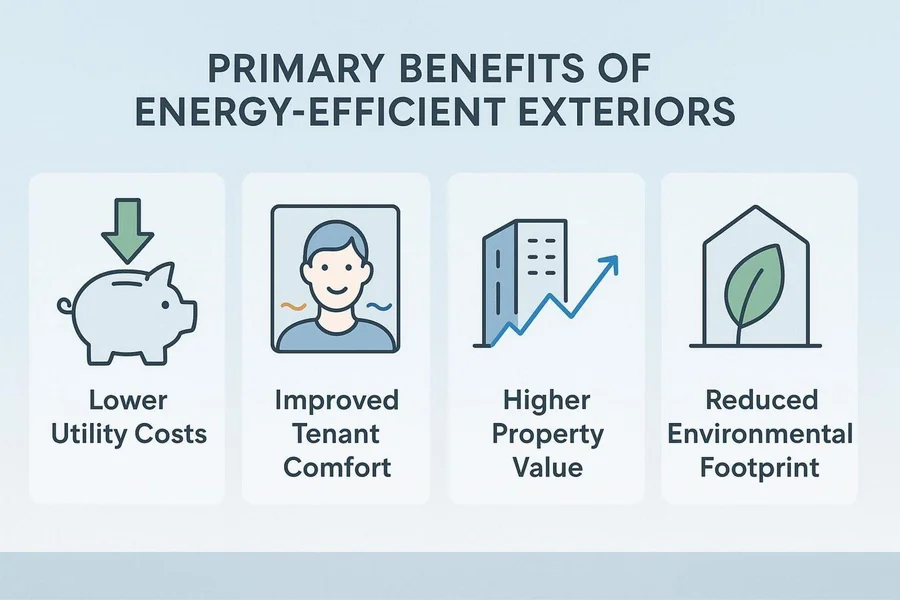
Reduced Utility Bills and Operating Costs
One of the clearest benefits is lower utility and operating costs. A better building envelope reduces heating and cooling demand. For example, modern window systems with low-E coatings and insulated frames can cut utility costs by 25-30%. Efficient lighting can reduce electricity use by up to 75%, and smart HVAC controls can trim energy use by 10-30%.
These savings add up over the life of the building. While exterior upgrades deliver long-term efficiency gains, businesses can also make immediate savings by reviewing and switching their tariff through a Utility Bidder comparison service — reducing what you pay per unit before a single wall has been touched. Using less energy also reduces strain on mechanical systems, which can extend their service life and cut maintenance costs. This direct impact on expenses makes energy upgrades a smart way to improve the bottom line.
Improved Occupant Comfort and Indoor Climate
Energy-smart exteriors also lift comfort inside. A well-insulated, well-sealed envelope reduces drafts, removes cold zones near windows, and keeps temperatures steady. This makes workspaces more pleasant for tenants, staff, and customers.
High-performance glazing reduces glare while keeping daylight, creating a better visual environment. Cleaner air often follows from better ventilation and newer systems. In noisy areas, systems like EIFS can help dampen outside noise, adding another layer of comfort.
Lower Maintenance and Improved Durability
Many high-performance exterior materials are tough and need little upkeep. Modern products often stand up to harsh weather, resist cracking, fading, and moisture, and clean up easily. Fiber cement siding, for example, resists fire, insects, and rot, and only needs occasional washing.
EIFS (synthetic stucco) is long-lasting and resists cracking, fading, and moisture. Roofing like clay tile, concrete tile, and slate can last for a century or more. Long life and low upkeep reduce repair and replacement costs, freeing budgets for other needs.
Increased Property Value and Marketability
Energy-focused exterior upgrades can raise building value and market appeal. Properties with strong energy performance often sell and lease for more. LEED-certified buildings, for example, may achieve rental income increases up to 20%, according to the U.S. Green Building Council.
Investors like these assets because they cost less to operate and draw more tenant interest. A refreshed, energy-smart façade also boosts curb appeal and helps attract high-quality tenants who will pay a premium for sustainable space. This can lead to higher lease rates, fewer vacancies, and a strong return on investment.
Improved Environmental Impact and Sustainability
Energy-efficient exteriors also cut environmental impact. Commercial buildings contribute a large share of global emissions. Upgrades that reduce energy use lower a building’s carbon footprint and support climate goals.
Cool roofs, green roofs, and high-performance insulation directly cut energy demand and emissions. Many energy-smart materials are sourced responsibly, can be recycled, or last longer, creating less waste. This helps the planet and supports a strong corporate social responsibility (CSR) profile that many tenants, employees, and investors value.
Which Exterior Materials Improve Energy Efficiency in Commercial Buildings?
Today’s materials focus more on performance and sustainability than ever before. The right choices can block heat, reflect sunlight, and provide insulation, helping keep indoor spaces comfortable while cutting energy use. This is about more than looks; it’s about building a strong outer shell that works well through all seasons.
Choosing the right mix depends on climate, design goals, budget, and long-term performance. Getting all pieces to work together as one tight envelope is the best way to get the full savings.
| Material/System | Main Benefit | Typical Upkeep | Typical Lifespan |
| Insulated Metal Panels | Strong insulation and solar reflectivity | Low; occasional cleaning | 30-50 years |
| EIFS | Continuous insulation; moisture control options | Low; periodic checks and cleaning | 30+ years |
| Cool/Reflective Roofs | Reflects sunlight; lowers cooling load | Low to moderate; coating renewal as needed | 20-30+ years (system-dependent) |
| High-Performance Glazing | Cuts heat gain/loss; reduces glare | Low; routine cleaning | 20-30+ years |
| Green Roofs/Living Walls | Extra insulation; cools air; reduces heat island | Moderate; irrigation and plant care | Varies by system and plant type |
Insulated Metal Panels and Cladding
Insulated metal panels (IMPs) and metal cladding are popular for their strength, long life, and modern look. Aluminum and steel siding resist fire, rot, and pests, and usually need little maintenance. Metal also reflects solar heat, helping reduce cooling costs in hot weather.
Some metal systems include built-in insulation that improves thermal performance even more. Panelized metal can cover large wall areas quickly, adding R-value and creating a clean, consistent finish. These systems often combine durability, low upkeep, and energy savings over time.
High-Performance EIFS (Exterior Insulation and Finish Systems)
EIFS, or synthetic stucco, uses a foam insulation board, a base coat with mesh, and a textured finish. The foam creates a continuous insulation layer that cuts thermal bridging and energy loss, keeping indoor spaces more stable in winter and summer.
EIFS is durable and resists cracking, fading, and moisture. Many systems include drainage to move water out, lowering the risk of mold or structural damage. EIFS also offers a wide range of finishes, textures, and colors, making it a flexible choice for many building styles.
Cool Roofs and Reflective Roofing Systems
Cool roofs and reflective systems are especially helpful in warm regions. These roofs reflect more sunlight and absorb less heat than dark roofs, which keeps buildings cooler. Options include reflective coatings, tiles, and membranes that lower heat transfer into the building and reduce air-conditioning use.
Cool roofs can also lower ambient temperatures in cities by reducing heat build-up on surfaces. Many of these systems hold up well against UV exposure, which can also reduce long-term maintenance needs. Property managers in areas that experience seasonal wear often seek siding repair Roswell GA to keep their exterior systems performing efficiently without costly replacements,
High-Performance Glazing and Dynamic Glass
Windows are common weak points in the envelope. High-performance glazing uses two or three panes, gas fills like argon or krypton, and low-E coatings that reflect infrared light. This setup reduces heat loss in winter and heat gain in summer.
Dynamic, or smart, glass goes further by darkening in bright sun to cut glare and solar heat. This can be used in new builds or retrofits. Triple-pane units are best for extreme climates, while well-specified double-pane systems work well in milder areas.
Green and Living Wall Systems
Green roofs and living walls add plants to rooftops and façades. A green roof adds insulation and lowers rooftop temperatures, helping keep the building cooler in warm months and warmer in cold months. It also helps reduce urban heat island effects.
Living walls can cool nearby air through plant evapotranspiration and add insulation on façades. They look great, support biodiversity, and can improve air quality. They do require specific structure, drainage, and maintenance, but the gains in comfort and energy use can be strong.
Which Design Trends and Innovations Drive Exterior Energy Efficiency?
Commercial building design keeps changing, with strong momentum toward low energy use and better comfort. New ideas are not just about looks. They focus on how buildings work with the sun, wind, and weather to use less energy while keeping people comfortable. Smarter systems and integrated designs are now common goals.
The push is to build spaces that respond to their surroundings and support both people and the environment.
Architectural Panel Systems and Prefabrication
Architectural panels made from resin, metal, or composites help cover large areas fast and add insulation value. Off-site prefabrication improves quality, cuts waste, and speeds up installation, which means less downtime for tenants and businesses.
Many panel systems are lighter than brick or concrete, which can simplify labor and speed work. Their insulation benefits also lower operating costs and improve comfort. This approach reduces weather exposure during construction and supports steady project schedules.
Integration of Passive Design Strategies
Passive design reduces energy needs through smart layout and construction choices rather than heavy reliance on mechanical systems. Key moves include placing windows to use winter sun, adding shading and overhangs to block summer heat, and building airtight walls and roofs with high insulation levels.
For example, south-facing glazing can collect helpful winter sun, while north-facing areas focus on insulation. Buildings that follow Passive House rules often use up to 75% less energy for heating and cooling than standard buildings. These methods work well in both new projects and retrofits.
Natural and Sustainable Material Use
More projects now use natural and low-impact materials. Wood cladding brings warmth and can insulate well when sourced responsibly. Natural stone offers a lasting, low-maintenance look that also helps with thermal performance.
Builders are also choosing materials that take less energy to make and ship, and that can be recycled or break down safely at end of life. This reduces environmental impact and often leads to healthier, longer-lasting buildings. Proper moisture barriers and anchoring keep these materials performing well over time.
Smart Technologies for Dynamic Exteriors
Smart tech is changing how exteriors respond to weather and sun. Dynamic glass adjusts tint to control heat and glare. Sensors can manage exterior shades, vents, and other systems based on weather data and occupancy.
These tools help buildings save energy hour by hour while keeping interiors comfortable. Careful planning and coordination with HVAC and lighting make these systems work their best, and the long-term savings and comfort gains can be substantial.
How Do Building Codes, Incentives, and Certifications Affect Exterior Upgrades?
Planning energy-efficient exterior work is not just about picking materials and designs. It also means working through building codes, government incentives, and green certifications. These programs shape budgets, timelines, and outcomes, and they guide better building practices.
For any owner planning exterior energy upgrades, a clear grasp of these rules and programs is a key part of getting strong results and better returns.
Relevant Energy Codes and Regulations
Energy codes are getting stricter and set minimum standards for new builds and major renovations. Many jurisdictions now require higher insulation levels, better window performance, tighter air sealing, and strong overall envelope performance. Missing these standards can cause delays, fines, or occupancy issues.
Meeting or exceeding current codes is both a legal duty and a smart hedge against tougher rules later. Upgrading now can prevent expensive fixes in the future. Keeping up with local, state, and national rules is an early step in any plan.
Available Government Incentives and Rebates
Many agencies offer incentives, rebates, and tax benefits to support energy upgrades. These programs help reduce upfront costs and make projects easier to fund. Energy Star and the Commercial Buildings Energy Efficiency Tax Deduction are well-known examples with real financial value.
Support can include grants, tax credits, low-interest loans, or rebates on approved products. Check federal, state, and local options, since programs vary by region. Using these benefits can shorten payback periods and improve overall returns.
LEED, BREEAM, and Green Building Certifications
Green certifications like LEED and BREEAM are strong markers of sustainability performance. While not always required, they can give properties a market edge and show real commitment to environmental goals. LEED covers energy, water, air quality, and material choices, many of which tie directly to the exterior.
BREEAM also rates energy, water, and waste performance. These badges attract tenants who prefer greener spaces and can support higher rents and values. The process takes planning and budget, but long-term gains-better reputation, fewer vacancies, and access to green financing-often outweigh the initial cost.
What Is the Process for Planning and Implementing Exterior Energy Retrofits?
Starting an exterior energy retrofit for a commercial property calls for careful planning and organized execution. It involves several stages, and a step-by-step approach helps deliver good results, limit disruption, and capture long-term benefits. From the first review to final construction, each stage plays a role in improving building performance.
A well-run process with expert guidance lays the groundwork for a durable, energy-smart exterior that supports both cost control and sustainability.
Reviewing Existing Building Envelope Performance
The most important first step is a thorough review of the current envelope. This means checking walls, roof, windows, and doors for energy loss, moisture issues, and any structural problems. Tools like thermal imaging, blower door tests, and visual inspections can find weak insulation, air leaks, and thermal bridges.
The review often includes foundation conditions, wall systems, and potential hazards like asbestos or lead paint in older buildings. Knowing the current state helps set a clear scope, avoid surprises, and pick solutions that fit the building’s real needs. This baseline drives smart planning and design.
Prioritizing Upgrades for Maximum ROI
After the review, rank upgrades by return on investment and overall impact. Some upgrades pay back faster than others. Energy-efficient windows, for example, often deliver strong savings on heating and cooling. Façade updates that refresh appearance can also lift rental appeal and value right away.
Balance upfront costs with long-term savings, lower maintenance, and potential value growth. A simple cost-benefit analysis for each option helps direct funds to the biggest wins first. Smart sequencing addresses the most impactful items early.
Handling Permitting and Compliance Steps
Permitting and compliance can take time. Simple exterior refreshes may take weeks for approval, while larger façade work can take months. Architects and engineers help align plans with current codes, energy standards, and accessibility rules such as ADA.
Submit permit applications early and keep in touch with building departments about status. Zoning rules and design standards, especially in historic areas, may limit changes and need careful review. A proactive general contractor can flag issues, prepare documents, and manage approvals to reduce delays and keep the project within the rules.
Timeline and Construction Sequence Considerations
Set a realistic schedule and sequence to limit business disruption. Exterior work often follows this path: pre-construction prep (final orders, site protection), selective demolition, structural repairs, waterproofing and insulation upgrades, then installation of cladding, windows, and doors.
Finish work includes exterior lighting, coatings, and signage. Many teams phase projects to complete weather-sensitive tasks first, then move to protected areas and finishes. Build in buffer time for permitting delays, material lead times, hidden damage found during demolition, and weather. Good scheduling and risk planning help keep the project on track.
Cost, ROI, and Long-Term Value of Energy-Efficient Exteriors
Questions about energy-efficient exteriors often center on cost, ROI, and long-term value. While upfront expenses can be higher than standard options, it helps to view these projects as long-term investments that reduce running costs, improve comfort, and boost property value.
Choosing energy-smart exteriors shows forward-thinking property management and supports both financial health and environmental goals for years to come.
Budgeting: Upfront Costs Versus Operational Savings
Smart budgeting weighs upfront costs against future savings. High-performance materials and systems may cost more at first, but lower energy and maintenance bills usually pay that back over time. For instance, low-E, insulated-frame windows can trim utility costs by 25-30% per year.
Look beyond purchase and installation to long-term heating, cooling, lighting, and maintenance savings. Set aside a 10-20% contingency for surprises during construction. With a long-term view, ongoing savings often outweigh the initial spend.
Evaluating Return on Investment for Different Solutions
Different upgrades deliver different paybacks. Façade refreshes can shift tenant perception and raise value quickly, sometimes adding 15-20% in competitive markets. Energy-efficient windows also offer clear, measurable bill savings and better comfort.
Cool roofs and high-performance EIFS may have longer paybacks but bring strong long-term savings and environmental benefits. Look at direct energy savings plus indirect gains like higher rents, better tenant retention, and lower maintenance. Energy audits and simple financial models can help compare choices and match them to your goals and risk limits.
Access to Green Financing and Funding Options
Growing interest in sustainability has opened more funding paths. Many lenders offer green loans or bonds for energy projects, often with better rates or terms than standard financing. These tools can make it easier to cover retrofit costs.
Public incentives, rebates, and tax benefits also help cut upfront costs. Combining green financing with available programs can shorten payback periods and improve returns, while also signaling a commitment to sustainable investment that many tenants and investors value.
Frequently Asked Questions About Energy-Efficient Commercial Exteriors
Owners and managers often have many questions about how exterior upgrades affect costs, comfort, leasing, and value. Clear answers help make the planning and decision process easier.
Here are responses to common questions that come up during planning and design.
Do Energy-Efficient Upgrades Attract Better Tenants?
Yes. Energy-smart upgrades make properties more appealing and help attract better tenants. Many large companies aim to cut emissions and meet CSR goals, and leasing green space helps them do that.
Tenants also favor buildings with good air quality, daylight, and steady temperatures. Happier tenants are more likely to renew, which lowers turnover and vacancies. Owners of LEED-certified spaces often can charge higher rents and draw strong tenant interest in sustainable workplaces.
How Do Exterior Retrofits Impact Interior Comfort?
Exterior retrofits can greatly improve comfort. A tighter, better-insulated envelope blocks outdoor heat, cold, and drafts, creating steady indoor temperatures and fewer hot or cold spots.
EIFS adds continuous insulation that cuts thermal bridging. High-performance glazing reduces summer heat and winter heat loss while limiting glare. Some systems, like EIFS, also help reduce outside noise, which makes interiors quieter and more pleasant.
What Are the Most Maintenance-Friendly Energy-Efficient Exteriors?
Several systems offer energy savings with low upkeep. Fiber cement siding stands up to fire, insects, and rot and usually needs only occasional washing. Metal siding (aluminum or steel) is also durable and easy to clean.
EIFS is built for long life and resists cracking, fading, and moisture. Roofing made from clay, concrete tile, or slate can last a century with minimal care. Choosing materials that save energy and resist weather and wear helps reduce future repair costs.
When Should You Replace Versus Retrofit Existing Facades?
Replace the façade if it is badly worn, has structural issues, or has ongoing moisture problems. Full replacement allows a complete update using current materials and methods for strong energy performance and durability.
If the façade is sound but needs upgrades, a retrofit may cost less and still deliver strong gains. Options include adding exterior insulation, upgrading windows, or applying high-performance coatings. A focused refresh can lift first impressions and fix maintenance issues without major structural work. A thorough site review by experts helps pick the most cost-effective path.
Next Steps for Commercial Property Owners
For owners, improving exterior energy performance brings both financial and environmental rewards. The choices may feel complex, but a clear plan and expert help can turn a building into a high-performing, sustainable asset. The key is to move from planning to action.
By following the steps below, owners can move through upgrades with confidence and end up with a more energy-efficient and valuable property.
How to Choose the Right Exterior Solution for Your Building
Start by looking at climate and site conditions. A solution that works in hot, sunny regions may differ from one that fits cold, wet areas. Weigh your building’s style and design goals too. Many energy-smart materials come in a wide range of finishes, so you can match performance with the look you want.
Be clear about budget and expected ROI. Focus on upgrades that bring the best mix of upfront cost, savings, and long-term value. Also check maintenance needs and durability. Low-maintenance, long-lasting materials reduce future costs. A thorough review of your current envelope and a clear scope will guide good choices.
Getting Expert Help With Energy-Efficient Upgrades
Because these projects have many steps and sizable budgets, working with experts is a smart move. Specialized contractors, architects, and energy consultants can run detailed energy audits and envelope reviews to find the best improvement areas.
They can also recommend materials and systems, help you meet building codes, and work through incentives and certifications. A proactive general contractor can handle permits, source materials, plan the build sequence, and solve on-site problems to keep the project on budget and on schedule. With the right team, your exterior upgrade can deliver the promised energy savings and long-term value-and turn your commercial property into a high-performing, sustainable asset.