
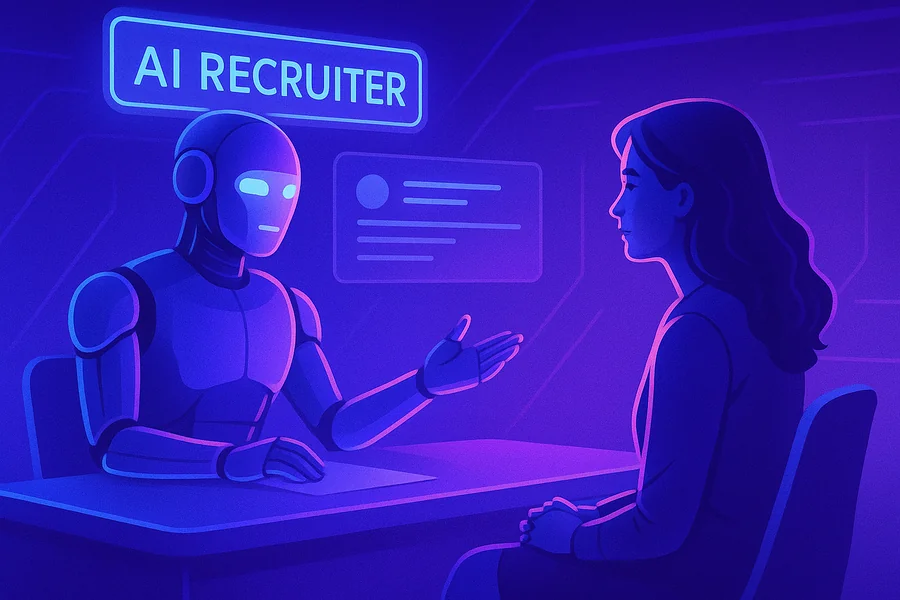
Hiring has always involved a tension between speed and quality. Recruiters are expected to move quickly, screen large volumes of candidates, maintain consistency across every conversation, and still make sound judgments about people. That combination is genuinely difficult to sustain at scale, and most hiring teams know it.
Over the past few years, automated screening tools have moved from experimental to operational in many organizations. The shift isn’t driven by novelty — it’s driven by real pressure. Recruiter capacity hasn’t grown at the same pace as hiring volume, and the cost of a slow or inconsistent screening process is measurable: lost candidates, misaligned hires, and extended vacancies that affect team performance.
What’s changed more recently is the quality and specificity of what these tools can do. The question most recruiters are now sitting with isn’t whether automation has a role in hiring — it’s how to use it without creating a process that candidates find cold, impersonal, or disconnected from the role they’re actually applying for. That’s a legitimate concern, and it deserves a grounded answer.
What an AI Interviewer Actually Does in a Hiring Workflow
An ai interviewer is a structured screening tool that conducts candidate interviews autonomously, typically through a combination of voice or text interaction, role-specific questioning, and recorded or evaluated responses. Unlike a static application form or a multiple-choice screening quiz, it engages candidates in a way that mirrors the early stages of a real conversation — asking follow-up prompts, capturing nuanced responses, and applying consistent evaluation criteria across every candidate who goes through the process.
The operational value isn’t simply about saving time, though that’s a real outcome. The deeper value is standardization. When two recruiters conduct phone screens independently, they rarely ask exactly the same questions in exactly the same way. Their attention varies. Their follow-up depends on how the conversation is going. That inconsistency isn’t a failure of professionalism — it’s a natural result of human conversation. But it creates a problem when organizations are trying to compare candidates fairly or audit their screening process later.
How Consistency Changes the Screening Outcome
When every candidate answers the same structured questions under the same conditions, the data collected becomes genuinely comparable. Recruiters can review responses side by side, identify patterns across a candidate pool, and make informed decisions based on substance rather than recall or impression. This is particularly relevant for high-volume roles where a recruiter might otherwise conduct dozens of calls in a single week, with quality inevitably declining by the end of that period.
Consistency also matters for fairness. Candidates who interview at the beginning of a hiring cycle are evaluated under different conditions than those who come in later, when the recruiter’s benchmark has shifted or their energy has dropped. A structured ai interviewer removes that variability — not because human judgment is unimportant, but because removing unnecessary inconsistency allows human judgment to be applied more deliberately where it counts.
Where Human Judgment Remains Essential
Automation handles repetition well. It does not handle ambiguity, emotional nuance, or organizational fit in the same way a skilled recruiter does. The goal of using an AI-assisted screening process is not to replace the recruiter’s role — it’s to redistribute where that role is applied. Recruiters who understand this distinction use these tools more effectively and maintain better candidate experiences throughout.
There are specific points in the hiring process where human involvement is not optional. Final-stage interviews, offer conversations, and any discussion of compensation or career trajectory require a person who can read tone, respond to concern, and represent the organization authentically. Candidates making significant career decisions want to feel that a real individual is engaged in their evaluation — not just a system processing their responses.
Reading What Automated Screening Cannot Fully Capture
Structured screening tools evaluate what candidates say and how they say it within a defined framework. What they don’t capture well is the context behind an answer. A candidate who gives a brief response to a question about conflict resolution may be reserved by nature, may have misunderstood the prompt, or may have a relevant experience they didn’t think to mention because the phrasing didn’t connect with them. A recruiter reviewing that response in isolation might flag it as a concern. A recruiter who then speaks with that candidate directly might find it entirely unremarkable.
This is why the handoff between automated screening and human review matters so much. The output of an AI screening process should be treated as structured information that informs the recruiter’s judgment — not as a verdict. Organizations that use these tools most effectively build clear review protocols that ensure recruiters engage with the data critically before making advancement decisions.
Designing a Process That Candidates Experience as Fair
Candidate experience during screening is not a secondary concern. Candidates who feel that a process is opaque, impersonal, or poorly designed will disengage — and they will share that experience. In industries where talent is competitive, a poorly designed screening process is a direct liability. The way an organization handles the first formal interaction with a candidate signals something real about how that organization operates.
Transparency is the most important factor in making an automated screening process feel fair. Candidates should know before they begin that they are completing an AI-assisted interview, what the format will involve, how long it is expected to take, and when they can expect to hear back. According to research published by the Society for Human Resource Management, candidates consistently rate clear communication about process and timeline as one of the top factors in their perception of an employer during recruitment.
Setting Expectations Before the Interview Begins
The way an organization communicates about an automated screening step shapes how candidates approach it. If candidates receive a link to a screening tool with minimal explanation, many will approach the interaction with suspicion or uncertainty. That affects how they perform, which affects the quality of the data collected, which ultimately affects the recruiter’s ability to make a sound decision.
A straightforward pre-interview communication — one that explains the purpose of the format, confirms that a real person will review responses, and provides a point of contact for questions — changes that dynamic significantly. It reframes the automated interview as a considered part of a structured process rather than a bureaucratic hurdle. That framing is honest, because that’s exactly what it is when used well.
Integrating AI Screening Into an Existing Recruitment Process
Most organizations don’t replace their entire hiring process when they introduce automated screening. They add it at a specific point — usually between application review and the first live recruiter conversation. Where exactly it fits depends on the role, the volume, and the organization’s existing workflow, but the logic is similar across most use cases: use structured screening to reduce the candidate pool to a manageable number before committing recruiter time to individual conversations.
The integration point matters because it affects what the tool is expected to accomplish. If automated screening is introduced too early — before any application review — it may create a poor experience for candidates who haven’t been assessed as minimum-qualified. If it’s introduced too late, after significant recruiter time has already been invested, it doesn’t deliver the efficiency benefit it’s capable of providing.
Aligning Screening Questions With the Role, Not the Template
Generic screening questions produce generic data. Recruiters who get the most value from AI-assisted screening invest time in building question sets that reflect the actual requirements of the role — not just the job title or department. This means engaging with hiring managers before the process begins to understand what they’re really trying to evaluate, which behavioral indicators matter, and what a strong early-stage candidate actually looks like for this specific opening.
When the screening questions are well-calibrated, the responses are more informative and the review process is faster. When they’re too broad or templated, recruiters end up with a large volume of responses that don’t meaningfully differentiate candidates — which defeats the purpose of using the tool in the first place.
Managing Bias Responsibly When Automation Is Involved
Any hiring process carries the risk of bias, whether human or automated. Automated tools are not inherently more objective — they reflect the design choices, training data, and evaluation criteria built into them. Recruiters and HR leaders have a responsibility to understand how the tools they use make evaluations and to monitor outcomes for patterns that might indicate disparate impact across candidate groups.
This is not an argument against using these tools. It’s an argument for using them thoughtfully. Regular audits of screening outcomes, clear documentation of evaluation criteria, and human review of borderline decisions are practices that responsible organizations apply regardless of whether automation is involved. When automation is involved, those practices become more important, not less, because the scale of impact is greater.
Closing Thoughts
The concern that using an ai interviewer will depersonalize the hiring process is understandable, but it’s not inevitable. The outcome depends almost entirely on how the tool is positioned within the broader process and how recruiters engage with what it produces.
Used well, automated screening creates the conditions for better human conversations — not fewer of them. It removes the low-value repetition from a recruiter’s workload and concentrates their time on the interactions that actually require their judgment, experience, and ability to build relationships. Candidates who advance through a well-designed process arrive at their first human conversation better informed about what to expect, and recruiters arrive better prepared with structured data to work from.
The human touch in hiring isn’t located in every touchpoint of the process. It’s located in the moments that matter: when a candidate is weighing a decision, when a conversation needs to go somewhere a script can’t anticipate, when the organization needs to show that it sees a person and not just a profile. Protecting those moments — by using automation to handle what automation handles well — is not a compromise. It’s good process design.