
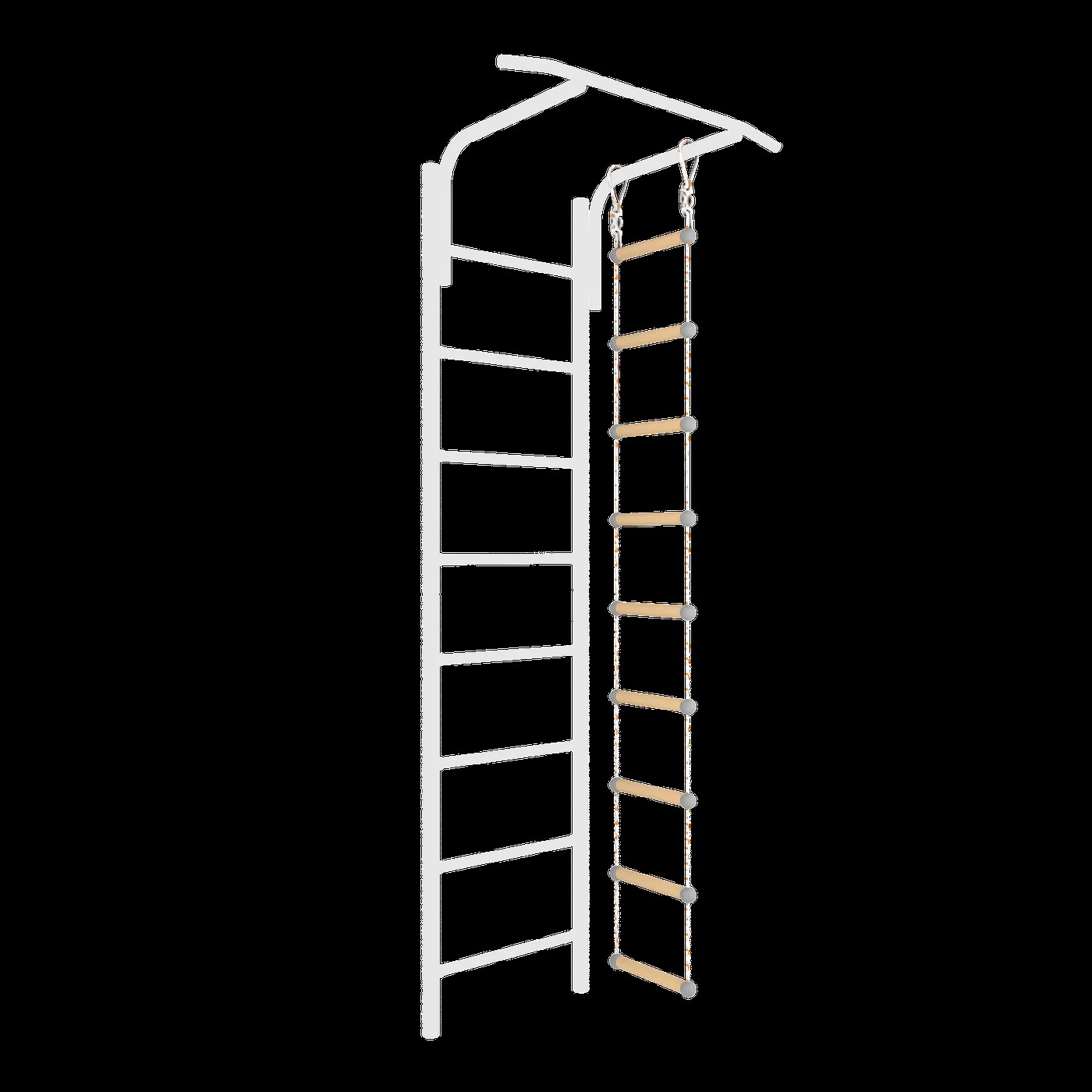
Children quickly lose interest in things that just sit there. A standard climbing wall is a great starting point, but once your toddler can do it in their sleep, they get bored. Fixed bars become as familiar as the stairs at home. They crave adventure-pirates on a storm-tossed ship or mountain rescuers.
This is where the mobile ladder with rope comes to the rescue, it’s not just a ladder, but a real attraction. It sways, it twists, and there’s no coasting on it. To climb to the very top, you need to hold on tightly and engage your whole body, from your fingers to your core. This is the perfect way to turn an ordinary game into a full-body workout that stays interesting, because each climb is a new challenge.
Wobbly Steps and Strong Grips
The key is that it never hangs perfectly still. When a rung shifts under your foot, the body has to react instantly. Your stabilizer muscles kick in to maintain balance. This is the best way to build coordination and body awareness in unusual situations.
Brainrich Kids designed all that wobble to feel safe and comfortable, down to the smallest details:
- Wood. The steps are smooth to help prevent splinters, but they are not so glossy that it turns slippery so feet can grip securely.
- Rope. The rope is thick enough and pleasant to the touch; it doesn’t dig into little hands, even when a child hangs with their full weight, which is very important for comfort.
- Size. The steps are located at such a distance that the baby has to stretch quite a bit – this encourages reach, mobility, and flexibility.
Installation: it’s not just tying a knot
It seems like hanging a rope ladder is a five-minute job. But don’t be fooled — it takes a bit of setup. To do it properly, you’ll need a bit of time (and patience).
It’s not just tossing the rope over a bar and forgetting. You need to set the height so that the steps don’t lie on the floor, but they are not too high for the first step. The most difficult thing is to get the rungs level. It often happens like this: you tied it, stepped back to check — and the ladder hangs crooked. You have to untie it, pull one side up and tie it again. It is important to make sure that every knot is cinched tight so that they don’t slip under movement when the child starts jumping actively. This is quite tedious and painstaking work, but safety directly depends on it.
Bumps, swings, and life skills
Let’s be honest: bumps can happen on a rope ladder. It keeps moving after you do. A child may misjudge the swing and hit a wall or a metal support post of the complex. A leg may slip, and hands can get tired and their grip can give out. This is normal.
Those small surprises and the fear of a rung suddenly “moving” to the side teach a child to be careful. They learn firsthand: if you don’t hold on tightly, you will fall. This experience makes your hands strong, and gives you quicker reflexes. Better to learn your limits at home, over a soft gymnastic mat, than to discover them somewhere on a tall tree outside without a safety net.
Such a simple, at first glance, accessory turns a boring corner of the room into a real adventure. And when the child finally makes it to the top, their eyes light up with pride. And this is probably the best reward for your efforts in all that setup time.