
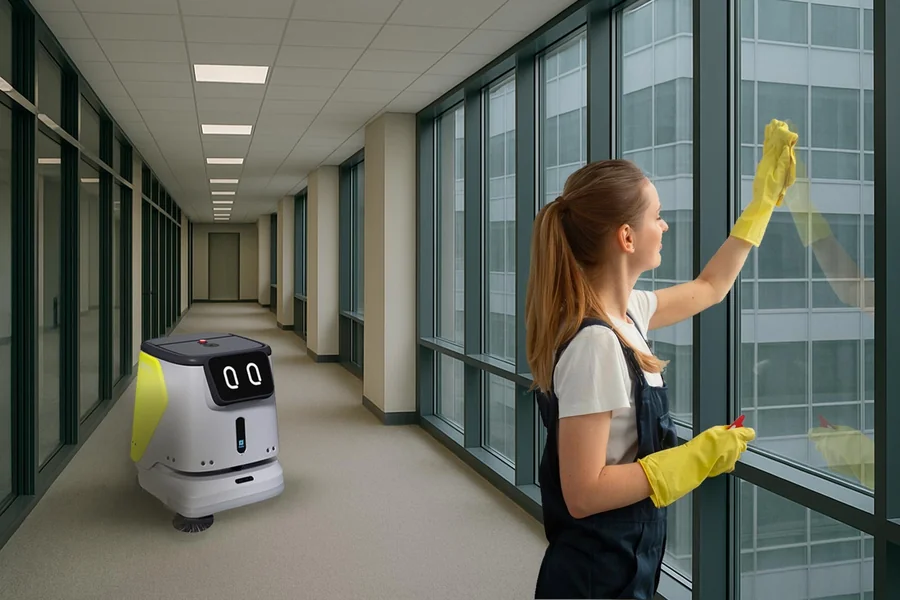
Sustainability in commercial real estate is no longer limited to energy-efficient lighting or HVAC optimization. Shopping centers are evaluating every operational process for environmental impact, including daily cleaning. Floors in malls experience constant foot traffic, food debris, moisture from entrances, and seasonal wear. Maintaining them requires both consistency and resource control.
For facility managers, the sustainability question is practical rather than theoretical. Cleaning operations consume water, electricity, chemicals, and labor hours. They influence waste generation and long-term flooring durability. As automation becomes more common in public environments, comparisons between robotic systems and traditional janitorial crews have shifted from novelty to structured evaluation.
The key issue is not which model eliminates the other. It is which approach supports measurable environmental responsibility while maintaining operational reliability.
Operational Efficiency of the Mall Autonomous Cleaning Robot
A mall autonomous cleaning robot operates on programmed routes, sensor-guided navigation, and centralized performance tracking. Unlike manual crews that rely on scheduled rounds and supervisory oversight, robotic systems follow repeatable patterns with defined coverage areas.
An overview of the mall autonomous cleaning robot highlights how route planning and water dispensing are calibrated to reduce excess use. Cleaning becomes standardized rather than dependent on individual pace or variation between shifts.
Water and Chemical Control
Traditional floor cleaning often depends on operator judgment when dispensing water and detergent. Variability can lead to overuse, especially in high-traffic areas where staff attempt to compensate for visible debris.
Robotic systems are designed to:
- Regulate water flow consistently across surface areas
- Apply cleaning solution in measured quantities
- Adjust output based on programmed surface types
This consistency can reduce resource waste over time. While manual teams can achieve similar discipline with training, robotic systems embed it into operational logic.
Reduced Recleaning Cycles
Inconsistent cleaning can lead to uneven drying or missed sections, requiring additional passes. Each additional cycle increases water and energy consumption.
Because autonomous systems track route completion digitally, coverage gaps are minimized. Reduced rework contributes to lower overall resource use.
Energy Consumption Considerations
Sustainability assessment must account for electricity use. Autonomous cleaning units rely on rechargeable batteries and charging stations.
Predictable Energy Profiles
Robotic systems operate within defined schedules and charging windows. Energy consumption is measurable and can be aligned with off-peak electricity hours where facilities support such optimization.
Traditional janitorial crews use powered equipment such as ride-on scrubbers and vacuums, which also consume electricity or fuel. The difference lies in predictability. Robotic systems generate usage data that allows facility managers to quantify energy input relative to cleaning output.
The U.S. Environmental Protection Agency emphasizes measurement and monitoring as central to sustainable facility management. Data visibility improves the ability to track environmental impact over time.
Labor Sustainability and Workforce Impact
Sustainability extends beyond environmental metrics. Workforce health and stability are integral components.
Physical Strain Reduction
Continuous manual floor cleaning involves repetitive motion and prolonged standing. In large shopping centers, crews may cover extensive square footage daily.
Autonomous systems assume repetitive navigation tasks, allowing staff to focus on:
- Spot cleaning
- Waste management
- Restroom sanitation
- Customer-facing assistance
Reducing repetitive strain contributes to workforce sustainability by lowering fatigue and injury risk.
Skill Reallocation
Rather than eliminating labor, robotic systems can shift roles toward supervision, troubleshooting, and facility oversight. This transition may support longer-term employment stability within evolving facility management structures.
Chemical Usage and Environmental Footprint
Chemical runoff and detergent overuse present environmental concerns in large-scale cleaning operations.
Precision Application
A mall autonomous cleaning robot dispenses solution according to programmed flow rates. This minimizes the likelihood of excess chemical residue on surfaces.
Manual crews can exercise care, but consistency varies between individuals and shifts. Embedded control systems standardize application across time.
Lower chemical consumption contributes to:
- Reduced wastewater treatment load
- Lower storage requirements for cleaning supplies
- Decreased risk of slippery residue affecting safety
Floor Longevity and Material Preservation
Sustainability includes protecting assets from premature degradation. Over-wetting or aggressive scrubbing can reduce floor lifespan.
Controlled Pressure and Repetition
Robotic cleaning systems operate with calibrated pressure and repeated coverage patterns. This reduces the chance of uneven wear compared to inconsistent manual pressure.
Preserving floor materials supports sustainability by delaying replacement cycles. Reduced replacement frequency decreases material consumption and associated environmental costs.
Waste and Consumable Management
Traditional cleaning methods may involve disposable mop heads, cloths, or pads that generate solid waste.
Autonomous systems typically use reusable components with defined maintenance schedules. While consumables are still required, usage patterns are more predictable and measurable.
Sustainability improves when facilities can forecast and control material inputs rather than reacting to variable demand.
Hybrid Models and Balanced Sustainability
A direct comparison between a mall autonomous cleaning robot and traditional janitorial crews oversimplifies operational reality. Most sustainable models combine both approaches.
Robots manage repetitive, large-area cleaning. Human teams address complex spills, detail work, and sanitation tasks requiring judgment.
This hybrid model can:
- Lower total water and chemical consumption
- Maintain high cleanliness standards
- Improve workforce health
- Enhance data visibility for environmental reporting
Sustainability, in this context, emerges from structured coordination rather than complete replacement.
Conclusion
The sustainability comparison between a mall autonomous cleaning robot and traditional janitorial crews depends on implementation discipline. Autonomous systems offer measurable advantages in water control, chemical precision, route consistency, and data tracking. These factors contribute to environmental efficiency and workforce sustainability.
However, long-term impact depends on integration. Facilities that combine structured robotic coverage with trained human oversight often achieve the most balanced outcome.
As shopping centers continue evaluating sustainable operations, reviewing structured operational frameworks such as those outlined in the mall autonomous cleaning robot resource can help decision-makers assess environmental trade-offs within a systems perspective.
Sustainability is not defined by technology alone. It is defined by consistency, measurement, and disciplined execution across every aspect of facility management.