
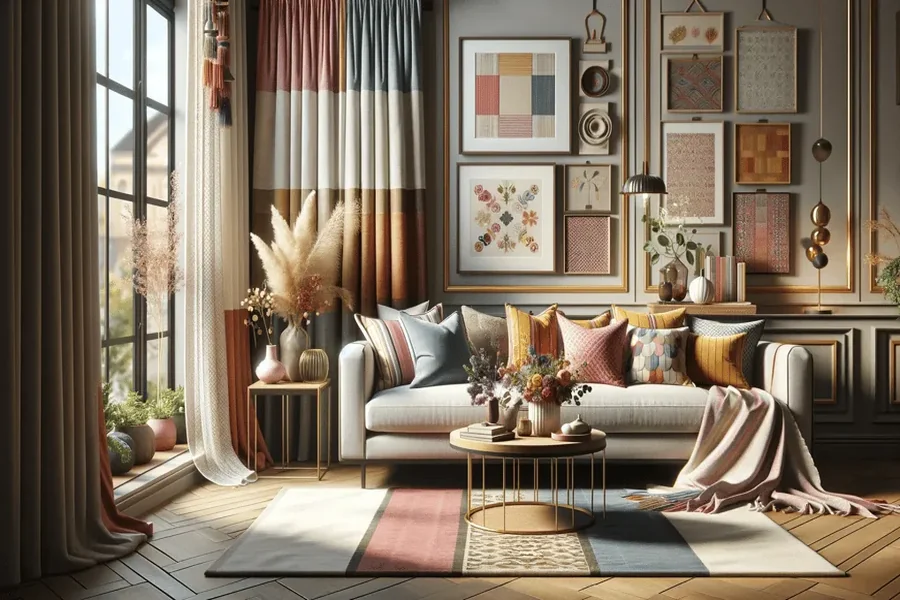
Luxury textiles have long shaped how interiors are perceived, experienced, and remembered. From the subtle sheen of satin to the architectural depth of jacquard, fabrics influence more than surface beauty; they affect mood, movement, acoustics, and even how space is valued. We will explore how refined textiles transform interiors by adding dimension, rhythm, and narrative without relying on excess ornamentation. In thoughtfully designed spaces, fabric becomes a visual language that connects furniture, light, and structure into a coherent whole. Drawing inspiration from heritage-driven textile houses such as Christian Fischbacher, this discussion focuses on how material choices elevate interiors through texture, craftsmanship, and intentional design, rather than trends or status. The result is an environment that feels composed, expressive, and enduring.
Material Narratives in Refined Interiors
Satin as a Tool for Light, Flow, and Visual Calm
Satin plays a critical role in interiors where light and movement are central to the aesthetic outcome. Its smooth surface reflects light softly rather than sharply, allowing spaces to feel fluid and balanced rather than rigid. When used in drapery, wall panels, or upholstered accents, satin introduces a quiet luminosity that changes throughout the day, responding to both natural and artificial light. This shifting quality prevents interiors from feeling static and adds a sense of lived-in elegance. Beyond appearance, satin also contributes to spatial harmony by softening architectural lines and hard edges.
In minimalist or contemporary settings, it counterbalances solid materials like stone, wood, or metal, creating contrast without visual conflict. Color saturation in satin fabrics appears deeper and more nuanced, which allows designers to use restrained palettes while still achieving richness. When considered as part of luxury textiles for home interior, satin contributes depth without overwhelming the space. Rather than dominating a room, it supports cohesion by gently guiding the eye across surfaces. Its role is not decorative excess but visual refinement, making it a foundational textile in elevated interior design.
Jacquard Weaves and the Architecture of Pattern
Jacquard textiles introduce structure and storytelling through woven patterns rather than surface print. This distinction is important because woven designs possess depth, shadow, and durability that printed fabrics cannot replicate. In interiors, jacquard functions almost like architectural detailing, adding rhythm and scale to large surfaces such as curtains, headboards, or statement seating. The complexity of the weave allows patterns to emerge gradually, revealing different aspects depending on distance and lighting. This layered perception encourages engagement with the space rather than immediate visual consumption.
Jacquard is particularly effective in interiors that aim to feel cultivated without appearing ornate. Subtle tonal contrasts within the weave can echo architectural motifs, historical references, or natural forms, creating continuity between fabric and structure. When used thoughtfully, jacquard anchors a room, providing visual weight and stability. It becomes a silent framework that supports other materials, proving that textiles can shape spatial identity as much as walls and furniture.
Texture as an Emotional and Sensory Experience
Luxury textiles elevate interiors by engaging more than just sight; they activate touch, sound, and emotional response. Textural variation influences how a space feels psychologically, making it warmer, calmer, or more intimate depending on the materials used. Fabrics like finely woven cottons, silks, and layered blends absorb sound, reducing echo and creating a sense of enclosure that hard surfaces cannot achieve alone. This acoustic contribution is especially valuable in open-plan interiors, where textiles help define zones without physical barriers.
Texture also affects how people interact with their environment. A space that invites touch feels welcoming and human-scaled, encouraging longer use and deeper comfort. Through deliberate textile selection, interiors gain softness without losing clarity or purpose. The interplay between smooth and tactile surfaces establishes balance, ensuring that refinement does not become sterility. In this way, textiles act as emotional mediators, shaping how occupants experience space over time rather than at first glance.
Craftsmanship, Longevity, and Design Integrity
One of the defining qualities of luxury textiles is the integrity of their construction, which directly impacts interior longevity. Fabrics produced with attention to fiber quality, weaving precision, and finishing processes maintain their appearance and performance over extended use. This durability supports sustainable design thinking by reducing the need for frequent replacement and encouraging long-term relationships with interior elements. In elevated interiors, textiles are not disposable accents but integral components of the design system.
Craft-driven production also ensures consistency in color, texture, and behavior, allowing designers to plan spaces with confidence. Over time, well-made textiles develop character rather than deterioration, aligning with interiors that value evolution instead of constant renewal. This approach fosters authenticity, where materials age alongside the space and its occupants. By prioritizing craftsmanship, luxury textiles reinforce design integrity, ensuring that aesthetic value is matched by functional resilience and ethical consideration.
Luxury textiles continue to shape interior aesthetics by offering depth, balance, and emotional resonance that extend beyond visual appeal. From the luminous calm of satin to the structural storytelling of jacquard, these materials influence how spaces function and how they are experienced daily. By emphasizing texture, pattern, and craftsmanship, designers create environments that remain relevant over time, resisting fleeting trends. Luxury in this context is not defined by status but by coherence, longevity, and sensory richness. When textiles are treated as architectural elements rather than accessories, interiors gain clarity and character, resulting in spaces that feel composed, expressive, and enduring.