
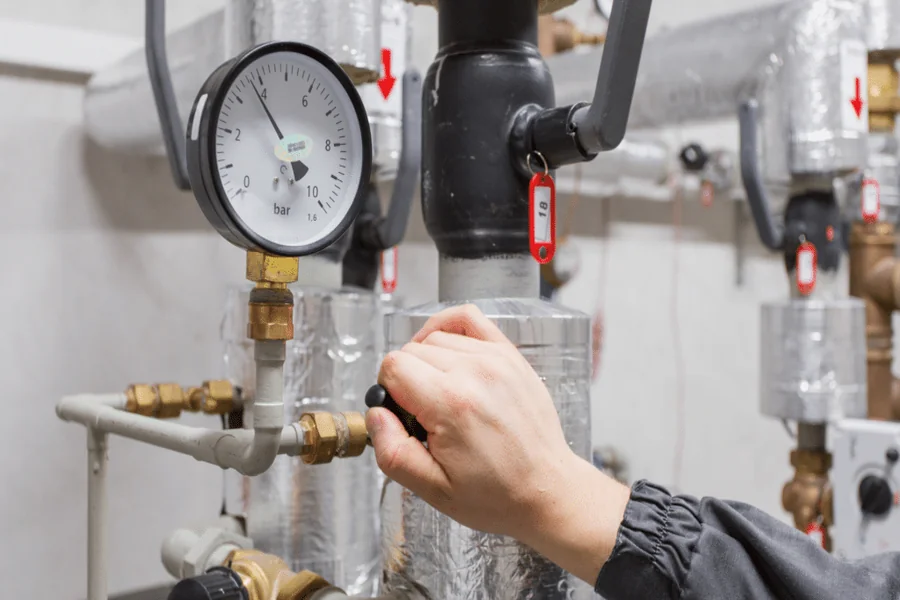
An HVAC system can run every day and still struggle to heat or cool a building properly. In many cases, the equipment is not the only issue. The air moving through the system may be encountering excessive resistance, which affects comfort, efficiency, and the long-term condition of the equipment. Static pressure helps contractors understand the hidden side of system performance. It shows how hard the blower must work to move air through filters, coils, ductwork, and registers. When contractors evaluate static pressure correctly, they gain a clearer picture of whether the system is breathing freely or fighting restrictions that reduce overall performance.
Why Pressure Tells A Story
- Following Air Resistance
Static pressure is the force the blower works against as it pushes and pulls air through the HVAC system. Contractors evaluate it because airflow is central to system performance, yet airflow cannot be judged accurately by feel alone. A room may seem to have air coming from the register, but that does not mean the system is moving the correct volume across the equipment. To understand resistance, contractors measure pressure on both the supply and return sides of the air handler or furnace using a manometer and pressure probes. These readings show how much effort the blower is using to move air through the system under actual operating conditions. The numbers are then compared with the equipment manufacturer’s rated limits, because every system is designed to operate within a certain total external static pressure range. If the reading is too high, the blower may be struggling against restrictions that reduce airflow. In many service calls, a Heating contractor uses static pressure readings to move beyond guesswork and identify whether comfort complaints are tied to airflow resistance rather than to heating or cooling capacity alone. This makes static pressure one of the most useful diagnostic indicators in residential and light commercial HVAC work, since it directly links the condition of the duct system and internal components to how the equipment performs in real time.
- Measuring Supply And Return Separately
Contractors do not stop with one combined number. They often break down static pressure into supply-side and return-side readings to see where resistance is developing. A high return pressure may indicate a clogged filter, an undersized return duct, a blocked grille, a dirty blower compartment, or a return-pathway problem elsewhere in the building. High supply pressure may indicate a restrictive evaporator coil, closed dampers, undersized supply trunks, crushed flex duct, dirty secondary heat-transfer surfaces, or other downstream airflow limitations. Looking at both sides separately helps contractors avoid vague conclusions. The total pressure matters, but the individual readings reveal where the stress is being created. For example, if the return side is relatively normal but the supply side is much higher than expected, the problem is likely occurring after the blower rather than before it. That distinction guides what the technician inspects next and reduces unnecessary part replacement or trial-and-error adjustments. Contractors usually take these measurements with the system running in normal operating mode, after confirming that basic conditions are reasonably stable. This creates a more accurate field picture than relying on visual inspection alone. Static pressure readings are valuable because they turn invisible airflow resistance into measurable information that can be traced to specific parts of the system rather than guessed at from symptoms alone.
- What High Static Pressure Reveals
When static pressure is elevated, contractors see it as a sign that the blower is working harder than the system design intended. That strain can affect both comfort and equipment operation in multiple ways. Airflow across the heat exchanger or evaporator coil may drop, which can change temperature rise, cooling performance, humidity control, and cycle behavior. Rooms may feel uneven because the system cannot deliver enough conditioned air to distant branches. Noise may increase as air is forced through restrictive passages, and blower motors may operate under more stress than necessary. Contractors often connect high static pressure to common field issues such as dirty filters, restrictive high-efficiency filters paired with undersized return systems, matted evaporator coils, closed registers, overly long or kinked flexible duct runs, or duct systems that were never sized correctly for the installed equipment. High static pressure can also explain recurring limit switch trips in furnaces, weak cooling output, and chronic comfort complaints that are often blamed on the thermostat or the equipment size. By evaluating pressure rather than assuming airflow is acceptable, contractors can identify whether the system is being choked by restrictions that force the blower into an unfavorable operating condition. Static pressure provides a way to confirm that poor system performance is due to airflow resistance rather than a simple mechanical failure.
- Low Pressure Does Not Always Mean Good Performance
Contractors also know that low static pressure is not automatically a sign of healthy airflow. In some systems, unusually low readings can point to disconnected ducts, major duct leakage, missing filters, open bypass conditions, or blower settings that are not aligned with the equipment’s needs. A system losing air to an attic or crawlspace may show lower resistance because the blower is not delivering its full intended airflow into the conditioned space. That is why pressure readings must be interpreted within the larger context of the system. Contractors combine static pressure data with temperature readings, blower speed settings, equipment specifications, duct observations, and customer complaints to build a complete performance picture. Static pressure by itself is powerful, but it becomes more useful when paired with the surrounding evidence. For example, a contractor may see an acceptable total pressure but still discover weak room delivery because balancing, leakage, or branch design problems are affecting distribution. Or a low reading may appear alongside comfort problems, indicating that air is escaping before it reaches the occupied rooms. In this way, static pressure is not treated as an isolated test. It is part of a broader evaluation of how effectively the system is moving air across the equipment and through the building. The measurements matter most when they are interpreted carefully rather than viewed as stand-alone pass-or-fail numbers.
Better Airflow Starts With Measurement
Evaluating static pressure gives HVAC contractors a direct way to understand how the system is handling airflow under real operating conditions. It reveals whether the blower is working against restrictions, whether the supply and return pathways are properly balanced, and whether comfort problems are related to hidden resistance within the system. By measuring both sides, comparing results with manufacturer limits, and interpreting the numbers alongside other system data, contractors can identify issues that would otherwise remain buried behind walls, filters, and equipment cabinets. Static pressure matters because HVAC performance is not only about producing heated or cooled air. It is also about delivering that air through a system that allows it to move as intended.