
Sometimes anxiety does not arrive as one clear thought. It shows up as a tight chest, a racing mind, irritability, trouble focusing, or the feeling that everything suddenly became too much at once. That can be unsettling, especially when you still need to get through work, family responsibilities, or an ordinary day.
Coping skills for anxiety can help create a little space between the feeling and your next reaction. They do not make every anxious moment disappear, and they are not a substitute for treatment when symptoms are severe or persistent. But many people find that a few steady, repeatable tools can lower intensity, improve focus, and make hard moments feel more manageable.
Start with your body, not just your thoughts
When anxiety rises, the nervous system often shifts into alert mode. That can mean shallow breathing, muscle tension, restlessness, sweating, nausea, or a sense of internal urgency. In that state, trying to “think your way out of it” may not work right away.
A steadier way to approach this is to begin with the body.
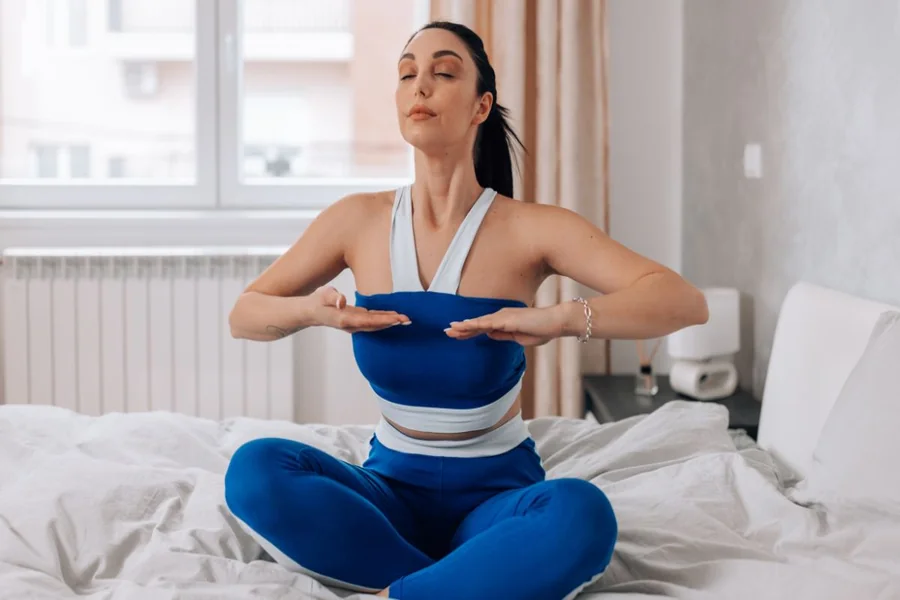
Slow breathing may help signal to your system that the moment is not an emergency. One simple version is to inhale through your nose for four counts, exhale for six, and repeat for one to two minutes. Longer exhales can be calming for some people, though not everyone responds the same way.
Grounding can help too. Try naming five things you see, four you feel, three you hear, two you smell, and one you taste. It is simple, but it can pull attention out of a spiraling loop and back into the present.
Progressive muscle relaxation is another option. Tighten one muscle group for a few seconds, then release. Move from your shoulders to your hands, jaw, stomach, or legs. The release matters more than doing it perfectly.
Make the moment smaller
Overwhelm often grows when the mind treats everything as urgent at the same time. Anxiety can narrow attention and make the full day, or even the full week, feel impossible.
What matters most here is reducing the frame.
Instead of asking, “How do I fix all of this?” ask, “What is the next ten minutes asking of me?” That shift can lower pressure. You are not denying the bigger problem. You are making it small enough to face.
Some people find it helpful to sort what is happening into three categories:
- What needs attention now
- What can wait until later today
- What is not actually urgent, even if it feels urgent
This kind of mental triage can restore a sense of control. Research on coping across different stressful situations suggests that flexible coping, rather than one perfect strategy, is often more useful.
Give worried thoughts less authority
Anxious thinking can sound convincing. It often predicts the worst, overestimates danger, and underestimates your ability to cope. That does not mean the thoughts are foolish. It means anxiety is influencing how threat is being interpreted.
One way to understand this is to notice the thought without immediately treating it as fact.
You might pause and ask:
- What is my mind predicting right now?
- What evidence supports that fear?
- What evidence points in another direction?
- What would I say to someone I care about in this exact situation?
Self-distancing may help here. That means stepping back from a thought instead of merging with it. A 2024 study on worry and self-distancing suggests this approach may help some people handle anxiety-provoking experiences with more perspective.
Try changing “I am not going to handle this” to “I am having the thought that I may not handle this.” It sounds small, but that wording can create needed distance.
Use routines that lower your baseline stress
Not every anxious moment starts with a clear trigger. Sometimes stress builds quietly in the background until your system has very little room left.
That is why daily regulation matters. The goal is not perfection. It is giving your mind and body a little more stability before the next hard moment hits.
Helpful basics may include:
- Regular meals, especially if anxiety gets worse when you are hungry
- Sleep routines that are reasonably consistent
- Daily movement, such as walking or stretching
- Less caffeine if you notice it increases shakiness or racing thoughts
- Brief breaks from constant news or social media input
These tools can sound ordinary, almost too ordinary. Still, they matter. Studies across different populations have linked mindfulness, social support, and active coping strategies with better emotional adjustment, though results can vary by person and circumstance.
Lean on support without feeling like a burden
Anxiety often pushes people inward. You may cancel plans, stop answering messages, or tell yourself you should handle it alone. That reaction is common, but isolation can make anxiety feel louder.
In a calmer moment, consider who helps you feel more grounded rather than more activated. It might be a friend, partner, sibling, therapist, support group, or primary care clinician.
Support does not have to mean a long conversation. It can look like:
- texting someone that you are having a hard day
- asking a trusted person to sit with you while you reset
- telling someone what helps and what does not
- making a plan for what you will do when anxiety spikes
Research often finds that perceived social support, meaning the sense that support is available and real, is associated with better coping. That does not erase anxiety, but it can make it feel less lonely and less overwhelming.
Know when self-help is not enough
Self-guided strategies can be useful, especially for everyday anxiety. But they have limits.
It may be time to seek professional support when anxiety is happening often, disrupting sleep, affecting work or relationships, leading you to avoid normal activities, or leaving you feeling stuck despite repeated efforts to manage it. A licensed mental health professional or medical provider can help sort out whether you are dealing with an anxiety disorder, stress overload, another mental health concern, or symptoms that may have a physical contributor.
To make this clearer: needing more support is not a sign that you failed at coping. It usually means your system needs more than quick tools. That is a reasonable place to be.
Treatment may include therapy, lifestyle changes, medication, or a combination. Evidence supports several approaches for anxiety, but the best fit depends on the person, the severity of symptoms, and what else may be going on.
A gentler way to think about progress
People sometimes assume coping means staying calm all the time. It does not. A more realistic goal is recognizing anxiety earlier, responding with more skill, and recovering a little faster.
Some days the skill works quickly. Other days it barely seems to touch the feeling. That does not always mean the tool is wrong. It may mean your stress load is high, your body is exhausted, or the moment calls for a different strategy.
A useful takeaway is that progress often looks less dramatic than people expect. It may be pausing before spiraling. It may be leaving a stressful room and coming back. It may be noticing, “This is anxiety,” instead of assuming something is deeply wrong.
Small shifts count.
Conclusion
Feeling overwhelmed can make anxiety seem bigger than it is and make you feel smaller than you are. That is part of how anxiety works. Gentle skills can help interrupt that pattern by calming the body, narrowing the moment, and giving worried thoughts a little less control.
The key point is not to find one perfect technique. It is to build a short list of tools you can return to when your system starts to tip into overload. With practice, those responses can become more familiar and more available.
If anxiety is lasting, intense, or interfering with daily life, reaching out for professional support may help you move from coping in the moment to feeling steadier over time.
Safety Disclaimer
If you or someone you love is in crisis, call 911 or go to the nearest emergency room. You can also call or text 988, or chat via 988lifeline.org to reach the Suicide & Crisis Lifeline. Support is free, confidential, and available 24/7.
Author Bio
Earl Wagner is a health content strategist focused on behavioural systems, clinical communication, and data-informed healthcare education.