
Hair extensions rarely change in dramatic leaps. More often, they evolve through small technical adjustments that quietly reshape how stylists build length, volume, and natural movement. One of the most recent examples is the rise of butterfly weft extensions—a newer bead-in weft system that’s gaining attention for its lightweight structure and more discreet finish.
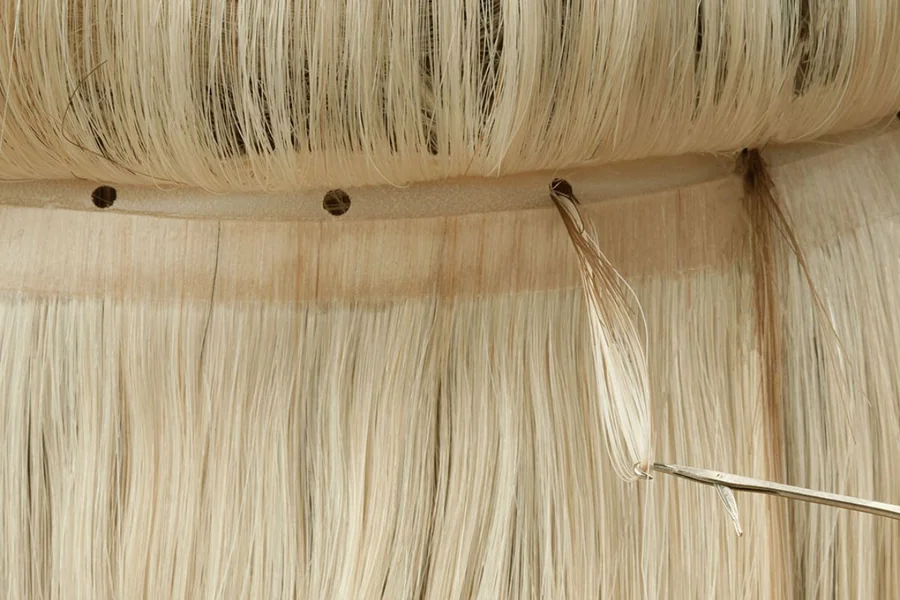
Unlike traditional sew-in wefts, butterfly wefts rely on a perforated base design. Natural hair is pulled through small openings in the weft and secured with micro beads or rings, removing the need for stitching entirely. The result is a method that prioritizes flexibility and flatness over structural density.
A Shift Away From Traditional Sew-In Construction
For years, sew-in wefts have been a salon staple. The method is durable and widely used, but it comes with familiar limitations—particularly for clients seeking a more undetectable result.
Depending on hair density and placement, traditional sewn-in tracks can sometimes create:
- A more noticeable ridge at the attachment point
- Added bulk near the scalp
- Limited flexibility in high or sleek styling
As client expectations shift toward softer, more natural-looking results, stylists have begun exploring alternatives that reduce visible structure without sacrificing security.
What Makes Butterfly Wefts Different
Butterfly wefts are defined less by how they look and more by how they are installed. Instead of stitching the weft into braided tracks, the stylist uses small sections of natural hair that are pulled through the weft’s perforated base and secured with micro beads.
This bead-in system creates a flatter anchor point, allowing the extension to sit closer to the scalp with less buildup between rows.
In practical terms, this often translates to:
- A lower-profile installation
- Reduced tension at the root
- Greater flexibility in styling placement
The goal is not to add visible volume, but to integrate it more seamlessly into the natural hair pattern.
Not All Butterfly Wefts Are Constructed the Same
As the category has expanded, “butterfly weft” has become more of an umbrella term than a single standardized design. While the perforated base is the defining feature, the real variation lies in how different systems engineer both the size, density, and placement of the openings across the weft.
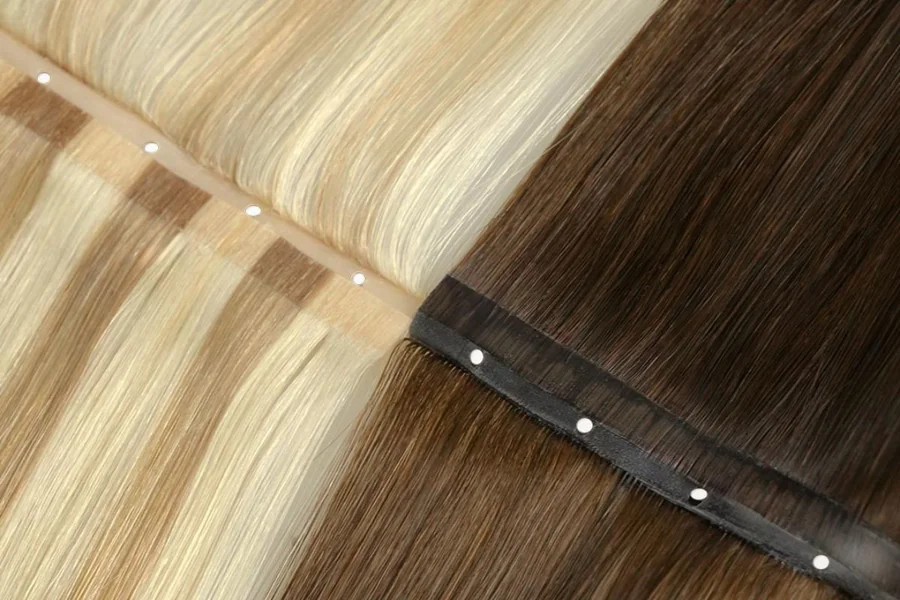
Some designs use wider spacing between perforations, while others opt for tighter, more controlled patterns. Beyond that, an increasingly important area of development is where those perforations are positioned within the weft itself—whether they sit closer to the top edge, distributed evenly through the base, or concentrated in specific zones to improve flexibility during installation.
These structural choices may seem subtle, but they directly affect:
- How flat the weft sits against the scalp
- How naturally the hair moves once installed
- How evenly weight is distributed across each row
- How undetectable the base appears under light and motion
While often overlooked at first glance, these engineering details play a meaningful role in how seamless the final result looks—and how comfortably it wears over time.
The Rise of Hidden-Structure Designs
Within this evolving category, a newer approach is emerging: more concealed perforation layouts, where the structural openings are less visually exposed within the base.
Instead of obvious gaps or clearly visible perforation lines, the design is engineered to blend the openings into a smoother overall surface. Once installed, this creates a more seamless transition between natural hair and extension.
Stylists often describe the effect as a more “invisible” finish—particularly in finer hair types, where traditional weft tracks can be easier to detect under certain lighting conditions.
The function remains the same, but the visual footprint is significantly reduced.
Why Stylists Are Paying Attention Now
The growing interest in butterfly wefts reflects a broader shift in the extension industry: away from visible enhancement and toward undetectable integration.
Across salons, client expectations have become more specific:
- “I want more volume, but I don’t want to see it.”
- “It needs to move like my own hair.”
- “It has to last, but still feel light.”
This shift has pushed innovation toward lighter bases, softer attachment methods, and less structured installation systems.
In this context, bead-in weft systems like butterfly wefts align with a clear demand: extensions that enhance hair without revealing the process behind them.
Brands such as GOO GOO Hair have also contributed to this direction, with an increasing focus on lightweight weft construction and flatter base designs that support more natural blending across different installation methods.
The Real Evolution: From Visibility to Discretion
If earlier generations of extensions were defined by how much they changed the hair, today’s innovations are defined by how little they are noticed.
Butterfly wefts sit firmly within this evolution. They don’t introduce a new aesthetic—they refine the technical foundation behind it. By replacing sewn attachment points with bead-based anchoring and reducing bulk at the base, they support a more modern expectation of beauty: hair that looks effortless, moves naturally, and doesn’t draw attention to how it was created.
In that sense, the innovation isn’t about adding more hair.
It’s about making it harder to tell where it begins.