
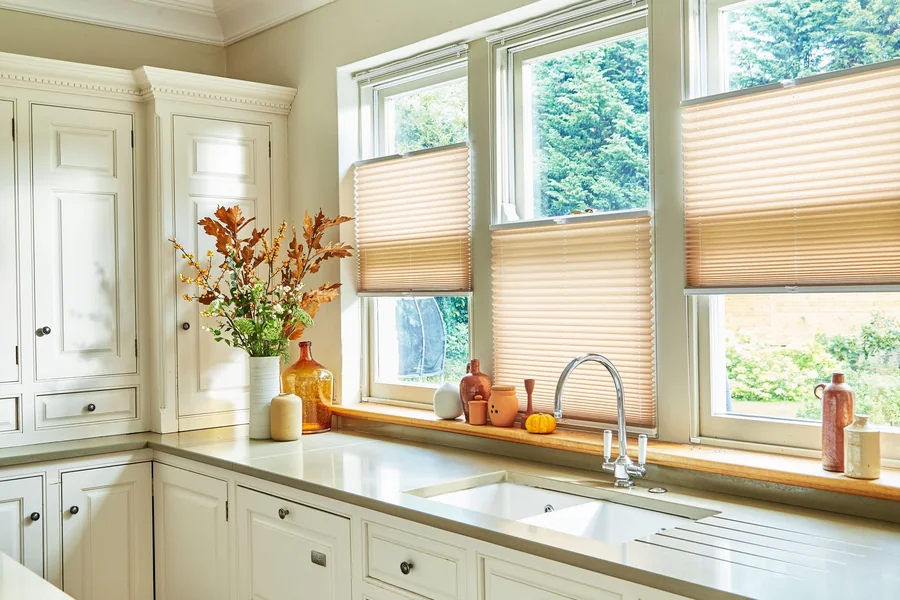
Could Pleated Blinds Be the Space-Saving Solution You’ve Been Searching For?
You’ve probably stood in your spare bedroom, conservatory, or that awkward bathroom window thinking: “How on earth do I cover this without making it look worse?” Sound familiar?
Here’s the thing. Traditional blinds can be bulky, fiddly, or just plain wrong for certain spaces. But pleated blinds? They’re the unsung heroes of the window covering world. Lightweight, sleek, and incredibly versatile, they solve problems you didn’t even know you had.
In this guide, you’ll discover exactly why pleated blinds might be your answer. We’ll explore how they work, where they shine brightest, and crucially, how to choose the right ones for your home. You’ll also learn about no-drill options that won’t damage your frames—perfect if you’re renting or simply want a cleaner installation.
Let’s dive in.
What Makes Pleated Blinds Different?
Think of pleated blinds as origami for your windows. The fabric folds into neat, crisp pleats that stack compactly when raised. This creates an incredibly slim profile compared to Venetian or wooden blinds.
The magic lies in their simplicity. No slats to clean individually. No cords dangling everywhere. Just smooth, consistent folds that look equally good whether they’re up or down.
Newblinds.co.uk Limited has been helping UK homeowners discover the benefits of pleated blinds since 1999. As the UK’s first online retailer of window blinds, they’ve witnessed firsthand how these versatile window coverings have evolved from basic designs to sophisticated solutions suitable for modern homes.
How They Actually Work
Pleated blinds operate using either a simple pull cord or a side handle. Pull down, and the fabric unfolds like an accordion. Release, and it stays put. Push up, and it collapses into a neat stack at the top of your window.
Some versions offer “top-down, bottom-up” operation. This means you can lower the blind from the top or raise it from the bottom. Brilliant for ground-floor rooms where you want privacy at eye level but light streaming in above.
The pleats themselves typically measure between 20mm and 25mm. Smaller pleats create a more refined look. Larger ones work better for bigger windows where you want a bolder statement.
Where Do Pleated Blinds Work Best?
Not every blind suits every space. But pleated blinds? They’re remarkably adaptable.
Conservatories and Roof Windows
Conservatories get scorching in summer and freezing in winter. Pleated blinds with thermal backing can genuinely make a difference. The honeycomb structure traps air, creating an insulating layer that keeps heat in during winter and reflects it away in summer.
For roof windows—VELUX, RoofLITE, or similar—pleated blinds are often the only practical choice. They sit flush against the glass, preventing light gaps and sagging fabric that plague other blind types on angled windows.
Awkward Shapes
Arched windows? Triangular skylights? Those strange shapes that builders seem to love? Pleated blinds can be custom-made to fit. The fabric follows the window shape, creating a tailored finish that’s nearly impossible with horizontal slats.
Bathrooms and Kitchens
Moisture is the enemy of many blind types. But pleated blinds in moisture-resistant fabrics handle humidity beautifully. They won’t warp, rust, or develop that musty smell that wooden or metal blinds sometimes acquire.
The compact stack means they don’t block your window when raised—crucial when you’re trying to maximise natural light in typically smaller rooms.
Rental Properties
Here’s where things get interesting. If you’re renting, you probably can’t drill into window frames without risking your deposit. No-drill pleated blinds solve this completely.
Newblinds.co.uk Limited offers Perfect Fit, INTU, and Stick Fit systems—all designed for installation without a single screw. Perfect Fit brackets clip around your existing window frame. Stick Fit blinds use strong adhesive tape. Both leave zero marks when removed.
Comparing Your Pleated Blind Options
Choosing between different pleated blind systems can feel overwhelming. This comparison should help:
| Feature | Standard Pleated | Honeycomb (Cellular) | Perfect Fit Pleated | Stick Fit Pleated |
| Installation | Requires drilling | Requires drilling | No-drill clips | No-drill adhesive |
| Insulation | Basic | Excellent (air pockets) | Basic to good | Good |
| Privacy | Good | Excellent | Excellent | Excellent |
| Price Range | £ | ££ | ££ | ££ |
| Best For | Standard windows | Energy efficiency | uPVC windows | Any window or door |
| Removal | Permanent | Permanent | Fully reversible | Fully reversible |
The exception to these general rules? Custom requirements. If you’ve got unusually large windows, extreme temperature variations, or specific aesthetic demands, you’ll want specialist advice.
Fabric Choices That Actually Matter
Walk into any blinds showroom (or browse online), and you’ll face dozens of fabric options. It’s frustrating when you just want something that looks decent and does the job.
Opacity Levels
Blackout fabrics block virtually all light. Essential for bedrooms, especially if you’re a shift worker or have young children who wake with the sun.
Dim-out fabrics filter light significantly but aren’t completely opaque. You’ll get a soft glow rather than pitch darkness. Perfect for living rooms where you want ambiance without full exposure.
Translucent fabrics diffuse light beautifully whilst maintaining privacy. You can see shadows through them but no detail. Brilliant for bathrooms and ground-floor rooms facing the street.
Sheer fabrics offer minimal privacy but maximum light diffusion. Think of them like permanently drawn curtains—soft, gentle illumination without harsh glare.
Thermal Properties
Single-layer pleated blinds look clean and simple but offer limited insulation. Honeycomb (cellular) blinds feature two layers with air pockets between them. This trapped air acts as a thermal barrier.
Studies from the British Blind and Shutter Association suggest well-fitted cellular blinds can reduce heat loss through windows by up to 46% in winter. In summer, reflective backings can reject up to 78% of solar heat gain.
That’s not marketing fluff. That’s genuine energy saving you’ll notice on your heating bills.
Colours and Patterns
White and cream remain the most popular choices—they’re neutral, they reflect light, and they suit virtually any décor. But don’t feel trapped by convention.
Darker colours absorb more light, creating a cosy atmosphere whilst providing better privacy. Patterned fabrics can either complement or clash spectacularly with your existing décor, so choose carefully.
Look, here’s what matters: hold fabric samples against your walls, furniture, and existing window frames. See them in natural daylight and artificial light. Colours behave differently depending on lighting conditions.
Installation Without the Headache
The thought of installing blinds puts many people off. Wonky brackets, stripped screws, and measurements that somehow end up wrong despite checking three times.
Measuring Correctly
This is crucial. Measure your window’s width and height in three places—left, centre, and right for width; top, middle, and bottom for height. Use the smallest measurement. Windows are rarely perfectly square.
For recess-fit blinds (inside the window frame), deduct 5-10mm from your measurements. This clearance prevents the blind catching on the frame when operating.
For face-fit blinds (mounted on the wall above the window), add 100-150mm to width and height. This extra coverage blocks light gaps and creates a more substantial appearance.
No-Drill Options Explained
Perfect Fit systems use brackets that clip around your uPVC window beading. No drilling required. The blind sits within the frame, moving with the window when you open it. Ideal for tilt-and-turn windows or doors.
INTU blinds work similarly but use a different bracket design. Both systems are fully reversible—remove them, and your window looks untouched.
Stick Fit blinds take a different approach. Strong adhesive tape secures the blind directly to the window glass or frame. When removed carefully, they leave no residue. These create the cleanest look since the brackets are virtually invisible.
DIY or Professional Fitting?
Most pleated blinds are genuinely DIY-friendly. If you can use a tape measure, spirit level, and screwdriver (or just adhesive tape for no-drill options), you can fit them yourself.
The exception? Extra-wide blinds spanning bifold or patio doors, or complex motorised systems. These benefit from professional installation to ensure smooth operation and proper weight distribution.
Smart Features Worth Considering
Technology has transformed window blinds. You might not think you need smart blinds until you’ve experienced them.
Motorised Operation
Battery-powered motors mean no electrical work required. Charge them every few months using a standard USB cable. They’re whisper-quiet and surprisingly affordable compared to five years ago.
Mains-powered motors suit larger blinds or situations where you’re having electrical work done anyway. Solar-powered options harness sunlight to recharge, though UK weather makes these less reliable than in sunnier climates.
Smart Home Integration
Amazon Alexa and Google Home compatibility means voice control. “Alexa, close the bedroom blinds” beats stumbling around in the dark finding pull cords.
SOMFY systems—which Newblinds.co.uk Limited specialises in as an accredited retailer—offer sophisticated scheduling and integration with home automation systems. Set your blinds to close automatically at sunset or open gradually as your alarm sounds.
But here’s the reality check: smart features add cost. If you’re covering multiple windows, that adds up quickly. Start with the rooms where automation genuinely improves your life—bedrooms and south-facing living spaces—rather than every window in the house.
Maintenance and Longevity
Pleated blinds don’t demand much attention, but a little care extends their life significantly.
Regular Cleaning
Most pleated fabrics are anti-static treated, so they repel dust reasonably well. A weekly dusting with a soft brush or vacuum cleaner attachment prevents buildup.
For deeper cleaning, some fabrics tolerate gentle sponging with mild detergent solution. Always test an inconspicuous area first. Never machine wash pleated blinds—the pleats will be ruined.
Honeycomb blinds trap dust inside the cells. Compressed air (like you’d use for keyboards) blows it out without damaging the fabric structure.
Lifespan Expectations
Quality pleated blinds should last 7-10 years with normal use. The fabric might fade slightly if exposed to intense direct sunlight, but modern UV-resistant treatments minimise this.
Cheaper blinds might develop broken pleats, frayed edges, or mechanism failures within 2-3 years. This is where buying from established retailers makes a difference. Newblinds.co.uk Limited works exclusively with trusted UK fabricators who stand behind their products with meaningful warranties.
Shopping for Pleated Blinds Online
Buying custom fit blinds online requires confidence in both the product and the retailer. Here’s what to look for.
What Separates Good Retailers from Great Ones
Experience matters enormously. Retailers who’ve been operating since the early days of online shopping—like Newblinds.co.uk Limited, who launched in 1999—understand the industry inside out.
Look for retailers who manufacture in the UK rather than dropshipping from overseas. This means faster delivery, better quality control, and easier returns or adjustments if needed.
Customer service is crucial when you’re measuring windows yourself. Can you speak to someone knowledgeable if your window is an unusual shape? Do they provide clear measuring guides and video tutorials?
Understanding Product Specifications
Fabric weight is measured in grams per square metre (gsm). Heavier fabrics (250gsm+) generally last longer and provide better insulation, but they’re harder to operate on very large blinds.
Pleat depth affects appearance and stackback (how much space the blind occupies when fully raised). Larger pleats mean more stackback but often better insulation.
Operating mechanisms vary. Side-mounted handles suit windows near walls or furniture. Centre cords work better on wider blinds for balanced operation. Spring-loaded systems (no cords at all) are safest around children and pets.
Reading Between the Lines on Reviews
Five-star reviews across the board might seem ideal, but they’re often suspicious. Look for retailers with mostly positive reviews that also include some constructive criticism—it suggests authenticity.
Pay attention to reviews mentioning measuring accuracy, fitting ease, and post-purchase support. These reveal more than comments about how “lovely” the blinds look.
Check if the retailer responds to negative reviews. How they handle problems tells you everything about their customer service philosophy.
Cost Considerations Beyond the Ticket Price
Pleated blinds range from around £30 for a small standard window to £300+ for large motorised versions. But the initial cost isn’t the whole story.
Energy Savings
Thermal blinds might cost 20-30% more than standard versions, but they can reduce heating costs by genuinely measurable amounts. In a typical three-bedroom UK semi, fitting thermal blinds throughout might save £100-200 annually on energy bills.
That payback period is 2-3 years—after which you’re ahead financially whilst also improving comfort.
Longevity Versus Cheap Replacements
A £35 blind that lasts two years costs £17.50 annually. A £90 blind that lasts ten years costs £9 annually. The maths favours quality, especially when you factor in the hassle of measuring, ordering, and refitting.
Hidden Costs to Watch For
Some online retailers advertise headline prices that exclude essential components. Check whether brackets, fixtures, and installation instructions are included or cost extra.
Delivery charges vary wildly. Some retailers offer free delivery on orders over a certain value. Others charge per blind, which quickly adds up for whole-house projects.
Returns policies matter if you measure incorrectly or the colour doesn’t match your expectations. Made-to-measure products are often non-returnable unless faulty, so choose retailers with generous pre-purchase sampling services.
Frequently Asked Questions
Can pleated blinds be fitted to any window type?
Virtually yes, though some designs work better than others. Standard pleated blinds suit most rectangular windows. Shaped versions fit arches, triangles, and angles. Perfect Fit and INTU systems work specifically with uPVC windows and doors. Stick Fit options work on almost any smooth surface. The rare exceptions are very shallow recesses (under 20mm depth) or extremely large single spans (over 3 metres wide), which might require reinforced mechanisms or multiple blinds.
How do pleated blinds compare with roller blinds for energy efficiency?
Honeycomb pleated blinds outperform standard roller blinds significantly for insulation because of their cellular structure trapping air. Single-layer pleated blinds and basic roller blinds perform similarly. However, specialist thermal roller blinds with reflective backing can match honeycomb pleats for heat rejection in summer. For year-round thermal performance, honeycomb pleats are generally superior—but they cost more initially.
Will pleated blinds work with smart home systems I already have?
This depends on which smart home ecosystem you use. SOMFY-powered pleated blinds integrate seamlessly with Amazon Alexa, Google Home, Apple HomeKit, and most major home automation systems. Battery-powered motors with Bluetooth or WiFi modules offer app control without complex installation. Older smart home systems using proprietary protocols might require additional bridges or hubs. If you’re already invested in a particular system, verify compatibility before purchasing motorised blinds.
How long does installation take for no-drill pleated blinds?
Perfect Fit and INTU systems typically take 10-15 minutes per blind once you’ve done the first one. There’s a learning curve understanding how the brackets clip together, but it’s genuinely straightforward. Stick Fit blinds are even faster—around 5 minutes per window—but require careful surface preparation (cleaning and drying) for the adhesive to bond properly. Standard drill-and-screw installation takes slightly longer (15-20 minutes) because you’re checking levels and positioning brackets precisely, but it’s still a manageable DIY project for most people.
Finding Your Perfect Pleated Blind Solution
We’ve covered a lot of ground. From the basics of how pleated blinds work to the nuances of fabric choices, installation methods, and smart features.
The beauty of pleated blinds lies in their versatility. They solve specific problems—awkward windows, energy efficiency, no-drill installation—whilst looking genuinely stylish. They’re not the loudest option in the window covering world, but they’re often the smartest.
Your next step? Measure your windows carefully. Consider which features actually matter for your specific situation rather than getting distracted by every available option. Think about whether energy savings, privacy, or aesthetics rank highest for your needs.
If you’re ready to explore the UK’s most comprehensive range of made-to-measure pleated blinds, Newblinds.co.uk Limited combines over 46 years of family expertise with the convenience of online shopping. As the UK’s first online blinds retailer and a SOMFY accredited specialist, they offer everything from simple manual pleated blinds to sophisticated automated systems—all custom-made by trusted UK fabricators who share their commitment to quality and customer care.
Whatever you choose, you’re making a decision that will affect your home’s comfort, appearance, and running costs for years to come. Take your time. Get it right. Your windows deserve it.