
The Mathematics of an Irrational Obsession
Let’s be real. Nobody wants to watch a predictable game. Human beings essentially throw logic out the window to chase the statistical anomaly. Quants in the front office love to measure these exact moments with Win Probability Added (WPA)—a cold, emotionless metric that exposes just how absurd an upset really is. You have probably watched a battered bullpen drag themselves into the bottom of the ninth with less than a one percent shot at survival. The math says they are dead. Then a lucky flare into the outfield shatters that algorithmic certainty, instantly turning a guaranteed funeral into a riot.
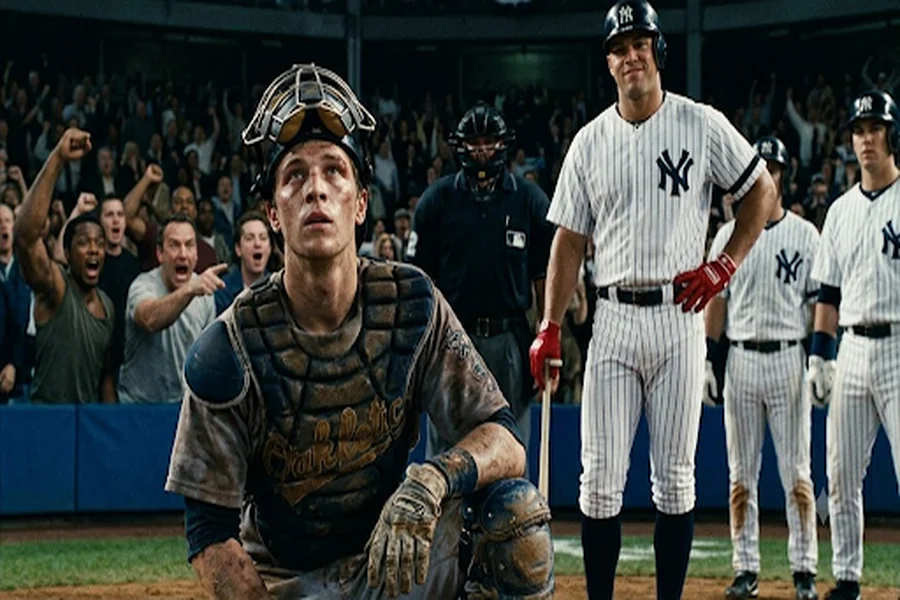
The math entirely breaks down when human emotion enters the equation. You see this same chaos when bookmakers set the odds to win the World Series every spring. Bettors happily throw away their cash on 100-to-1 longshots like the 1969 “Miracle” Mets rather than taking a safe, boring return on a 109-win juggernaut. We are hardwired to reject the inevitable. The 2004 Boston Red Sox found themselves down three games to zero against a New York Yankees dynasty with seemingly infinite financial leverage. Their mathematical probability of survival was functionally zero. Twenty-five previous Major League Baseball teams had faced that exact deficit in a best-of-seven series; not even one had recovered. Boston somehow swept the rest of the series.
Quantifying the Unthinkable
Look closer and you realize that these anomalies represent systemic failures in rational expectation. The 2011 St. Louis Cardinals provide a masterclass in this exact statistical disruption. Late in August of that year, severe injuries had decimated their roster. A wild-card playoff spot seemed entirely out of reach. Sabermetric models viewed their postseason chances as a literal rounding error, hovering around a pathetic 4.3 percent implied probability.
Analytics departments measure these pressure-cooker scenarios using the Championship Leverage Index (cLI). This advanced metric quantifies the macro-level impact of a single game on a franchise’s ultimate title hopes. During their miraculous 23-9 run in the final month of the season, the Cardinals registered historically massive cLI values. Every single victory exponentially shifted the mathematical landscape of the entire league. A normal roster would snap under that kind of suffocating leverage. St. Louis thrived on it. The team channeled that external doubt into an aggressive psychological advantage, ultimately stealing a championship ring from the heavily favored Texas Rangers in a brutal seven-game series.
Why We Secretly Want the Giant to Bleed
The reality is that our love for the underdog is only half about empathy. The other half is raw, vindictive spite. We instinctively despise monopolies. Anthropologists will tell you that ancient human tribes deliberately banded together for one specific reason: to stop the biggest guy in the cave from hoarding all the meat. We never actually lost that tribal instinct. Today, that exact same survival mechanism just dictates our sports allegiances and wallet habits. We view systemic inequality as inherently unjust. Observers actively root for the collapse of the dominant force to restore a perceived cosmic balance.
Psychologists label this phenomenon GORFing—Glory Out of Reflected Failure. The vindictive thrill of watching a giant fall frequently trumps our own desire to see our favorite group succeed. Researchers once asked Red Sox and Yankees fans how much money they would require to miss seeing their own team win, versus missing their rival lose. The results were remarkably savage. Boston fans demanded significantly more cash to forgo watching the Yankees choke than they did to miss a Red Sox victory. We experience a profound, measurable sense of schadenfreude when an arrogant, heavily funded favorite suffers a public humiliation. Frankly, watching the giant bleed just feels good. There is a strict condition here, though. We only lend our support if the underdog lacks resources. A statistically terrible team with a massive billionaire payroll generates zero sympathy.
Hijacking the Brain’s Reward Circuitry
Your brain is chemically addicted to the upset. A heavily favored top dog winning a match barely registers on your neural pathways. That predictable outcome perfectly matches your baseline expectation. Dopamine neurons in your midbrain remain completely flat because you experience zero reward prediction error. The victory feels satisfactory but biologically mundane.
A massive upset radically flips this biological script. Your subconscious brain permanently writes off a massive longshot as a statistical impossibility. So, when that gritty squad pulls off the miracle, the sheer shock of the event detonates a massive payload of phasic dopamine straight through your mesolimbic pathway. Your brain treats that sheer statistical absurdity as a massive neurochemical multiplier. The resulting high hits with explosive force entirely because nobody saw the comeback coming.
This chemical cocktail gets a secondary boost from a hormone known as oxytocin. The psychological concept of narrative transportation allows you to project your own daily struggles directly onto the disadvantaged competitor. When a massive longshot survives the gauntlet, it somehow validates your own exhausting commute or awful boss. The television screen disappears—you stop being a passive viewer and start feeding off their vicarious resilience.
The Favorite-Longshot Financial Trap
Bookmakers and Wall Street algorithms exploit this biological addiction every single day. Behavioral economics clearly defines a market inefficiency known as the favorite-longshot bias. Rational market participants should theoretically value a wager based strictly on its exact mathematical probability. Human beings absolutely refuse to do this.
Behavioral economists call this the probability weighting function, which is just a fancy way of saying humans are terrible at judging risk. A tiny one percent glimmer of hope suddenly morphs into a ten percent certainty inside a gambler’s head. Bettors become incredibly intoxicated by the narrative of a massive payout. This anticipation of a dopamine hit completely blinds them to the abysmal expected value of the investment. Market makers understand this behavioral flaw perfectly. They intentionally shade the betting lines heavily against massive underdogs. Sportsbooks know the public’s irrational appetite for a Cinderella story guarantees a flood of dumb money, regardless of how aggressively the house manipulates the profit margin.
Weaponizing the Garage Myth
Corporate boardrooms cracked this neurochemical cheat code decades ago, and they exploit it without mercy. Madison Avenue shops routinely burn millions of dollars artificially crafting that gritty, garage-startup myth to lock you into a manufactured sense of brand solidarity.
The formula requires two non-negotiable elements to function effectively. The brand must first highlight a severe external disadvantage or a massive lack of capital at its founding. Second, executives must heavily emphasize the gritty, unwavering passion of the founders battling against a faceless corporate Goliath. Consumers eat this narrative alive. The simple act of purchasing a product suddenly shifts from an economic transaction to a deeply personal act of symbolic solidarity.
The catch? The most aggressive users of this tactic are actual global monopolies. Massive tech behemoths constantly remind you they started in a dusty California garage. They desperately maintain this artificial underdog halo to mitigate the Tall Poppy Syndrome—the public’s instinct to cut down anything that grows too powerful. It operates as a highly calculated public relations shield against antitrust scrutiny and rising consumer resentment.
The Burden of the Crown
Low expectations are a highly lethal tactical weapon. A public dismissal immediately threatens a disadvantaged group’s sense of autonomy. Disrespect, it turns out, acts as premium rocket fuel for a hyper-focused drive to humiliate the critics. These squads shift into a relentless, promotion-focused attack mode since there is absolutely nothing left to protect.
The heavy favorite operates in a continuous state of quiet terror. A standard victory offers zero psychological reward; it merely confirms the baseline expectation. This asymmetric risk profile forces the top dog into a rigid, prevention-focused mindset. The dominant competitor plays defensively. Basic mechanics suddenly require agonizing conscious thought. Deep inside the favorite’s brain, the anterior cingulate cortex scans frantically for errors while the amygdala screams about failing, making a catastrophic choke almost guaranteed. The longshot rarely pulls off a miracle just through sheer effort alone. History shows they win because the crushing gravity of absolute expectation shatters the dominant player into a million pieces.