
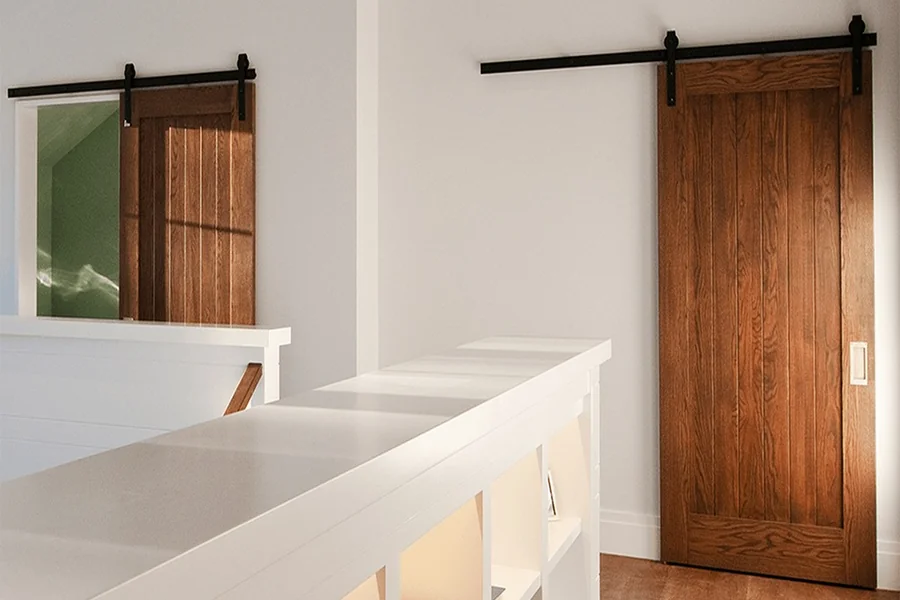
Hidden barn doors are the design equivalent of a mic drop. When done right, they slide effortlessly, look impossibly clean, and make guests wonder where the hardware even is. When done wrong… well, you end up with a door that scrapes, rattles, or quietly drives you insane every time you open it.
As hidden barn door hardware has surged in popularity, so have the mistakes people make when choosing it. Unlike traditional exposed barn door systems—where you can see what you’re getting—hidden hardware demands a bit more planning, a bit more precision, and a bit less optimism.
Below are five common mistakes to avoid when selecting hidden barn door hardware, explained in plain language and without assuming you’re secretly a structural engineer.
Mistake #1: Assuming All Hidden Barn Door Hardware Works the Same Way
“Hidden” Is a Category, Not a Standard
One of the biggest misconceptions is thinking that all hidden barn door hardware systems operate similarly. They don’t.
Some systems conceal the track in the door itself. Others hide it behind trim, within wall cavities, or above the door frame. Each approach has different requirements for wall structure, door thickness, and installation tolerances.
Choosing hardware without understanding how it hides is a fast track to compatibility issues.
Why This Becomes a Problem Later
If the system you choose doesn’t match your wall construction or door type, you may discover—too late—that:
- Your door isn’t thick enough
- Your wall can’t support the load
- The track can’t be concealed as planned
At that point, “hidden” becomes “awkwardly modified.”
Mistake #2: Ignoring Door Weight and Material
Not All Doors Are Created Equal
Solid wood doors, glass panels, engineered slabs—they all behave differently. Hidden barn door hardware is designed with specific weight limits and balance requirements.
Choosing hardware rated for a lighter door than you actually plan to use leads to sagging, resistance, or premature wear. The door may still slide—but not gracefully.
And barn doors are supposed to glide, not struggle.
Weight Issues Don’t Show Up Immediately
This is the sneaky part. A system may feel fine at installation but degrade over time. Rollers strain. Alignment shifts. The door starts making noises it definitely didn’t make before.
Correct weight rating is not optional—it’s foundational.
Mistake #3: Underestimating Wall and Framing Requirements
Hidden Hardware Needs Somewhere to Hide
Traditional barn door hardware mounts externally, usually into a header or surface-mounted support. Hidden barn door hardware often relies on internal framing, reinforced walls, or precise clearances.
This means the wall behind the door matters just as much as the door itself.
The Renovation Reality Check
Many people choose hidden barn door hardware after walls are finished, painted, and admired. Then they discover the system requires:
- Additional framing
- Wall modifications
- Specific stud placement
At that point, the project shifts from “hardware upgrade” to “unexpected construction adventure.”
Planning early avoids this entirely.
Mistake #4: Prioritizing Looks Over Performance
Minimalist Design Still Needs Mechanics
Hidden barn door hardware is popular precisely because it disappears visually. But focusing only on aesthetics can lead to poor functional choices.
Smooth motion, soft-close mechanisms, noise reduction, and long-term durability matter more than how invisible the track looks on day one.
A door that looks stunning but slams shut or sticks halfway quickly loses its charm.
Cheap Hardware Shows Its True Colors Over Time
Lower-quality systems often cut costs in bearings, rollers, or track materials—components you won’t see until they start failing.
Hidden doesn’t mean unimportant. In fact, it means the opposite: performance matters more because fixing issues later is harder.
Mistake #5: Treating Installation as an Afterthought
Precision Matters More Than You Think
Hidden barn door hardware systems are less forgiving than exposed ones. Millimeter-level alignment errors can affect how the door moves, how evenly it hangs, and whether it stays quiet.
Assuming “any installer can figure it out” often leads to disappointing results.
DIY Isn’t Always the Enemy—But It Needs Preparation
Some hidden systems are DIY-friendly. Others are not. What matters is understanding:
- Required tools
- Installation sequence
- Adjustment limitations
Rushing installation—or improvising mid-way—can undermine even high-quality hardware.
Why Hidden Barn Door Hardware Requires a Different Mindset
Hidden barn doors aren’t just sliding doors with better marketing. They’re integrated systems that blend architecture, mechanics, and design.
That’s why the most successful installations start with questions like:
- What door material am I using?
- How is the wall constructed?
- Where will the hardware actually sit?
Answering these before purchasing hardware saves time, money, and drywall repairs.
The Payoff When You Get It Right
When chosen correctly, hidden barn door hardware delivers:
- Clean, modern aesthetics
- Smooth, quiet operation
- A door that feels intentional, not improvised
It elevates the space without demanding attention. Which, ironically, is exactly why it stands out.
Hidden barn doors are a beautiful solution—but only when the hardware behind them is chosen thoughtfully. Most problems don’t come from bad products. They come from mismatches between expectations, structure, and mechanics.
By avoiding these five common mistakes when choosing hidden barn door hardware, you give yourself the best chance of ending up with a door that works as well as it looks.
And if guests can’t figure out how it’s mounted? Congratulations. That means you did it right.