
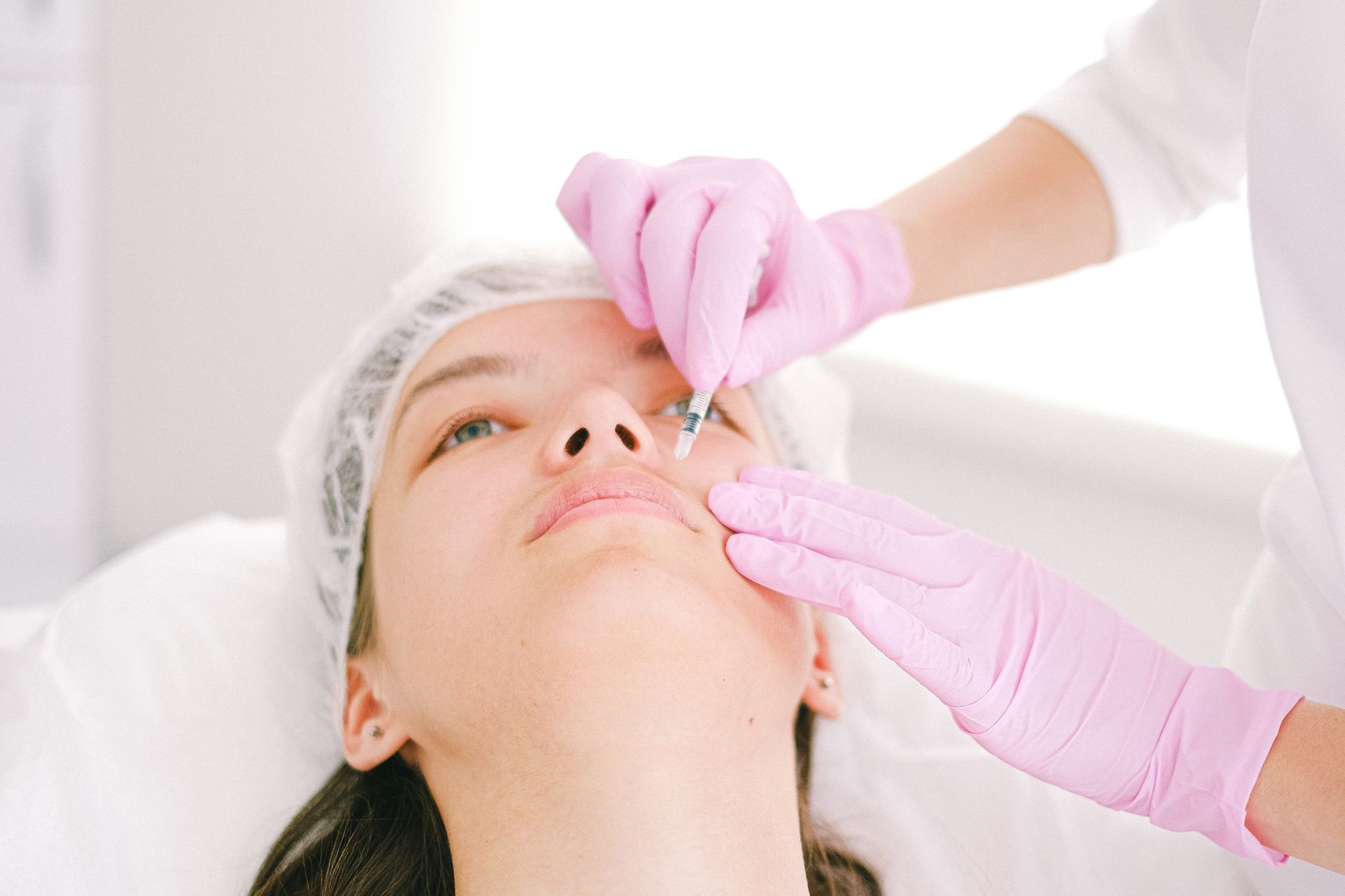
Subcutaneous volume loss represents one of the most studied aspects of facial aging. Over the last two decades, cross-linked hyaluronic acid fillers have replaced older permanent and semi-permanent materials as the standard tool for non-surgical soft tissue augmentation. The chemistry behind these products, however, is far from uniform. A major split exists between biphasic formulations, which suspend cross-linked particles within an uncross-linked gel fluid, and monophasic gels, which consist of a single continuous phase.
This distinction in manufacturing changes how the material behaves once it passes through the cannula or needle. Laboratory testing and clinical observation both point to the same outcome: the physical structure of monophasic dermal fillers directly influences injectability, tissue spread, and overall recovery.
The Science of Monophasic Formulations
Creating a cohesive cross-linked network requires precise control over cross-linking density and polymer hydration. In a traditional single-phase manufacturing process, high-molecular-weight hyaluronic acid undergoes reaction with a cross-linking agent like BDDE (1,4-butanediol diglycidyl ether) under uniform conditions. The entire gel mass forms a singular, continuous matrix without needing to be sieved into discrete particles.
This uniform structure provides high gel homogeneity. Rheological measurements show that monophasic products maintain consistent elastic modulus (G’) and viscous modulus (G”) throughout the entire volume of the syringe. Biphasic gels, by contrast, tend to separate under force because the fluid carrier flows around the harder suspended particles. The absence of a dual-phase split in monophasic systems ensures predictable flow and spreadability under shear stress.
Clinicians often select specific brands when treating areas requiring balanced cross-linking and steady extrusion. Dermalax is a widely recognized line of monophasic dermal fillers designed to deliver predictable volume restoration across various anatomical planes. Practitioners seeking reliable sourcing often look for Dermalax wholesale supply for medical spas to stock their clinical inventory with consistent hyaluronic acid gels. The Dermalax range utilizes advanced cross-linking technology to ensure stability, smooth delivery, and optimal tissue integration.
1. Lower Needle Extrusion Force and Reduced Injection Resistance
Force dynamic studies demonstrate that biphasic products require fluctuating pressure during administration. The plunger moves, pauses, and surges as particles pass through the tight lumen of a fine-gauge needle. This inconsistent resistance can result in unpredictable bolus delivery and localized tissue trauma.
Monophasic gels act differently under mechanical stress. When pressure applies to the syringe plunger, the single-phase network undergoes controlled deformation, sliding through narrow gauge needles with minimal variation in resistance.
Why Extrusion Dynamics Matter
A steady needle extrusion force allows the clinician to maintain complete control over flow rates. The physical properties of the gel mean that the force applied at the thumb transfers directly into a predictable volumetric release at the tip.
- Reduced hand fatigue for the clinician during lengthy injection sessions
- Minimization of sudden gel bursts that cause localized tissue tearing
- Greater control when placing microscopic droplets in sensitive superficial planes
When the pressure remains constant, the mechanical displacement of host tissue occurs gradually rather than violently. This continuous displacement directly mitigates the sudden pressure spikes that trigger acute pain receptors in the dermis.
2. Controlled Tissue Integration and Uniform Migration Profiles
Once placed into the reticular dermis or sub-orbicularis plane, a filler must integrate into the surrounding collagen network without forming hard nodules or migrating away from the targeted space. The physical layout of the gel matrix dictates how host cells and extracellular matrix components interact with the implant.
Biphasic particles can clump together, leaving microscopic voids between particles where tissue fluids accumulate. Monophasic gels, owing to their uniform cohesive structure, mold around endogenous extracellular matrix fibers. A 2018 comparative histological review evaluating hyaluronic acid hydrogels noted that cohesive monophasic structures exhibited a more uniform cell-ingrowth profile, demonstrating smooth adaptation to native tissue architecture over a multi-month period.
This seamless incorporation supports an even tissue distribution. Rather than creating discrete island-like structures, the single-phase matrix spreads in a controlled manner, filling anatomic spaces without forming irregular boundaries. The result is a natural feel upon palpation and a reduced rate of late-onset granulomatous reactions or visible lumpiness under thin facial skin.
3. Reduction in Micro-Trauma and Post-Procedure Downtime
Tissue disruption during an aesthetic injection stems from two factors: needle path manipulation and hydraulic displacement. While injector technique and comfort play a primary role in directing the plane of delivery, the physical behavior of the gel as it exits the aperture dictates the degree of surrounding tissue distortion.
High-cohesivity monophasic gels flow into natural tissue planes without blunt force disruption. Because the gel does not contain harsh particulate edges, mechanical shear against capillaries and nerve branches remains low.
Impact on Vascular and Lymphatic Structures
Capillaries in the superficial fascial system are easily ruptured by uneven pressure gradients. The low extrusion force and smooth gel consistency of monophasic fillers allow the material to move around fragile vessels rather than shearing through them.
Reduced vascular disruption leads directly to reduced swelling and bruising in the post-treatment window. Furthermore, because the uniform matrix does not contain excess uncross-linked fluid or volatile particle size distributions, osmotic fluid attraction occurs evenly. This limits the sudden, intense localized edema often observed within forty-eight hours of treatment with non-cohesive formulations. Less fluid shift means a faster return to baseline appearance and a shorter overall post-injection downtime.
4. Enhanced Patient Comfort Through Synergistic Formulations
Pain perception during dermal filling involves both mechanical pressure on nociceptors and chemical signals triggered by tissue displacement. Monophasic gels address both pathways simultaneously, particularly when paired with local anesthetics.
Lidocaine-integrated formulations have transformed the administration process. In a monophasic matrix, lidocaine molecules distribute evenly throughout the single-phase structure. As the gel flows out of the needle, lidocaine diffuses into the immediate interstitial space within seconds, dulling localized sensory nerves before the full gel volume expands the tissue.
The Interplay of Mechanics and Anesthesia
In biphasic systems, lidocaine often concentrates primarily in the liquid carrier phase, which can wash away quickly from the injection site. In a monophasic gel, the cross-linked matrix holds the anesthetic in close proximity to the delivery site, releasing it steadily as the gel expands the plane.
This steady release mitigates injection pain and discomfort during both the initial entry and subsequent moulding passes. When mechanical resistance is low and local anesthesia acts rapidly, the overall patient experience and satisfaction indicators rise significantly. Patients experience less procedural anxiety, which in turn reduces systemic stress responses that can exacerbate capillary flushing and bleeding.
Clinical Observations on Practical Delivery
The choice of filler rheology shapes every aspect of the procedure, from the initial needle insertion to the final follow-up evaluation. While biphasic fillers still hold utility in specific high-projection areas like the deep periosteal chin or malar space, monophasic systems continue to gain ground across broader treatment categories due to their versatility and forgiving extrusion characteristics.
Precision in aesthetic medicine relies heavily on eliminating unwanted variables. By choosing materials that yield predictable flow, minimal swelling, and smooth tissue integration, clinicians can focus entirely on structural mapping and anatomical safety. The mechanical clarity offered by monophasic cross-linking technology remains one of the most effective developments in refining soft tissue augmentation outcomes.