
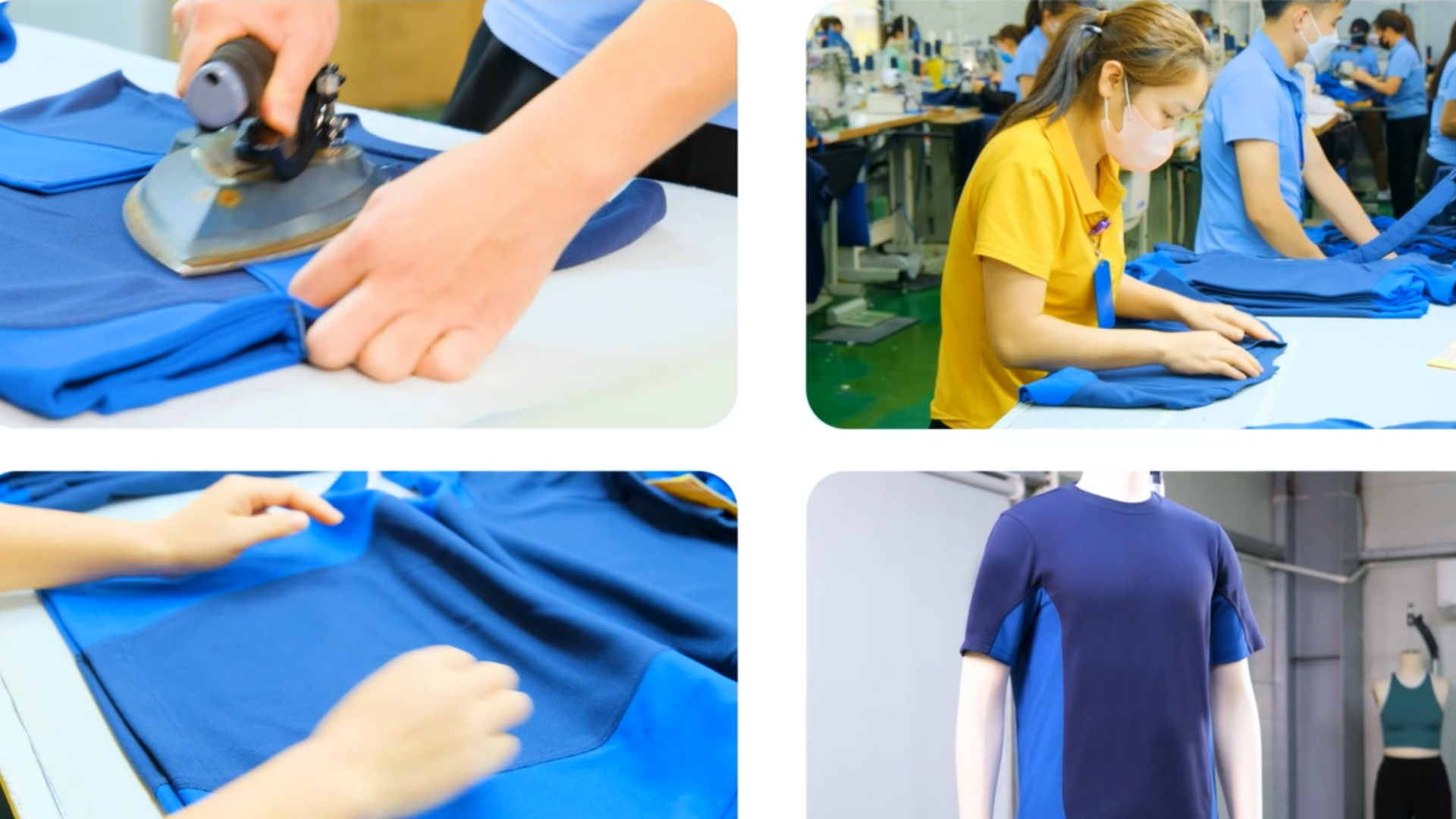
Behind every piece of athletic apparel lies a carefully structured process, where design, material selection, and precise manufacturing all come together. Understanding how these steps work gives brands and teams the clarity they need to make smarter, more confident decisions, whether you’re developing performance products or sourcing the right manufacturing partner.
Design & Product Development
This stage sets the foundation for everything that follows in athletic apparel manufacturing. It’s where ideas are translated into a clear, actionable product direction and where many brands either gain efficiency or run into delays later on.
If a brand has an in-house design team, this stage is usually more structured. The team will define the concept, create detailed sketches, develop tech packs, select fabrics and specify key performance requirements such as stretch, breathability, moisture-wicking, or compression levels. With this level of preparation, communication with manufacturers becomes much smoother, as the factory can work directly from clear technical inputs rather than assumptions. The focus here is on refining details and aligning on execution. Many leading athletic clothing manufacturers work closely with brands during this phase to ensure product concepts can be translated into commercially viable and scalable products.
For brands without an in-house team, the role of the manufacturer becomes much more critical. In this case, it’s important to choose a manufacturer that has strong product development capabilities – not just production capacity. Look for a partner that can support you with design input, fabric recommendations, and technical guidance, especially for performance-focused garments. However, it’s still essential that the brand provides a clear direction: target user, intended use (training, running, gym, etc.), desired fit, and overall brand positioning. Without this, even the best manufacturer will struggle to translate your vision accurately.
Material & Trim Sourcing
In athletic apparel manufacturing, materials play a role similar to the foundation of the product. Unlike standard garments, performance wear requires fabrics with specific technical properties such as stretch, breathability, moisture management, quick-dry performance, and shape retention. The choice of fabric directly impacts comfort, durability, and overall user experience, making material sourcing a critical step in the product development process.
At this stage, brands can either source materials independently from fabric suppliers or rely on a manufacturer’s sourcing capabilities. Common fabrics used in athletic apparel include polyester, nylon, and elastane (spandex), often in blended constructions such as polyester-spandex or nylon-spandex to balance durability and stretch. An experienced cut and sew manufacturer can help evaluate fabric options based on product requirements, performance expectations, target pricing, and production feasibility.
Technical fabrics like moisture-wicking knits, compression fabrics, seamless constructions, and breathable mesh are widely used to enhance performance and comfort during physical activity. In addition, trims such as elastic bands, zippers, heat-transfer labels, reflective elements, and bonding tapes contribute to both functionality and aesthetic finishing.
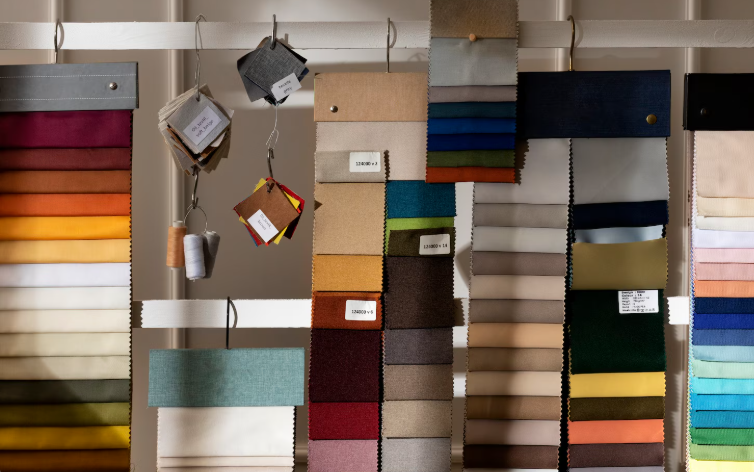
In athletic apparel manufacturing, materials play a role similar to the foundation of the product
Another important factor in material sourcing is working with suppliers that hold recognized fabric certifications, such as OEKO-TEX Standard 100, GRS (Global Recycled Standard), or GOTS (Global Organic Textile Standard). These certifications ensure that materials meet safety, sustainability, and quality standards, which is increasingly important for modern consumers and global markets.
Location sourcing is also a key consideration. Sourcing materials from different countries can significantly impact cost structure, lead time, and import/export regulations. Factors such as customs duties, tariffs, shipping costs, and tax policies can directly affect the final cost of the product.
Sampling & Development
In this stage, the goal is to turn the idea into a finalized physical sample and ensure the product can be produced consistently at scale. This process acts as a continuous research – sample making – fitting loop, where the brand and manufacturer work together to validate and refine the product before moving into production.
The loop typically goes through 2-4 sample rounds, depending on the complexity of the design. Each round helps refine the product from the initial version to a more complete and production-ready sample.
Throughout these iterations, key adjustments are made to fit and sizing, fabric behavior, seam and construction details, placement of panels and logos, and trims and finishing. For athletic apparel, additional focus is placed on compression, stretch, movement support, and durability during physical activity.
Each round follows the cycle of research => sample making => fitting, where feedback from fitting is fed back into development, ensuring the product is continuously improved. This loop helps balance design intention with technical feasibility and production efficiency.
The final objective is to achieve a golden sample, which is the approved version of the product and serves as the reference standard for bulk production, ensuring consistency, accuracy, and alignment with both brand vision and manufacturing capability.
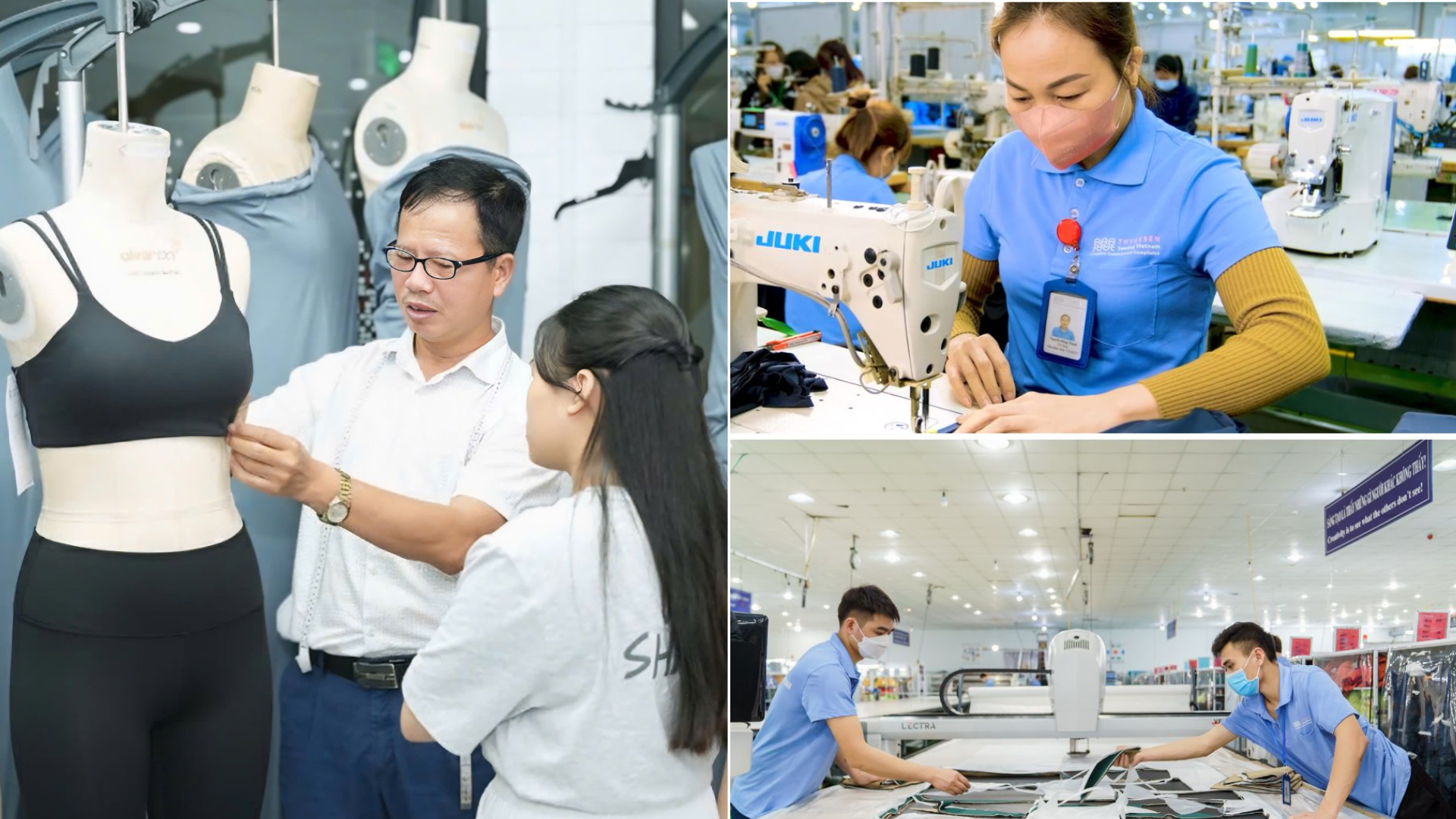
Sample development and bulk production are important steps for athletic apparel manufacturing
Bulk Production
At this stage, the product moves from sampling into full-scale manufacturing, where the approved sample serves as the reference for the entire production run. The main goal is to ensure consistency, quality, and efficiency across all units while meeting the agreed timeline and quantity.
Before production starts, the manufacturer will confirm materials, trims, production plan, and pre-production samples (if needed) to ensure everything is aligned. Once approved, bulk fabric and trims are prepared, and production is scheduled based on factory capacity and lead time.
During production, garments go through key processes such as cutting, sewing, assembly, and finishing, followed by in-line and final quality control checks.
Quality Control
Quality control is a critical step that ensures both fabric and finished garments meet required standards before moving forward in production and delivery. The process is designed to maintain consistency, reliability, and overall product quality.
For fabric QC, materials go through 100% inspection to detect defects such as thickness variation, weaving issues, or elasticity problems. This is followed by random sampling checks to confirm consistency across rolls. For dyed fabrics, a lab dip process is conducted to ensure accurate color matching before bulk dyeing. After dyeing, fabrics are again inspected to verify color consistency, surface quality, and performance, and only approved materials are released for garment production.
For garment QC, quality is controlled throughout the production process. This includes self-inspection by workers, in-line inspection during sewing, and semi-product checks after cutting and assembly to catch issues early. A final inspection is carried out on completed garments, checking stitching, measurements, seam strength, trims, and overall appearance. Before packing, garments are also reviewed for finishing details such as loose threads, stains, and labeling accuracy.
Finishing & Delivery
The finishing stage ensures that all garments are fully prepared and presentable before reaching the customer. This includes trimming loose threads, pressing or steaming, checking final appearance, attaching labels and tags, and folding and packing according to brand requirements. Every detail is reviewed to ensure the product is clean, consistent, and aligned with the approved standard.
After finishing, garments go through final packing and packaging, including carton packing, labeling, and preparation of shipping documents. This step ensures that products are protected during transit and organized for efficient logistics handling.
The delivery stage involves coordinating logistics from the manufacturer to the brand, which can be arranged via air freight or sea freight depending on the timeline and cost requirements. Air shipment is typically faster and used for urgent orders, while sea shipment is more cost-effective for larger volumes but requires longer lead time. In both cases, key factors such as customs clearance, shipping documents, and delivery scheduling must be carefully managed to ensure smooth transportation.