
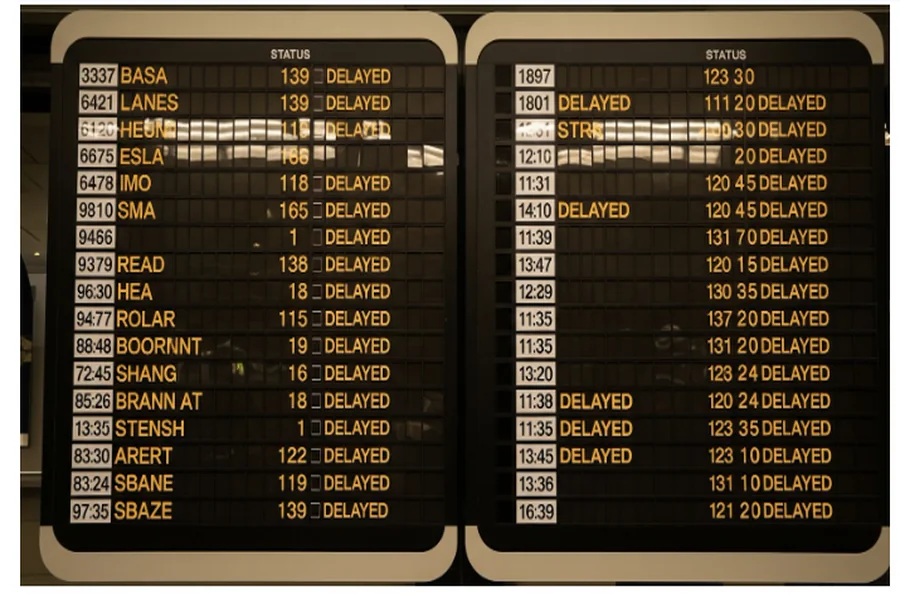
For the travel industry every minute matters. Flight delays disrupt operations, increase costs, and frustrate passengers. As the industry faces record-high demand – expected to reach 5.2 billion passengers by 2025 – traditional air traffic management systems are reaching their limits. The future of aviation depends on anticipating problems before they occur, and Artificial Intelligence (AI) is leading that transformation.
From Reactive to Predictive Operations
Historically, air traffic management has been reactive. Controllers and dispatchers adjusted schedules after disruptions had already begun, whether due to weather, congestion, or equipment issues.
Now, AI in Aviation is enabling a shift toward predictive air traffic management, where data-driven algorithms forecast potential delays hours or even days in advance.
According to Addepto’s AI in Aviation report, organizations like EUROCONTROL are already testing AI-based trajectory prediction systems that have improved accuracy by up to 30%. Meanwhile, Heathrow Airport has used AI-led runway optimization to reclaim up to 20% of landing capacity during low-visibility conditions. These advances mark the beginning of a new standard, one where flight operations are no longer constrained by human reaction time, but enhanced by real-time intelligence.
How AI Predicts Flight Delays
At the core of AI-driven delay prediction lies data. Modern aircraft and airports generate terabytes of information daily, from sensor readings and radar data to weather forecasts, maintenance logs, and passenger flows.
Machine learning models trained on this data can recognize complex patterns invisible to human analysts. For example:
- Supervised learning models classify flights at risk of delay based on historical and environmental factors.
- Deep learning systems analyze dynamic weather conditions, runway usage, and traffic congestion in real time.
- Reinforcement learning algorithms continuously improve scheduling decisions as new data arrives.
These models can evaluate thousands of variables: wind direction, gate availability, flight connections, staffing levels, and provide actionable insights to operators before disruptions occur.
In one use case, Lufthansa Technik’s predictive maintenance system analyzes sensor data and flight logs to forecast part failures well before they happen. This same principle can be applied to flight operations: anticipating chain reactions that might cause cascading delays across an entire network.
Building the Digital Foundation
Predictive AI systems require more than algorithms, they depend on a robust digital infrastructure. Aviation’s next evolution is powered by IoT sensors, edge computing, and real-time data integration across legacy systems.
Airports and airlines must modernize not only their hardware but also their data pipelines. As highlighted in Addepto’s research, “digital transformation in aviation isn’t just about software—it requires fundamental infrastructure modernization.” This means integrating AI models directly into air traffic management systems, ensuring low latency, reliability, and compliance with strict safety standards.
Business Impact: From Costs to Customer Experience
The benefits of AI-based delay prediction extend across every stakeholder in aviation.
For Airlines
AI enables smarter resource allocation, improved punctuality, and reduced fuel consumption. Early adopters report 6–7% revenue increases through dynamic optimization of routes and pricing. Predictive insights also allow carriers to adjust schedules preemptively, minimizing ripple effects from weather or congestion.
For Air Traffic Controllers
Real-time trajectory predictions enhance situational awareness, reduce false conflict alerts, and optimize airspace usage. With AI as a decision-support tool, controllers can handle higher traffic volumes safely and efficiently.
For Passengers
Predictive analytics translate directly into a smoother travel experience. Passengers receive more accurate departure information, fewer cancellations, and personalized updates through AI-powered apps and chatbots. What once felt like chaos becomes a data-driven journey.