
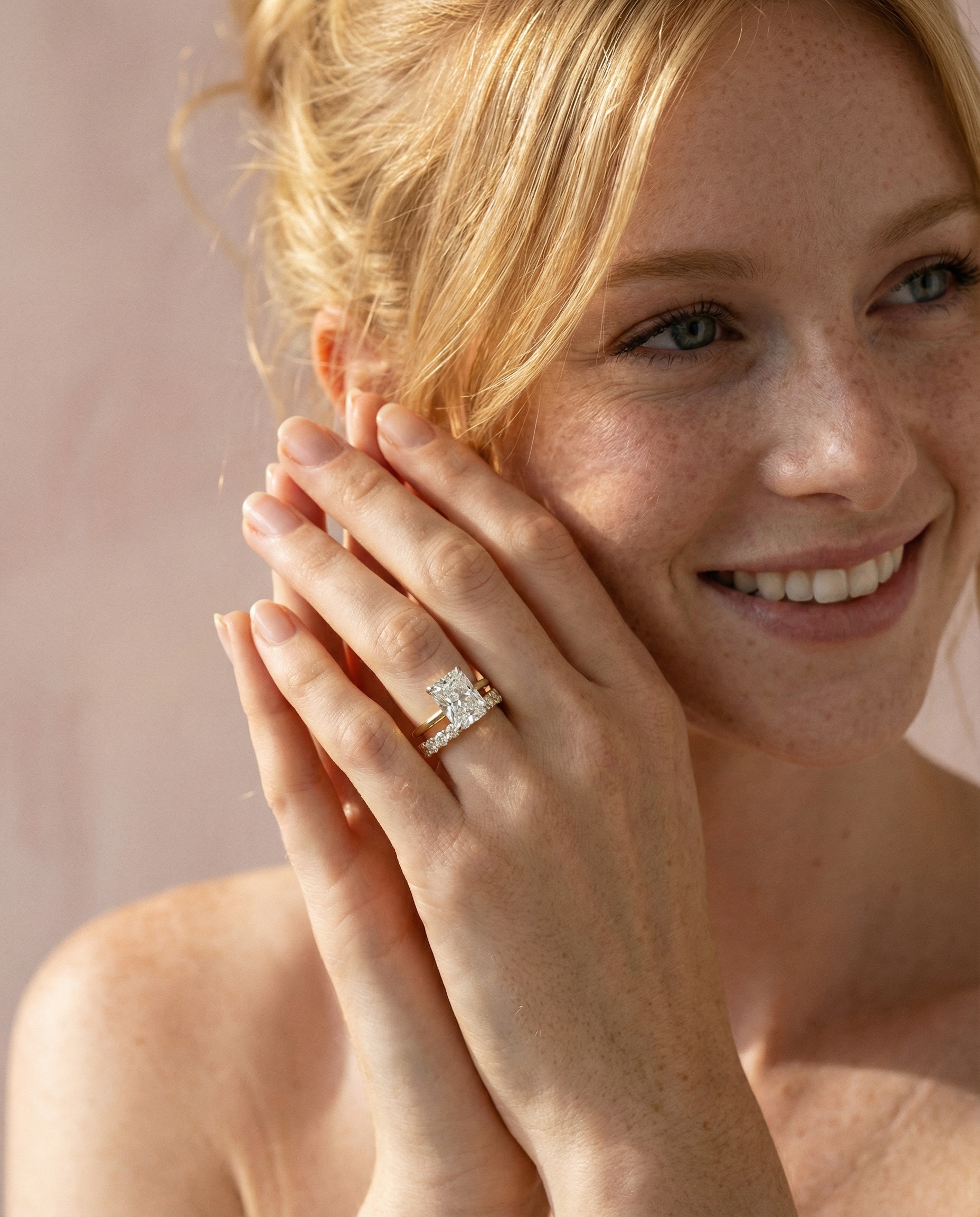
You find a two-stone ring you love, then start looking up the gemstones. Perhaps a birthstone feels right, or a traditional association adds something to the choice. You might also be drawn to a colour simply because it reminds you of somewhere you have been together.
A Toi et Moi ring leaves room for all of those connections. Its two principal stones can represent you and your partner, with each bringing something different to the design. The meaning can come from a shared memory or from choosing the pair together.
Begin with what the pair means to you
Toi et Moi is French for “you and me”. GIA’s guide to ring settings describes the style as two gemstones placed side by side, often symbolising two people coming together. That association gives you a starting point, rather than a set of instructions for choosing the stones.
Lily Arkwright’s collection of paired centre-stone designs includes a version of Comet with two lab-grown diamonds: one emerald-cut, the other pear-cut. Here, emerald names the rectangular cut. Their contrasting outlines give each stone a distinct presence.
The same material can therefore express two different preferences. If you both love diamonds, there is no need to introduce a coloured gemstone solely to make the stones distinguishable. Equally, a colour you associate with somewhere meaningful can be part of your own interpretation.
Choose a connection that feels personal
Start with a specific memory. Blue might remind you of the coast where you first went away together. Yellow could bring back the flowers in your first shared home. These are possible personal associations, not meanings that a gemstone has to carry for everyone.
Birthstones are another option if you already enjoy that tradition. But if one of the colours is something the wearer would never choose, discuss that before making it essential to the design. A ring can mark your birthdays without requiring two particular gemstones.
You might instead choose one shared colour in different shapes, or let one person suggest an outline and the wearer choose the final combination. Keep the agreed budget in view as the ideas develop. A meaningful connection need not depend on finding an expensive or unusual material.
Let the two stones work together
A rectangular outline beside a pear shape creates a different visual balance from two matching ovals. The straight edges make the curve more noticeable, while matching shapes can draw attention towards differences in colour or size. Try to identify which of those effects appeals to you.
Spacing matters too. Two stones set close together can read as a single compact arrangement; a more open gap makes their separate outlines easier to follow. Their angles affect that impression. A tilted stone may create a different outer shape from the same pairing placed more upright.
Compare the stones’ length and width in millimetres and ask for the width of the complete arrangement. Equal carat weights are not essential to a balanced pair.
Make the meaning comfortable to wear
The wearer’s preferences should guide the final choice. A partner can contribute a memory, a colour or ideas for how the ring is presented, while leaving the stones themselves to the wearer.
Before your first ring-shopping appointment, save one or two reference pictures and note what you like about each. “I like the space between these two stones” gives a jeweller more to work with than a folder of pictures with no comments.
Confirm each stone’s material and origin. A blue diamond and a blue sapphire are different gemstones, despite sharing a colour. Ask for care advice that covers both stones and their setting.
Look at on-hand and side photographs to judge the pair’s spread and height, checking which stone sizes the images show. If you plan to wear it beside a wedding band, try them together and discuss clearance with the jeweller. Move your hand naturally to check the fit.
Keep a few words with the ring
Once you have chosen the pairing, write down the connection while it is fresh. It might be as simple as “the blue reminds us of that first weekend by the sea”, or “we each chose a shape and found a way to put them together”.
A note in the box can hold more of that story than an engraving has room for. You can keep it for yourselves, share it when you give the ring, or return to it years later when the details of choosing it have become less clear.
The two stones do not need to explain your whole relationship to someone looking at your hand. What matters is that you enjoy the ring and recognise something of yourselves in the choice.