
Introduction
Car window tinting is one of the most popular automotive modifications in the country, and its popularity is well-earned. For drivers in Georgia, where the sun is intense and the summers are long, quality window film is less a luxury than a practical necessity. The right tint keeps your cabin cooler, protects your interior, reduces glare, and gives your vehicle a finished, professional look.
But navigating the world of car tinting services can be confusing. There are dozens of film types, a wide range of price points, varying levels of installer expertise, and state laws to comply with. Making uninformed decisions in any of these areas can lead to disappointing results — or worse, a legal violation that requires removing your tint entirely.
This guide is designed to give you a clear, comprehensive understanding of car tinting services so you can make confident decisions and get the results you’re looking for.
Why Car Tinting Services Are Worth the Investment
Before diving into the specifics, it’s worth restating why car tinting is such a compelling investment for Georgia drivers.
Georgia’s climate is characterized by long, hot summers with intense UV exposure. Without window film, your vehicle’s interior is exposed to both infrared radiation (which heats the cabin) and ultraviolet radiation (which degrades materials and is harmful to skin). Over time, this exposure fades dashboards, cracks leather, bleaches fabric, and creates an uncomfortable driving environment.
Quality window film addresses all of these issues simultaneously. It can block 40 to 70 percent of total solar energy, filter out 99% of UV radiation, reduce glare by 50% or more, and maintain these benefits for a decade or longer.
When you consider the daily comfort improvement, the protection of your vehicle’s interior value, and the reduction in AC load, the cost of professional car tinting services is modest relative to the total benefit delivered.
Understanding the Film Options
Dyed Window Film: Manufactured by layering dye between polyester sheets. It absorbs solar energy rather than reflecting it, offering basic heat and glare reduction at an affordable price. The downside is that the dye fades over time, often turning purple or brown, and it offers less heat rejection than more advanced films. Best for budget-conscious buyers who want a cosmetic upgrade and some glare reduction.
Metalized Film: Uses metallic particles to reflect solar energy, providing better heat rejection than dyed film. It’s more durable and color-stable. However, the metallic content can interfere with GPS, cell signals, and radio reception. Best for drivers who want better heat rejection without a premium price and don’t rely heavily on in-vehicle technology.
Hybrid Film: Combines dye and metallic layers to balance performance and cost. Offers better heat rejection than pure dyed films with less signal interference than fully metalized options. Best for drivers seeking a middle-ground option.
Carbon Film: Uses carbon particles instead of metal, eliminating signal interference entirely. Provides excellent heat rejection, has a sophisticated matte finish, and is highly color-stable. Won’t fade or turn purple over time. Best for drivers who want high performance and a premium aesthetic without the top-tier price of ceramic.
Ceramic Film: The highest-performing automotive window film on the market. Uses non-conductive nano-ceramic particles to block up to 80% of infrared radiation without affecting any electronic signals. Maintains exceptional optical clarity, provides maximum UV protection, and is the most durable option available. Best for drivers who want the absolute best in heat rejection, clarity, and longevity.
Understanding Tint Percentages
Window tint darkness is measured in Visible Light Transmission (VLT) — the percentage of visible light that passes through the film and glass combined. A 50% VLT film appears lighter and allows more light through. A 5% VLT film is very dark and allows very little light through. Lower numbers mean darker tint.
Georgia state law requires front side windows to maintain at least 32% VLT. Rear windows on passenger vehicles must also maintain at least 32% VLT, though SUVs and vans have different regulations. A professional installer will measure your factory glass’s VLT and account for it when selecting film to ensure the combined VLT meets legal standards.
What to Look for in a Car Tinting Service Provider
Experience and Specialization: Look for shops that specialize in window tinting or have a dedicated tinting team. General auto shops that offer tinting as a side service may not have the specialized skills needed for complex installations.
Film Brands Carried: Ask specifically what brands and product lines the shop offers. Reputable shops carry well-known brands like Llumar, 3M, Suntek, or Formula One. If a shop is vague about the films they use, that’s a red flag.
Warranty Coverage: Quality installations should be backed by a warranty on both the film (manufacturer’s warranty) and the installation (labor warranty). Understand what each covers and for how long.
Portfolio and Reviews: Check online reviews and ask to see examples of past work. Consistent positive reviews and a willingness to share their work are signs of a confident, quality-focused operation.
Clean Work Environment: Cleanliness matters in window tinting. Dust and debris are the enemies of a smooth installation. A shop with a clean, organized workspace is more likely to deliver a contamination-free installation.
The Tinting Process: From Appointment to Cured Film
Your installer begins by cleaning each window surface with specialized solutions to remove all traces of oil, dust, and residue. This is a non-negotiable step — any contamination will cause imperfections in the finished film.
The film is then cut to fit each window. Premium shops use computer-aided plotting systems that cut film to your vehicle’s exact specifications. The cut film is applied to the interior glass surface using a mounting solution, positioned precisely, and smoothed with a squeegee to remove solution and air from beneath the film.
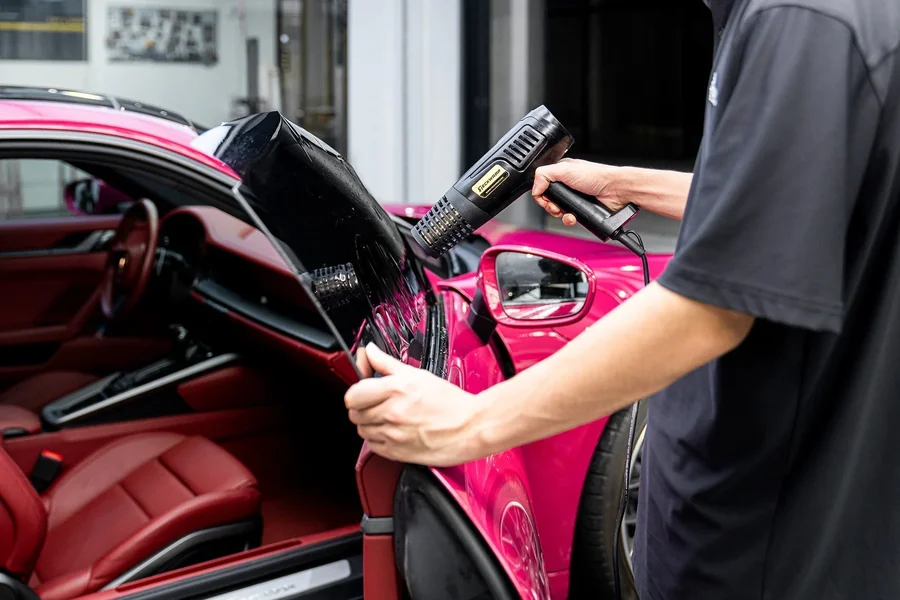
For rear windows and curved glass, a heat gun is used to shrink and shape the film around the contours of the glass — a skill that takes considerable practice to master.
After installation, most vehicles are ready for pickup within a few hours. The film will continue to cure over the next two to four weeks. During this time, you may notice some haziness or small water pockets — both are completely normal and will resolve as the adhesive fully sets.
Caring for Your Tinted Windows
For the first few days, avoid rolling down your windows to allow the adhesive to cure fully against the glass. When cleaning tinted windows, use a soft microfiber cloth and an ammonia-free cleaner. Ammonia can degrade the film and cause premature failure.
With proper care, quality automotive window film will last 10 to 15 years without peeling, bubbling, or significant color shift.
Conclusion
Professional car tinting services represent one of the best value-per-dollar upgrades available to Georgia drivers. The combination of heat rejection, UV protection, glare reduction, interior preservation, and enhanced aesthetics makes it a modification that improves your driving experience in every way.
For Kennesaw-area drivers looking for a trusted provider, Atlanta Tint Lab delivers professional car tinting services with premium film and skilled installation. Explore your options and book an appointment today.