
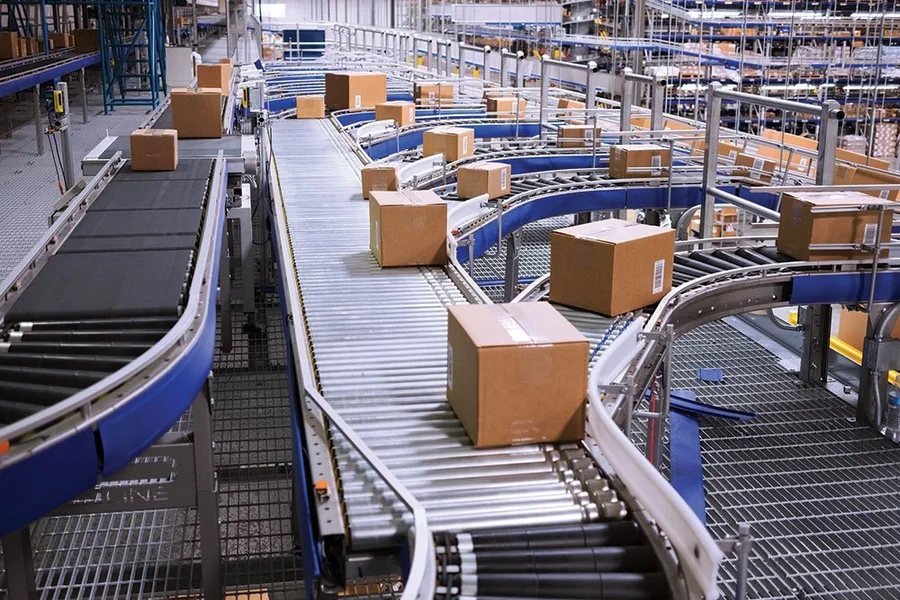
Expanding production in a manufacturing plant brings many operational decisions into focus. One of the most visible is material movement. How product travels between workstations, through inspection points, and into packaging affects throughput, reliability, and the allocation of labor. When pressure to increase output collides with existing plant capacity, systems that once performed adequately can become sources of bottlenecks.
Plant managers in the US manufacturing sector face persistent challenges: keeping lines running without frequent interruptions, reducing product handling errors, and aligning line pacing with customer demand. Conveyor systems are not glamorous, but they are central to this pressure. They determine how efficiently materials move and how much manual intervention remains in today’s lean operations.
This guide provides a grounded, practical look at flat belt conveyors — from basic mechanics to integration with broader workflows — so that leaders can make informed choices about their implementation as production scales.
What a Flat Belt Conveyor Is and Why It Matters
A conveyor system transports items from one point to another in a controlled manner. A flat belt conveyor uses a continuous, usually polymer-based belt looped around two or more pulleys to move goods along a surface. The belt lays flat, providing an unbroken support surface under the product throughout travel.
This design contrasts with point-contact systems like roller conveyors, where items rest on a series of spaced rollers. The continuous surface of a flat belt conveyor supports items more uniformly and maintains contact during motion.
The Flat Belt Conveyor guide linked here serves as a comprehensive resource for more detailed specifications, configurations, and product variations. In this article, the focus remains on how and why to apply flat belt conveyors in real plant contexts.
How Flat Belt Conveyors Function in Production Environments
A flat belt conveyor moves products along a continuous belt driven by a motor connected to a drive pulley. The belt travels over idler pulleys or slider beds, depending on support requirements and system length. Products rest on the belt surface and move with it from point A to point B.
From an operational viewpoint, two basic mechanics influence performance:
- Contact continuity – The flat belt provides uninterrupted support, which reduces movement variability as product travels.
- Controlled speed – Drive systems allow for precise speed settings that can match upstream and downstream processes without creating slippage or uneven motion.
Because the belt makes uniform contact with the product, it often reduces unwanted movement that can occur with segmented contact systems. This uniform support becomes especially important where products have soft bases, irregular shapes, or require exact positioning for inspection or packaging.
Choosing a Flat Belt Conveyor: Operational Factors to Consider
Selecting a conveyor should begin with a clear picture of what the line must accomplish. Key factors include expected throughput, product type, environmental conditions, and integration with existing workflows.
Product Characteristics
The size, weight, and base profile of items influence conveyor choice:
- Broad, flat products: These benefit greatly from the continuous support of a flat belt, which keeps items level and less prone to shifting.
- Soft or fragile items: The belt’s uniform surface reduces the likelihood of damage compared to systems with discrete contact points.
- Irregular or asymmetrical loads: Flat belts conform more consistently under varied shapes, reducing rotation or tipping that can occur elsewhere.
Understanding product interaction with the belt surface informs choices around belt material and surface finish.
Throughput and Speed Requirements
Production lines with varying speeds between stations need conveyors that can adjust to match system pacing. Flat belt conveyors support smooth, continuous motion with minimal shock when speed changes.
The ability to fine-tune speed settings helps align the conveyor with:
- Filling or assembly stations that operate on cycle time
- Inspection equipment that scans at fixed rates
- Packaging machines sensitive to product arrival intervals
Consistent belt motion simplifies coordination across these systems.
Space and Line Layout
Plant floor space is often at a premium. Flat belt conveyors can be configured in straight runs, curves, or inclines, which allows them to fit within constrained layouts. Managers should consider:
- Conveyor length relative to workstation spacing
- Turn radius for curved sections
- Clearance for maintenance access
In complex line layouts, conveyors may need to interface with lifts, merges, or diverters. Early design coordination reduces later changes that disrupt production.
Environmental Conditions
Material handling environments vary. Dust, moisture, or temperature extremes can impact belt selection and maintenance frequency. For example:
- Washdown environments may require belts with water-resistant materials
- Dusty conditions benefit from smooth belts that are easier to clean
- High-temperature zones may need specialized belt materials to resist deformation
Anticipating environmental effects helps choose both belt material and support structure.
Integrating Flat Belt Conveyors Into Production Workflows
Once selected, a conveyor must work as part of a broader system. Integration influences performance, ergonomics, and maintenance.
Synchronizing with Upstream and Downstream Equipment
Conveyors rarely operate in isolation. They must coordinate with other equipment that may operate at distinct cycle times.
For example:
- A filling station may send product at variable intervals
- A labeler may require products to arrive at fixed spacing
- Inspection cameras depend on consistent motion to capture accurate images
A flat belt conveyor’s controlled motion supports synchronization by allowing operators to adjust speed and buffering zones without introducing large motion variations.
Buffering and Accumulation
In high-volume lines, temporary storage — or buffering — smooths differences between production rates. Flat belt conveyors can support simple accumulation zones where product rests without pressure on upstream items.
Unlike roller conveyors that require stops and starts at individual rollers, flat belt accumulation points facilitate:
- Gentle gathering of product
- Reduced compression between items
- Fewer misalignments during congestion
Buffers help maintain overall line flow when downstream stations pause briefly.
Ergonomics and Manual Interaction
Operators often interact with conveyors for tasks such as manual loading, sorting, or inspection. Flat belt systems provide a predictable surface that reduces risks during manual handling.
A continuous surface:
- Minimizes pinch points between moving parts
- Makes hand placement more intuitive
- Reduces trips and slips around the conveyor region
Good ergonomic design reduces injury risk and improves operator comfort throughout long shifts.
Maintenance Practices That Sustain Reliability
A conveyor is not truly effective unless it can run reliably with predictable maintenance cycles. Plant managers should plan maintenance around expected wear and accessible inspection points.
Routine Checks and Adjustments
Regular inspection of the belt surface and tensioning hardware helps identify early signs of wear. Key activities include:
- Visual inspection of belt condition
- Checking tension to prevent slippage or tracking issues
- Verifying pulley and drive alignment
By catching small issues early, teams prevent larger disruptions.
Cleaning and Debris Management
In environments prone to dust or debris, accumulation under the belt or around pulleys can affect motion. A cleaner belt path:
- Reduces friction that increases motor load
- Prevents tracking deviation
- Extends belt life
Facilities with stringent hygiene requirements — such as food or pharmaceutical packaging plants — benefit from conveyors designed for easy cleaning.
Replacement and Wear Parts Planning
Belts and pulleys wear with use. Including spare parts in plant inventory and scheduling periodic replacement reduces downtime. For plants scaling production, predictable wear intervals align with planned maintenance windows rather than emergency stoppages.
Performance Metrics to Monitor After Installation
Once a conveyor is installed, monitoring performance helps ensure it meets production demands.
Plant managers should track:
- Uptime percentage: Time the conveyor operates without unscheduled stops
- Throughput achieved: Items processed per hour relative to planned targets
- Quality impact: Number of product issues traced to conveyor movement
- Maintenance intervals: Frequency of interventions per operational hours
These metrics inform adjustments to belt speed, maintenance planning, and future conveyor investments.
Common Challenges and How to Address Them
Even well-selected conveyors can present challenges if not supported by operational practices.
Belt Tracking Issues
Misalignment causes the belt to drift to one side. This can result from improper tension, worn pulleys, or uneven loads. Corrective steps include:
- Rechecking tension specifications
- Ensuring pulleys are square to the line
- Confirming load distribution on the belt
Addressing tracking early prevents accelerated wear or product misalignment.
Unexpected Stops During Line Integration
When conveyors connect to equipment with independent controls, stops can occur unexpectedly. To manage this:
- Implement signal communication between equipment and conveyors
- Use sensors to moderate flow into paused stations
- Apply gentle start/stop profiles to reduce mechanical stress
Proactive signal integration reduces shock to the conveyor system.
Wear from High Abrasion Loads
In applications with sharp edges or heavy weights, belt wear may accelerate. Solutions include:
- Choosing belts with abrasion-resistant materials
- Adding guides to keep products centered
- Planning more frequent inspection cycles
Matching belt material to the application extends service life.
Conclusion
Flat belt conveyors play a central role in many manufacturing plants as they scale production. Their continuous surface and controlled motion support consistent material movement, integration with automation, and predictable maintenance demands — all of which matter when uptime affects profitability.
This flat belt conveyor guide provides a practical framework for making informed decisions about selecting, integrating, and maintaining belt systems. The focus is on real-world operational outcomes: smooth product flow, reliable synchronization with adjacent equipment, manageable maintenance routines, and monitored performance after installation.
For plant managers in the US looking to sustain higher volumes without sacrificing quality or introducing new risks, understanding how flat belt conveyors perform in production environments is a critical part of operational planning. With this foundation, leaders can align conveyor choices with broader production goals and the realities of everyday plant operations.