
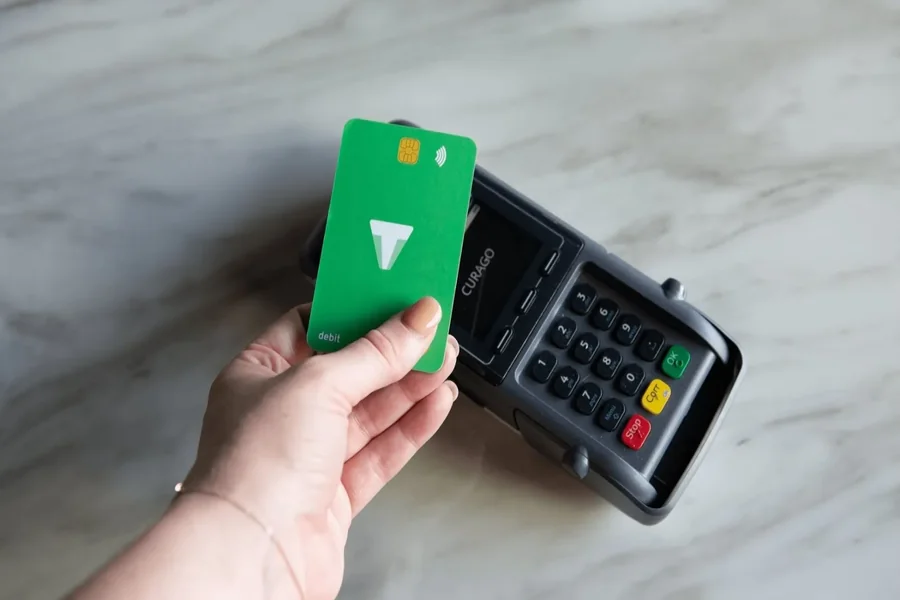
At Smart Payment Solutions, we’ve helped hundreds of businesses figure out their payment systems. We know what works and what doesn’t. This guide is designed to give you a complete, no-jargon understanding of credit card payment machine—what they do, how they actually process payments, the different options available, and most importantly, why your business needs one.
The Complete Breakdown: What Happens When You Process a Payment
Customers often think payment processing is mysterious. It’s not. It’s actually a straightforward series of steps that happens incredibly fast. Let’s walk through exactly what occurs:
Step 1: The Customer Initiates the Payment
Your customer hands you their card. They might physically hand it to you, insert it into the machine themselves, swipe it through a reader, or simply hold it near a contactless reader. Modern machines accept all these methods because customer preferences vary.
Step 2: The Machine Secures the Information
The moment the machine reads that card data, it immediately scrambles it through a process called encryption. Picture locking sensitive information in a vault that only the payment processor and the bank can unlock. This scrambled data is worthless to thieves. Even if someone intercepts it, they’re looking at gibberish.
Step 3: The Payment Processor Forwards the Request
Your payment machine doesn’t connect directly to the customer’s bank. Instead, it sends the encrypted information to a payment processor—basically a company that specializes in handling these transactions. This processor acts as the intermediary, forwarding the request to the appropriate bank based on the card type.
Step 4: The Bank Authenticates and Authorizes
The customer’s bank receives the request and performs verification checks. They confirm the card is legitimate, check if the account is active, verify the customer has sufficient funds, and look for any fraud indicators. All of this happens in seconds.
Step 5: The Response Returns and Payment Completes
The bank sends back either an approval or decline. Your machine receives this response and immediately displays it to you and the customer. If approved, the transaction is complete. The customer gets a receipt (physical or digital), the payment is recorded in your system, and the funds begin moving from their account to yours.
From card presentation to approval? Typically under 10 seconds. That’s why customers have come to expect instantaneous checkout. This speed has become the standard people anticipate.
The Range of Payment Machines: Finding Your Fit
Every business operates differently, which is why payment machine options exist across a spectrum. Finding the right one means understanding which type aligns with your actual business model.
Fixed Countertop Machines: The Reliable Workhorse
These are the machines you see bolted to checkout counters everywhere. They stay in one place, connect to the internet or phone line, and run all day processing transactions. They’re built to be durable, handle high volume, and integrate with existing point-of-sale systems.
If you operate a traditional retail store, coffee shop, salon, or any fixed-location business where customers come to you for checkout, a countertop machine is your reliable foundation. They’re proven, they’re dependable, and they handle heavy transaction loads without breaking a sweat.
Smartphone and Tablet Readers: Business-Grade Portability
These are small devices that connect to a smartphone or tablet you already own. They’re compact, affordable, and incredibly flexible. Perfect for small business owners, freelancers, service providers, market vendors, and anyone operating a mobile business.
A contractor finishing a job can collect payment right there using a tablet reader. A photographer at a wedding can process payments on the spot. A delivery driver can collect customer payment immediately upon delivery. These readers are accessible, easy to learn, and require minimal setup.
Advanced Smart Payment Terminals: The All-in-One System
Modern smart terminals are basically small computers designed specifically for payment processing. They feature touchscreens, run business applications, integrate with inventory systems, manage receipts digitally, and connect your entire operation. They’re comprehensive business tools, not just payment processors.
These machines make sense if you want one device handling payments, inventory management, customer databases, loyalty programs, and sales analytics. They cost more initially but can reduce your need for multiple separate systems.
Modern Features That Genuinely Improve Your Business
Payment machines have evolved significantly. Today’s devices include capabilities that directly benefit your operations and customer experience:
EMV Chip Security — Instead of easily counterfeited magnetic swipes, modern cards use encrypted chips. Every transaction generates a unique code, making fraud nearly impossible.
Tap-to-Pay Technology — Customers simply hold their card or phone near the machine. No insertion required. It’s faster, more hygienic, and customers love the simplicity.
Digital Wallet Support — Apple Pay, Google Pay, Samsung Pay—customers pay directly from their phones. This is becoming increasingly common as more people abandon physical wallets.
Instantaneous Processing — Gone are the days of waiting to see if a payment processes. Modern machines approve or decline instantly. Faster checkout means better customer experience.
Receipt Flexibility — Customers choose their preference: printed receipt, emailed receipt, or texted receipt. You reduce paper waste while giving customers what they want.
Seamless System Integration — Your payment machine communicates with your entire business system. Inventory adjusts automatically, customer records update, sales data flows into your reporting systems.
These aren’t gimmicks. Each feature directly impacts how smoothly your business operates and how satisfied your customers feel.
Why Accepting Cards Transforms Your Business
Someone might ask: “Couldn’t I just stick with cash?” Technically possible. Realistically? It’s limiting your business significantly. Here’s the honest assessment:
Customers Increasingly Don’t Carry Cash
This is simple consumer behavior: people are using physical cash less and less. If you only accept cash, you’re turning away customers who want to buy but can’t because they have no cash. Those are lost sales you can’t recover.
Card Transactions Are Faster
Handling cash requires making change, counting bills, securing the money. Card transactions? Tap or swipe and move on. Faster transactions mean you can serve more customers in the same time period. Higher throughput. Better customer satisfaction.
Card Payments Eliminate Theft Risk
Cash in a register is a theft target. Employees, customers, or robbers all represent security concerns. Card payments eliminate this. The money goes directly to your bank account. No cash handling. Reduced theft risk.
Your Accounting Becomes Effortless
With cash, you manually reconcile registers at closing. It’s tedious, error-prone, and time-consuming. With card payments, everything gets recorded automatically. At the end of the day, your numbers balance themselves. Your accounting requires minimal manual work.
You Project Professional Credibility
Customers judge businesses partly on their capabilities. Accepting only cash signals you’re outdated. Accepting modern payment methods signals you’re current, professional, and customer-focused. It builds trust and confidence.
You Gain Actionable Business Intelligence
Card payment systems automatically track what customers purchase, when they purchase it, and spending amounts. This data reveals patterns: your best-selling products, your busiest hours, your most valuable customers. You make smarter business decisions based on real information rather than guessing.
Payment Security: Why Customers’ Information Stays Protected
When customers trust you with their card information, you’re accepting serious responsibility. The good news is that modern payment machines are built with substantial security measures.
Legitimate payment processors follow PCI DSS (Payment Card Industry Data Security Standard)—essentially a comprehensive rulebook dictating how payment information must be protected. It covers every aspect: how data moves, where it’s stored, how long it’s retained, who accesses it. Compliance is mandatory for legitimate processors.
Let’s look at the specific security technologies protecting your customers:
Encryption Technology — All card data gets scrambled the moment it’s read. This scrambled information is mathematically impossible to unscramble without the encryption key. Even intercepted data is useless.
Token-Based Processing — Your machine doesn’t store actual card numbers. Instead, it creates unique tokens—basically codes that only work with your processor. The actual card number is deleted immediately, so there’s nothing for hackers to steal.
Chip-Based Authentication — EMV chips create a unique code every transaction. These codes can’t be reused. This makes counterfeiting nearly impossible, which is why chip technology has largely replaced vulnerable magnetic swipes.
Selecting the Right Machine: A Practical Decision Framework
Choosing a payment machine isn’t simple if you haven’t thought through your actual business needs. What works for a boutique doesn’t work for a food truck. Here’s how to think through your decision:
What’s Your Business Model? — Do you operate from a fixed location? Are you mobile? Do you attend markets and events? Your business structure determines whether you need stationary equipment, portable equipment, or mobile readers.
What’s Your Transaction Volume? — Processing 20 payments daily requires different equipment than processing 500 daily. High-volume operations need robust, fast machines. Lower volume allows for simpler, less expensive solutions.
Where Do Customers Pay You? — Are customers coming to your checkout? Do you serve them in multiple locations? Do you go to customer locations? Payment processing location determines machine type.
What Equipment Do You Already Have? — Do you own tablets or smartphones? Do you have an existing point-of-sale system? Choosing compatible equipment leverages what you already own rather than requiring complete replacement.
What’s Your Budget Reality? — Mobile readers cost $50-150. Countertop terminals run $200-500. Smart terminals might be $500-2000+. Beyond hardware, you’ll pay monthly processing fees (typically 2-3% per transaction). Choose what your budget genuinely allows.
Do You Need Advanced Features? — If you just need basic payment processing, don’t pay for inventory management, customer tracking, or analytics features you won’t use. But if you want everything integrated, the extra investment in smart terminals might make sense.
Thinking carefully through these questions prevents purchasing the wrong equipment or paying for unnecessary capabilities.
The Evolution Ahead: Where Payment Technology Is Heading
Payment technology moves faster than most business tools. Understanding future trends helps you make informed decisions today.
Contactless Becomes Standard — Swiping and inserting are gradually disappearing, replaced by tapping and waving. Faster, more secure, more convenient.
Mobile Payments Continue Exploding — More people pay with phones than ever. This trend accelerates. Expect mobile payment adoption to grow significantly.
QR Code Payments Expand — Scan a QR code, approve payment on your phone, transaction complete. Particularly useful for smaller payments and remote transactions.
Biometric Authentication Becomes Common — Fingerprint and facial recognition replace traditional PINs. More secure and faster than typed codes.
AI Provides Business Insights — Payment systems increasingly use artificial intelligence to analyze patterns. They tell you things like “product X sells 40% better on weekends” or “customers purchasing A usually buy B within 30 days.”
The point is straightforward: payment technology constantly evolves. Businesses that adopt these advancements early gain competitive advantages over businesses using outdated systems.
What This Means for Your Business
Credit card payment machines are genuinely critical business infrastructure. They’re not just about moving money from customers to you—they’re about creating frictionless experiences, protecting financial information, building professional credibility, and gathering data that makes you smarter.
The encouraging reality? Modern payment machines are cheaper, simpler to use, and more secure than ever. Whether you’re establishing payment systems for the first time or modernizing an aging system, options exist at every price point and complexity level.
At Smart Payment Solutions, we help businesses match with payment systems that actually fit their operations. We don’t push expensive equipment you don’t need or complicated features you won’t use. We believe in finding the right solution for your specific situation—one that helps your business operate more smoothly and grow more effectively.