
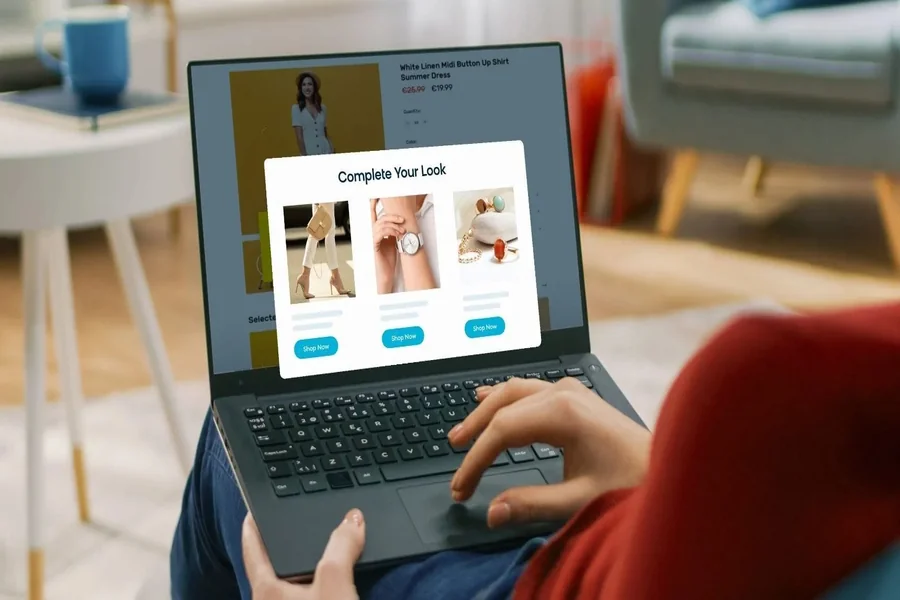
Retail is no longer defined by assortment or price alone; it is defined by how well a brand understands and supports individual customers throughout their buying journey. Today’s shoppers expect relevance, immediacy, and seamless guidance across every touchpoint. They want experiences that feel curated rather than generic, intelligent rather than static, and effortless rather than overwhelming. This is where personalized product recommendation strategies become a competitive advantage, rather than an optional enhancement.
Modern retailers are moving beyond basic recommendation carousels and adopting real-time, intent-driven recommendation systems that not only increase conversions but also lift average order values, reduce returns, and foster longer-term loyalty. This article examines why personalization has become essential, how customer expectations have evolved, and the strategies retailers can employ to capture meaningful commercial value.
Why Personalized Recommendations Matter More Than Ever?
Customer behavior has changed rapidly. As product choice explodes, decision fatigue grows, and acquisition costs rise, brands can no longer expect shoppers to navigate catalogs independently. The experience must guide them.
Key forces driving the shift
- Customer journeys are nonlinear and cross multiple devices
- Attention spans are short decisions are made in seconds
- Competition online is nearly infinite, and switching costs are low
- Personalization has become a default expectation, not a premium feature
- Consumers reward relevance and ignore generic content
The business impact of better recommendations
- Higher AOV and multi-item purchase rates
- Lower cart abandonment and return rates
- Faster path to purchase and stronger conversion efficiency
- Increased repeat buying through relevance and trust
Retailers who master relevance outperform those who rely on catalog navigation and static merchandising.
Why Many Retailers Underperform With Recommendation Strategies?
Most retailers already use product recommendations, but few generate meaningful impact because implementations are surface-level and disconnected from buyer psychology.
Common failures
- Same recommendations across all customers
- No adjustment based on browsing depth or behavior signals
- Generic carousels appear without a clear purpose
- Recommendations are positioned too late in the journey
- Personalization logic is isolated to a single channel
- Over-optimization for relevance rather than intent
Retailers often treat recommendations as decoration rather than a strategic approach.
How Shopper Psychology Shapes Better Recommendation Strategy?
Understanding shopper psychology allows retailers to design recommendation experiences that reduce friction, increase confidence, and guide customers toward higher-value purchases without pressure. The most effective strategies are grounded in behavioral insight rather than algorithms alone.
Key behavioral principles
- Cognitive ease – People choose faster when fewer decisions are required.
- Completion bias – Customers tend to buy more when presented with complete solutions, rather than fragments.
- Anchoring – Price and value framing influence upgrade decisions.
- Social proof – Confidence increases when shoppers see others like them choosing similar products.
- Emotional reassurance – Risk reduction matters more than the size of the incentive.
Strong personalization supports these behaviors rather than forcing choices.
Types of Recommendation Strategies Retailers Can Apply
Different recommendation models serve different business objectives. High-performing retailers use a layered approach rather than a single format.
1. Context-aware recommendations based on real-time intent
Real-time signals reveal customer motivation and interest level. Recommendations should be updated as new signals emerge.
Examples
- Switching recommendation type after hesitation or comparison behavior
- Changing offer framing after price sensitivity signals
- Highlighting social proof when trust needs reinforcement
Value
- Prevents abandonment
- Converts uncertain buyers
2. Affinity-based personalization
Identifies user preference patterns and surfaces products aligned to personal tastes.
Inputs
- Past purchases
- Browsing categories and dwell time
- Product attributes and semantic similarities
Best for
- Apparel, furniture, lifestyle, cosmetics, sporting gear
Affinity increases emotional relevance and margin efficiency.
3. Complete solution and bundle recommendations
Customers buy outcomes, not objects. Bundles create clarity.
Examples
- Outfit builders in fashion
- Goal-based sets in wellness and supplements
- Room setup bundles in home decor
- Beginner-to-advanced kits in hobby categories
Impact
- Higher basket size, lower comparison shopping
4. Upgrade and premium version recommendations
Helps customers confidently choose higher-tier products.
Execution
- Side-by-side comparison blocks
- Feature trade-off guidance
- Value framing (cost per use, performance benefit)
Impact
- AOV lift through value trade-ups, not additional items
5. Add-on and accessory recommendations
Low-effort items are attached late in the journey.
Examples
- Batteries, replacement parts, protective accessories
- Digital add-ons (insurance, extended warranty)
Impact
- High incremental revenue with minimal friction
6. Lifecycle-aware recommendations
Different stages require different recommendations.
Examples
- First-time buyers → confidence-building guidance and starter sets
- Repeat buyers → cross-sell
- Loyal customers → new launch access and exclusives
- Lapsed customers → replenishment or reactivation pathways
Data Inputs That Power Successful Personalized Recommendations
Data is useful only if it creates insight. The best-performing systems optimize for behavioral signals rather than demographic assumptions.
Data that drives high-impact recommendation decisions
- Browsing depth and recency
- Multi-session return behavior
- Scroll depth and hesitancy moments
- Product attribute preference clusters
- Engagement with education vs urgency content
- Add-to-cart and removal patterns
- Price sensitivity indicators
- Purchase timing and replenishment windows
Recommendation Placement Strategy: When and Where to Surface Recommendations?
Strategic placement ensures that recommendations align with intent at the right stage in the journey, when customers are most receptive to discovery or upsell opportunities.
High-leverage placements
- Homepage personalization for return visitors
- Guided discovery on category pages
- Solution builders and contextual education on PDP
- Add-ons and upgrades in cart
- One-click attachment at checkout
- Personalized suggestions post-purchase
- Automated second-purchase prompts in CRM channels
Recommendations should appear as guidance, not pressure.
Measurement: KPIs That Reveal Real Impact
Many retailers evaluate recommendation performance using surface-level engagement metrics such as carousel clicks or impressions. These signals are useful, but they do not reflect commercial value. To understand whether recommendations truly influence buying behavior, measurement must focus on business outcomes rather than activity metrics.
KPIs that reveal meaningful performance impact
- Incremental revenue contribution – revenue directly attributable to recommendation exposure
- Multi-item order rate – percentage of orders containing more than one item
- Bundle or add-on attachment rate – frequency of recommended products added to cart
- AOV uplift vs. non-exposed control groups – true impact on basket size
- Discount dependency reduction – higher revenue without relying on promotions
- Time to second purchase – acceleration in return buying
- Repeat-session conversion performance – retention and consistency improvements
When results are measured through financial outcomes, not interface interactions, the value of the recommendation strategy becomes unmistakably clear.
How Retailers Can Implement a High-Impact Recommendation Strategy Step-by-Step
Building a high-impact recommendation strategy doesn’t have to be overwhelming. By approaching it step-by-step, retailers can transition from basic carousels to a structured, outcomes-driven program that steadily increases AOV and conversion rates without disrupting existing operations.
Recommended roadmap
- Start with one problem area (PDP abandonment, low multi-item rate, etc.)
- Introduce one recommendation type at a time
- Optimize placement and sequence before algorithm complexity
- Integrate psychological framing (trust, completeness, simplicity)
- Add intent scoring for dynamic personalization
- Coordinate across key surfaces and channels
- Expand to lifecycle recommendations
- Layer predictive modeling and automation
Future Direction: The Next Generation of Recommendation Systems
The next generation of recommendation systems will look very different from today’s rule-based and relevance-only approaches, shifting toward predictive intelligence and automated journey orchestration. Understanding where the technology is heading helps retailers prepare for what will soon become standard.
Trends shaping next-gen recommendation intelligence
- Real-time decisioning across the full journey
- Next-best-action automation replacing segmentation
- AI-generated variation and content testing
- Unified identity across web, mobile, and offline
- Post-purchase behavior integration
- Personalization governance based on trust and privacy transparency
Final Takeaway
Modern recommendation strategies are not about showing more products they are about showing the right next product based on intent, context, and timing. Retailers that build personalized recommendation systems grounded in psychology, real-time intelligence, and multi-surface orchestration consistently achieve higher AOV, improved retention, and healthier economics.