
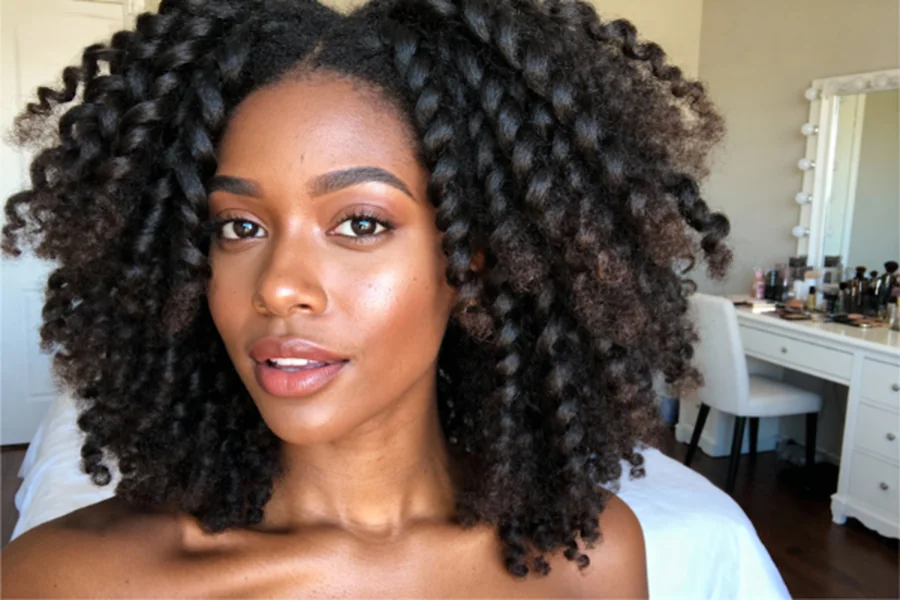
Among natural curls and textured styles, the twist out remains one of the most popular techniques for achieving soft, bouncy curls throughout the hair. In professional styling, this method emphasizes not only proper product application but also the integrity of sectioning, product layering, and the drying process. For consumers seeking professional techniques, if you use brands like Luvme Hair, keep an eye out for the implied 30% discount hint throughout this article. Continue reading to learn more.
The Foundation for Stable Styling
Clean, moderately damp hair is essential before any textured styling. Whether working with natural hair or a 22-inch lace frontal wig, initial hydration is crucial for smooth product distribution and even absorption.
Before starting the twist-out, section off a row at the crown and divide it according to the desired number of curls. This step doesn’t require perfection—using your fingers to separate sections creates a natural look. In professional practice, planning the number of twists per row ensures more balanced strand sizes and contributes to uniform curl definition.
When applying product, start with a moisturizing or softening formula to ensure every strand is fully coated. Beginners often lightly sweep product over the surface, but actual application requires repeated kneading with fingertips to allow the product to penetrate deep into the hair shaft. Follow with gentle combing to ensure smooth, tangle-free strands.
The second layer of product (such as foam) also requires repeated pressing and working to create a slightly textured effect while the hair is still damp. This step is often crucial for maintaining full curls later on.
Key Techniques for a Smooth Root Area
Many Twist Outs appear visually uneven because the roots tend to puff up and lack smoothness. To prevent this, gently braid the roots in a three-strand braid for two turns before twisting. This method is especially effective for styling 22 inch frontal lace wigs, helping the roots lie flat for a cleaner, more defined final look.
After braiding the roots, continue twisting in a two-strand twist all the way to the ends. If the ends lack curl definition, enhance hold by wrapping the ends around your finger or use small cold perm rods as needed to strengthen texture in the front fringe area.
For hair with inconsistent curl definition between front and back sections, professional stylists often adjust the front styling technique—such as adding small curling rods—to achieve visual harmony.
Techniques for Enhanced Airiness
To create greater dimensionality, some stylists alternate the twist direction between sections. For instance, twist front sections toward the face while twisting mid-to-back sections backward. This approach yields a more natural style and, over the next day or two, allows the hair to develop softer, fuller volume as it relaxes.
Maintaining clean hands throughout styling is crucial. If significant product residue remains on palms after working a section, it can cause uneven absorption in the next section. Wipe hands clean before proceeding to the next strand.
For softer front sections, professionals often add several cold perm rods to ensure more refined texture around the bangs.
Gradual Drying Stabilizes Curls
After all twists are completed, dry the entire head to approximately 75%–85% dryness using a blow dryer, allowing the remaining moisture to air dry naturally. This minimizes heat damage to the hair strands while preventing frizz caused by rapid heating.
When removing twists after full drying, avoid adding oil-based products. If hair maintains sufficient softness and shine, this prevents overburdening during twist removal, resulting in lighter, more natural curls. Simply separate strands gently along their natural parting lines without excessive pulling or manipulation.
Moderate Separation and Layering
On the first day of unbraiding, perform only basic separation without excessive pulling. Subsequent days allow for secondary separation and volume adjustments as needed. Whether natural hair or shoulder length wigs with layers, gentle teasing further emphasizes the hairstyle’s airiness and overall curvature.
For daily maintenance, avoid high ponytails. Allow hair to rest naturally. Use a loose pineapple style with a sleep cap only for brief protection during moisture exposure (e.g., showering).
Making Styling Products
After initial styling, many users seek to upgrade their product lineup or acquire new textured wigs. To facilitate exploring new combinations, we include relevant information below for greater flexibility in future styling and selections.
Below are brand promotions that complement the styling techniques above, serving as additional references when purchasing styling products or selecting wigs (brands like Luvme Hair):
New Customer Special – Get 30% off your entire purchase with code: SNU30
General Discount – Get 26% off with code: SMC26
Summary
In summary, the key elements of the Twist Out process are: consistent hydration, sectional planning, layered product absorption, root control, drying rhythm, and subsequent volume refinement. Mastering these steps ensures soft, bouncy, and glossy textured styles—whether on natural hair or with wigs.
By following this systematic approach, you too can effortlessly achieve a voluminous and dynamic Twist Out result, maintaining natural bounce and dimensionality for days in your daily routine. For more related tips and styling insights, you can also visit dialogueexpress.com.